
Affiliation: Queen Mary University of London
Keywords: Functional Composites, Biopolymers, Polymer Engineering, Sustainable Electronics, Micromechanics, Multimodal Sensors, Graphene, MXenes, 2D Materials.
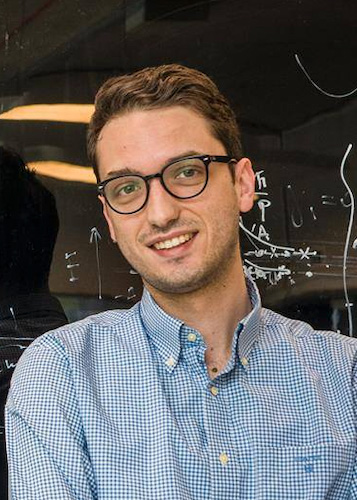
Full profile: Dimitrios G. Papageorgiou grew up in Greece and trained as a physicist before finding his scientific home in polymer engineering. After completing his PhD in Polymer Nanocomposites at the Aristotle University of Thessaloniki, he moved to the UK to join the School of Materials and the National Graphene Institute at the University of Manchester, where he worked with Prof. Robert J. Young and Prof. Ian Kinloch as a core member of the European Graphene Flagship project. The work he did there, establishing quantitative Raman spectroscopy as a tool for understanding mechanical reinforcement in graphene- and 2D-material-based composites and developing micromechanical models that link nanoscale reinforcement to bulk composite performance, became foundational to the field.
Since joining Queen Mary University of London in 2019, he has built a research group that bridges fundamental polymer science and nanotechnology with real industrial outcomes. His group’s work spans sustainable multimodal sensors, edible electronics, biodegradable electronic skin patches, moisture-driven energy generators, and green textiles made from waste proteins. He was promoted to Reader in 2025 and serves as Director of Research for the Centre for Sustainable Engineering.
Dimitrios has published 135 peer-reviewed papers (h-index 51, >12,000 citations) in journals including Nature Sustainability, Nature Communications, Advanced Functional Materials, Nano Energy and Nano Letters and has been involved as PI or Co-PI in grants with a monetary value >£8M. He has received the Rosenhain Medal and Prize from the Institute of Materials, Minerals and Mining (IOM3) for distinguished contributions to polymer science and engineering, the IOM3 Composites Publication Award for excellence in composites research and has been consistently listed among Stanford University’s World’s Top 2% Scientists.
He is a passionate advocate for science beyond the laboratory, he contributes to the Henry Royce Institute’s Discover Materials outreach programme, has exhibited at the Big Bang Fair, New Scientist Live and Manchester Science Festival, and his research has been featured in the Financial Times.