
Affiliation: Institute of Biology Valrose
Keywords: Chirality, d-amino acids, circular dichroism, chiral-selective methods, cancer.
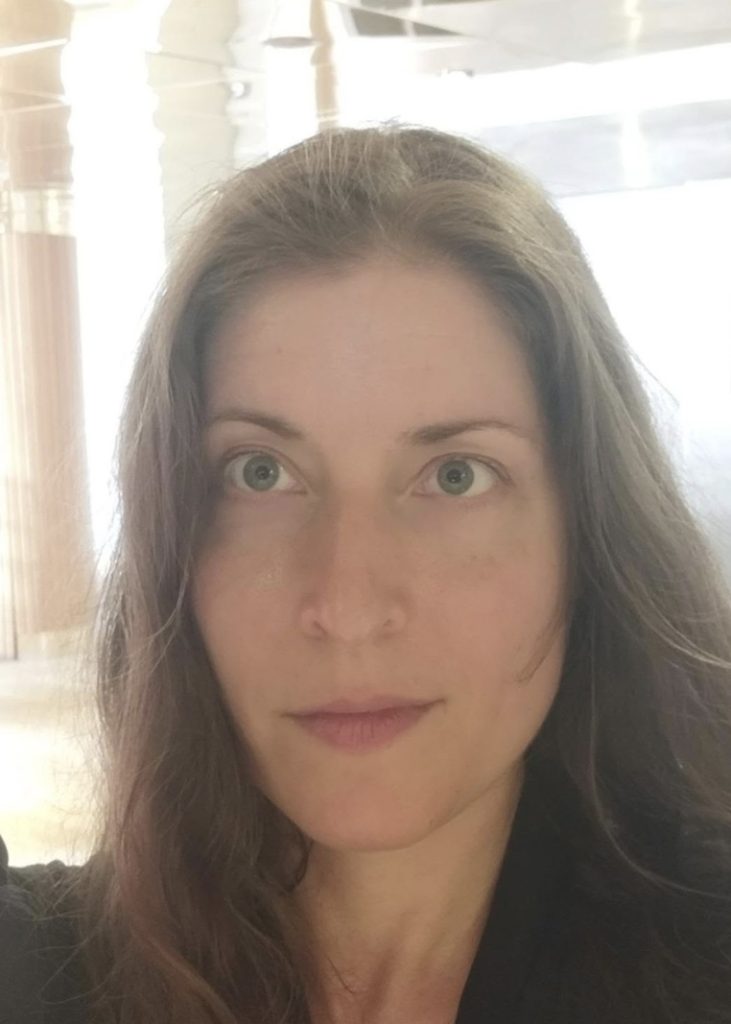
Full profile: Agnes developed an interest in biology and medicine as a child and, from the age of 14, attended a special biology-chemistry preparatory class. She started her research career at Eötvös Loránd University in Budapest and, in co-tutelle with the Developmental Biology Institute Marseille-Luminy, completed her Ph.D. on autophagy and Hox proteins. She then joined the Institute of Cancer Research with an EMBO-Marie Curie COFUND fellowship, where she worked on cell competition and discovered that NMDA receptors are key regulators of this cellular process.
During this period, she developed a passion for d-amino acid research and chirality, on which she soon built her independent research project. She subsequently joined her current institute, the Institute of Biology Valrose in Nice, France, where she is currently a Group Leader and an honorary member of the Nice Chemistry Institute (ICN).
She was the first to develop several methods enabling in vivo detection of protein-bound non-l-amino acids, including a set of chirality-specific antibodies that show no cross-reactivity with one another despite epitopes sharing identical amino acid sequences, as well as in vitro and in vivo chiral-selective fluorogenic cleavage assays. More recently, her interdisciplinary group has been working closely with chemists and biologists; her team applies circular dichroism spectroscopy and, in collaboration with ICN, multi-dimensional gas chromatography and ultra-high-resolution liquid chromatography for qualitative and quantitative analysis of heterochiral biological specimens.
The major aim of the team is to address the direct physiopathological roles of proteome homochirality loss and to identify a new family of genes dedicated to the maintenance of protein homochirality. The team also collaborates closely with several medical institutes (e.g., Gustave Roussy) and hospitals to analyze the heterochirality state of various patient-derived samples, as well as with numerous national and international research centers (SOLEIL Synchrotron, Diamond Light Source, University of Limerick, etc.).
Her group’s multidisciplinary work is supported by prestigious grants such as ANR JCJC, ARC PJA1, Cancéropôle Emergence, IdEx, Academy 4, Synchrotron SOLEIL, and Diamond Light Source. She was also a Lendület–Momentum Laureate in 2023 (the Hungarian equivalent of an ERC Starting Grant).
Agnes is an active member of the International d-Amino Acid Scientific Committee. She is co-organizing the EMBO-IDAR 2026 d-Amino Acid Research Workshop as well as the FEBS BioChirality Across Scales Meeting in 2026. She is also active within the Young Academy of Europe (YAE).
Agnes has given many invited talks at international meetings as well as at leading institutions (ENS Lyon, Crick Institute, etc.).
In addition to her academic career, Agnes is very interested in bringing together scientists and artists for the interdisciplinary project “Chirality in Art,” for which she organizes exhibitions and concerts.