Borges

Affiliation:  University of Aveiro, Portugal

Keywords: Supramolecular biomaterials,Macromolecular and interfacial self-assembly, Nanobiotechnology, Peptides, Carbohydrates, Nucleic acids, Layer-by-Layer technology, Supramolecular hydrogels, Drug delivery, Tissue engineering, Regenerative medicine

Webpage

Orcid identifier

Full profile: Dr. João Borges is a Senior Researcher at the Department of Chemistry and CICECO – Aveiro Institute of Materials at the University of Aveiro, Portugal. He graduated and received his PhD in Chemistry from the University of Porto. His research focuses on the molecular design, synthesis and development of biofunctional supramolecular multicomponent biomaterials to interface with living systems. In particular, he and his team have been developing bioinspired, chemically programmable and dynamic supramolecular hydrogels and layer-by-layer-driven soft self-assembling nanobiomaterials by combining polysaccharides, self-assembling peptides, proteins and nucleic acids, to be used as bioinstructive matrices to control cell functions and as platforms for controlled drug/protein/therapeutics delivery.

João has been also lecturing on supramolecular biomaterials for tissue engineering and regenerative medicine strategies in Portugal and abroad at undergraduate and graduate levels, as well as on communication and presentation skills. He has been Principal Investigator of major R&D projects funded at European (e.g., SUPRALIFE) and national Levels (e.g., SUPRASORT), and team member in several other funded EU and national projects.

He is an Editorial Advisory Board Member of the Journal of Materials Chemistry B (Royal Society of Chemistry, RSC), Associate Editor for Frontiers in Medical Technology, and he has served as guest editor for several international peer-reviewed journals, including the Journal of Materials Chemistry B and Pure and Applied Chemistry.

He has been elected Member of the Biomaterials Chemistry Group at the RSC and he is the recipient of several honors and awards. He has been elected Chemistry Europe Fellow (Class of 2022/2023), Member of the RSC (MRSC), Journal of Materials Chemistry B Emerging Investigator (2023), and received the IUPAC Periodic Table of Younger Chemists Award (2019).

Beyond his academic activity and scientific impact, João has been devoted to connecting, mentoring, and empowering early-career scientists globally in advancing their professional development. In addition, he has been strongly committed to delivering a positive social impact by being invested in science communication, outreach, policy and diplomacy as a Member of the Global Young Academy (GYA), Young Academy of Portugal of the Lisbon Academy of Sciences, International Younger Chemists Network (IYCN), European Young Chemists’ Network (EYCN), and Young Chemists Group of the Portuguese Chemical Society (GQJSPQ). He is co-chair of the Global Conversation on Sustainability (GCS), a joint project by the IYCN and the International Union of Pure and Applied Chemistry (IUPAC) which aims to tackle the United Nations Sustainable Development Goals by raising awareness and implementing sustainable practices globally, and a National Representative of the IYCN Standing Committee at IUPAC. João is a member of several professional scientific organizations, including the RSC, the American Chemical Society (ACS), the European Society for Biomaterials (ESB), SPQ, and IUPAC.

Agapiou

Affiliation:  Cyprus University of Technology

Keywords: Remote sensing, earth observation, geoinformatics, cultural heritage, archaeological prospection, archaeological proxies

Webpage

Orcid identifier

Full profile: Dr. Athos Agapiou is an Assistant Professor at the Department of Civil Engineering and Geoinformatics, Cyprus University of Technology, where he holds the “Geoinformatics and Earth Observation” chair. He also serves as the Deputy Director of the UNESCO Chair on Digital Cultural Heritage and coordinates the EOCult Laboratory, a cutting-edge research group specializing in the application of Earth Observation and Geoinformatics for archaeological research and the study of cultural heritage landscapes. Dr. Agapiou has played a leading role in numerous high-profile research initiatives at both European and national levels, including Horizon Europe and Horizon 2020 projects, as well as programs funded by the Research and Innovation Foundation (RIF) in Cyprus. His work focuses on developing and applying innovative remote sensing technologies for cultural heritage, addressing challenges posed by environmental and anthropogenic factors.

Dr. Agapiou’s academic and professional achievements have been widely recognized with numerous awards and honors. In 2023, he received the Young Scientist Award from the International Society for Digital Earth (ISDE), acknowledging his contributions to innovative research in the field of Geoinformatics. Earlier, in 2018, he was awarded the Young Researcher Award by the Cyprus Research Awards for his work in cultural heritage studies. His impact is further demonstrated by his inclusion among the top 2% of researchers worldwide in his field, as documented in Stanford University’s annual studies from 2020 to 2024. Additionally, bibliometric studies published in the esteemed journal Heritage Science in 2024 highlighted his influence as one of the top three global researchers in the application of Geoinformatics to cultural heritage, showcasing the extensive reach and importance of his scientific contributions. In corresponding independent research (2022) published in the same journal about the rapid developments taking place in the field and related to the fourth industrial revolution and its applications in cultural heritage studies, the name of Dr. Agapiou was included in the list of the first ten researchers worldwide whose research influences the scientific community.

Gahan

Affiliation:  University of Galway

Keywords: Evolution, EvoDevo, Chromatin, Gene regulation

Whttps://gahanlab.com/

Orcid identifier

Group Leader Marios Chatzigeorgiou, Paula Miramón-Puértolas and James Gahan photographed at Media City in Bergen, Norway on March 31, 2023.

Full profile: James received his PhD in Biochemistry from University of Galway in Ireland in 2016. Following this, he spent 5 years as a Postdoc in the Michael Sars Centre at the University of Bergen in Norway where he worked on chromatin regulation in the nervous system of the cnidarian Nematostella vectensis. He then received a Sir Henry Wellcome Postdoctoral fellowship from the Welcome Trust to work on chromatin-based gene regulation in Choanoflagellates and was based at the University of Oxford, UK. In addition, he spent 1 year as a visiting scholar in UCSF. In 2023, James was awarded a prestigious ERC Starting Grant from the European Research Council and, since April 2024, is an Associate Professor at the Centre for Chromosome Biology in the School of Biological and Chemical Sciences at the University of Galway. 

James’s team work on understanding gene regulation in two evolutionary-interesting groups. Firstly, they work on cnidarians (jellyfish, sea anemones etc) where they dissect gene regulation during development and neurogenesis. Cnidarians are the sister group to bilaterian animals and therefore provide insights into early animal evolution. The group also works on choanoflagellates, the closest unicellular group to animals. They dissect the regulation of chromatin and gene expression in this clade to decipher how changes in these processes may have contributed to the emergence of animals.

Moniek Tromp Elected President of the Initiative for Science in Europe

Prof. Moniek Tromp, former Chair of the Young Academy of Europe, was elected as the new President of Initiative for Science in Europe (ISE). She will take office on 1 January 2025.

Moniek Tromp is currently Director of the Zernike Institute for Advanced Materials and Chair of Materials Chemistry at the University of Groningen (The Netherlands),  and her research focusses on the development and application of operando spectroscopy techniques in catalysis and materials research. She has held many important national and international roles, including Chair of the Young Academy Europe, board member of the Dutch Funding Agency, chair of the Dutch Network for Female Professors, and president of the Young Academies Science Advice Structure and Science Advice for Policy by European Academies respectively. You can find more about Moniek’s work here: https://www.rug.nl/staff/moniek.tromp/

The Initiative for Science in Europe  is an independent platform bringing together learned societies and European scientific research organisations, operating throughout all disciplines and across all sectors, which played a decisive role in the creation of the European Research Council.

ISE has since then successfully advocated for a greater role for science in Europe, and effectively supports common causes essential for European scientific research communities, shaping European science policies and stimulating the involvement of European researchers in the design and implementation of the European Research Area.

You can find more about ISE here: https://initiative-se.eu/

Enhancing Europe’s competitiveness through research and innovation

This Autumn, the European science-policy ecosystem was lit up by some influential reports that chart a future towards the 10th Framework Programme for research funding in the region.

On 16 October, an expert group – chaired by Manuel Heitor, former Portuguese Minister of Science, Technology, and Higher Education – released an interim evaluation of the European Commission’s Framework Programme 9 (FP9) (also known as Horizon Europe) and offered a vision for the next Framework Programme (FP10). The report builds on the momentum generated by three recent key publications: Ursula von der Leyen’s Political Guidelines, and the Letta and Draghi reports, all of which push for enhancing EU competitiveness through research and innovation.

The shift proposed in these reports, if implemented, will have wide-ranging impacts on parts of the research funding landscape. The YAE did not release its own statement on the Heitor report, because many of its partner organisations released excellent and timely statements of their own, including the Marie Curie Alumni Association and Eurodoc: https://zenodo.org/records/13944737

But the YAE is engaging with debates on the future of Europe’s research governance, including through its work on taskforces and working groups, and in the media. Recently, a journalist for Nature asked the YAE for comment on the changing policies steering the research sector (https://www.nature.com/articles/d41586-024-04017-6).

Building Bridges’24 in Wroclaw (November 25-28, 2024)

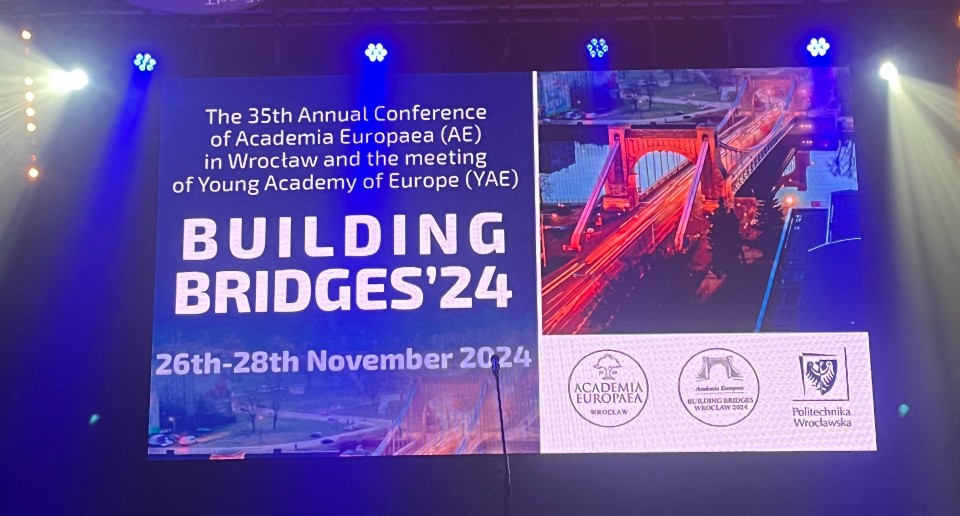
Between 26-28 November 2024, Academia Europaea (AE) and the Young Academy of Europe (YAE) co-organized the Building Bridges Conference (BB2024) in Wroclaw. The event’s programme is available at the homepage of the AE Wroclaw Knowledge Hub.

On the first day of the event, YAE held its own meeting, with detailed programme of the event being available here. In the morning session, in a panel moderated by Katalin Solymosi (Outgoing Chair), YAE members discussed YAE’s recent and upcoming activities and plans for the next year to improve the visibility of early to mid-career researchers, and also listened to scientific talks by members. In the afternoon, we hosted a panel discussing the state of the art of early to mid-career researchers’ organisations in Europe at the institutional, national and regional level, as well as the role of Young Academies in the scientific development of early career researchers. We invited speakers from Academia Europaea, from the Academia Iuvenum of WroclawTech and from the Polish Young Academy as well. (Detailed list of the programme and speakers is available here and is also provided in the figure legend below.) A key point of discussion was the comparison of research careers across different countries, highlighting distinct challenges that require collective consideration. There has been notable progress in fostering new collaborative relationships with various institutions and senior academies. However, certain aspects have been identified as necessitating further attention, particularly in relation to funding sources.

Participants of the afternoon panel of the YAE Conference held at Building Bridges’24 in Wroclaw (in the picture from left to right): Łukasz Sadowski (Polish Young Academy), Anna Miśniakiewicz (Academia Iuvenum), Katalin Solymosi (YAE), Maciej Sałaga (Polish Young Academy), Anna Dzimitrowicz (YAE), Slawomir Czarnecki, Jacek Kolanowski (Polish Young Academy) and Steve Evans (Academia Europaea)

On the second day of the BB2024 Conference, directly after the keynote lecture of the 2020 Chemistry Nobel Laureate, Emmanuelle Charpentier, the André Mischke Young Academy of Europe Prize for Science and Policy was awarded to Jacek Kolanowski, who gave a presentation entitled: “Opportunities and Challenges for Early-and-Mid-Career Researchers in Trans-Sectoral and Community Engagement: A Chemical Biologist’s Methodological Perspective”. This presentation outlined the challenges encountered by new scientists and put forward innovative solutions to address problems from a multidisciplinary perspective. The laudatio of the awardee was given by Katalin Solymosi (Outgoing Chair). The video recording of this second day of the conference, featuring the laudatio and the award lecture (from 3:31:30) is available here.

Handing over of the certificate of the André Mischke YAE Prize for Science and Policy to Jacek Kolanowski by Katalin Solymosi (Outgoing Chair)

During the event and the President’s Dinner, YAE members had the opportunity to discuss with AE members about potential future collaborations of AE and YAE. Also, in the third day of the event, Edyta Roszko (FYAE) presented a keynote lecture on her research entitled “The importance of global indigenous history in the era of climate change”. The video recording of this third day of the conference is available here, Edyta’s speech can be watched from 4:16:00.

Finally, the ‘Art & Science Exhibition’ of members of Academia Europaea, Academia Iuvenum (of the WroclawTech) and YAE curated among others by Katalin Solymosi (Outgoing Chair) and Anna Dzimitrowicz (FYAE) was also inaugurated, featuring photographs in which art and sciences intersect. For more details about the exhibition see here.

Selected microscopic images of the Art&Science exhibition at the conference venue of the Building Bridges 2024 Conference in Wroclaw

Conference on ‘Academic Competitiveness: The Future of European Higher Education, Research and Development’

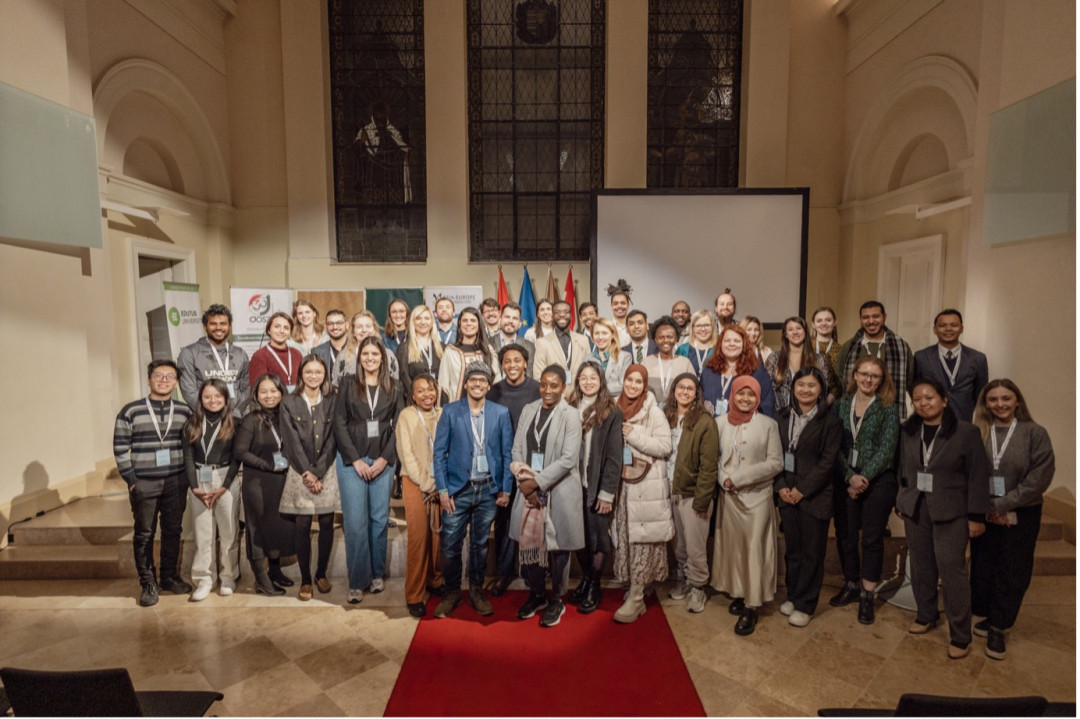
On the 18th of November, the Association of Hungarian PhD and DLA Students (DOSZ) marked its 30-year anniversary with an international conference on ‘Academic Competitiveness: The Future of European Higher Education, Research and Development’, held in the beautiful buildings of the Ludovika University of Public Service in Budapest. YAE’s Chair, Scott Bremer and Outgoing Chair, Katalin Solymosi were both invited to attend to take part in panels and lead group discussions, alongside members from partner organisations, such as the Marie Curie Alumni Association and Eurodoc.

The timing and the topic were poignant, at a moment when European science is pivoting toward a focus on competitiveness, and as science-policy stakeholders gathered in Budapest ahead of the World Science Forum. The conference opened with a set of engaging keynote talks from politicians and scientists on topics of techno-scientific innovation, which set the tone for the days discussion.

What distinguished this conference was how it sought to elevate the views of early-career researchers on Europe’s vision; what parts young scientists see that they play in this future. The conference was organised around taking up the different facets of these roles, on topics such as mental health (led by Scott Bremer), research diaspora, PhD quality assurance, or the organisation of research grants. The conference finished with a panel discussion including Katalin Solymosi, titled: ‘Early-Career Researchers as the Drivers of Change in the European Higher Education’.

Conferences such as this one are important meeting points for European science-policy stakeholders to meet, and it is laudable that this conference centred and elevate the early career perspective; something the YAE was excited to take part in.

Meet the board

At the AGM we elected a new 12-person board, and in mid-September the board had its first meeting, where members took on different roles. Below you can find the board and their role (and in brackets their research domain):
 
Chair: Scott Bremer (SH)
Vice-Chair: Anna Kuppuswamy (LS)
Outgoing Chair: Katalin Solymosi (LS)
Secretary: Marc Yeste (LS)
Treasurer: Wolfgang Tress (PE)
Selection Committee Chair: Emma Gordon (SH)
Selection Committee Vice-chair (PE): Nicoletta Liguori (PE)
Selection Committee Vice-chair (LS): Zohreh Hosseinzadeh (LS)
Communication Chair: Mona Simion (SH)
Communication Vice-chair: Borja Franco Llopis (SH)
Recruitment Chair: Emilian Mihailov (SH)
Activity Chair: Philippa Warren (LS)
 
Please feel free to reach out to our board members if you have any questions or input, whether its an idea for an activity/event, or something you think we should communicate to our members. Either contact us directly, or collectively at board@yacadeuro.org.

Andics

Affiliation:  University of Budapest

Keywords: Voice and speech perception, language evolution, comparative cognitive neuroscience, dog, EEG, fMRI

Webpage

Orcid identifier

Full profile: After obtaining master’s degrees in cognitive neuroscience, psychology, mathematics and teaching, Andics pursued a PhD on voice neurocognition in the Max Planck Institute for Psycholinguistics, Nijmegen. He joined the ELTE Department of Ethology, Budapest in 2012 to play a central role in laying the foundations for dog brain imaging. His ERC-funded research group (Neuroethology of Communication Lab) takes a comparative perspective, combining ethological, psycholinguistic and cognitive neuroscientific methods to investigate the evolution of the neural mechanisms underlying voice and speech perception in dogs, pigs and humans.

Nawrotek

Affiliation:  Warsaw University of Technology

Keywords: Biomedical engineering, tissue engineering, regenerative medicine, (bio)polymers, drug delivery, 3D bioprinting, neuroscience, epigenetics

Webpage

Orcid identifier

Full profile: Katarzyna currently holds the position of assistant professor at the Centre for Advanced Materials and Technology (CEZAMAT) at the Warsaw University of Technology in Poland. She obtained her doctoral degree and habilitation in chemical engineering from the Lodz University of Technology in Poland in 2014 and 2022, respectively.

Katarzyna’s research is dedicated to exploring cutting-edge technologies and materials for nerve tissue engineering. Our research primarily involves the design and fabrication of devices for manufacturing personalized medicine materials and the development of complex structures that mimic the natural cell-supporting environment of tissues in need of replacement. Additionally, we focus on creating devices and in vitro models to assess materials for nerve tissue engineering, with the potential to contribute to advancements in diagnostics, disease modeling, and drug discovery. Furthermore, our research examines how materials equipped with DNA-modifying enzymes may promote nerve cell regeneration by influencing epigenetic processes.

Katarzyna has led interdisciplinary research projects funded by Polish organizations such as the National Science Centre, the National Centre for Research and Development, and the Foundation for Polish Science. She has undertaken fellowships at Aix-Marseille Université in France, McGowan Institute for Regenerative Medicine in the USA, University of Oslo in Norway, and University College London in the UK. Katarzyna has been recognized with national and international awards, including the MIT Technology Review’s Innovators Under 35 and the World Intellectual Property Organization award for the best female inventor, along with accolades from the Polish Chitin Society and the Minister of Science and Higher Education.

Throughout her career, Katarzyna has been actively involved in various non-profit activities aimed at supporting young scholars interested in STEM fields.