5th ERC Starting Grant mentoring event of the Young Academy of Europe and Academia Europaea Budapest Knowledge Hub – Focus on the Oral Interview Process

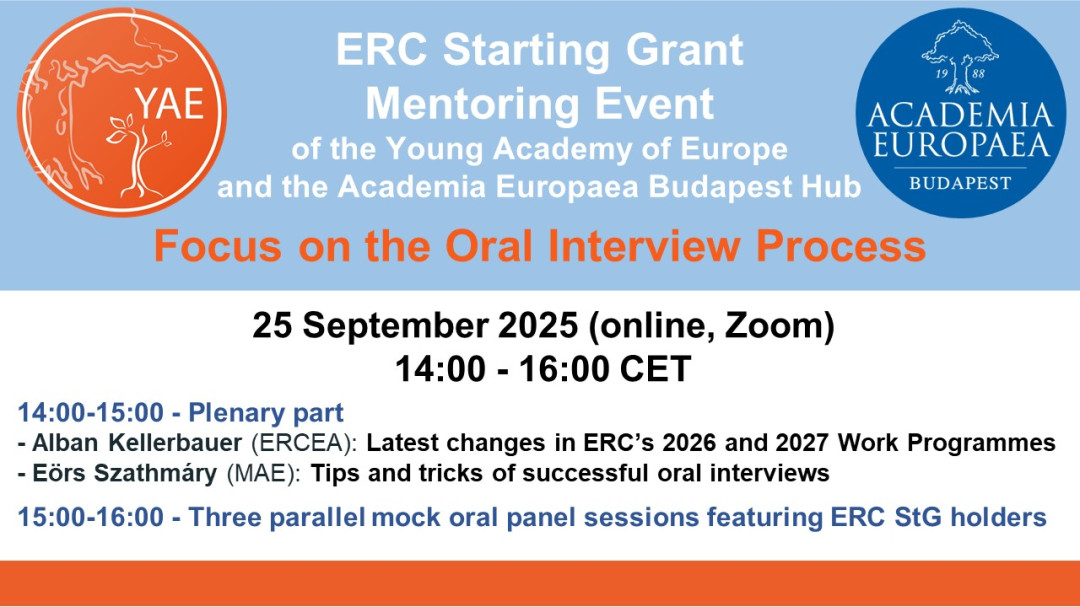
On September 25, 2025, from 14:00 to 16:00 CET, the Young Academy of Europe (YAE), in collaboration with the Academia Europaea (AE) Budapest Knowledge Hub, hosted an online event on Zoom for researchers worldwide who are interested in applying for the next round of the European Research Council’s (ERC) Starting Grant (StG). One of the main goals of this event series is to promote wider participation among researchers from EU13, Associated Countries as well as outside of Europe.

The online event consisted of two parts. First, a plenary information session was held with welcoming remarks from Katalin Solymosi (Outgoing Chair, YAE and Vice Academic Director, AE Budapest Hub) followed by a presentation from Alban Kellerbauer (FYAE, MAE, Head of Unit ‘Support to the Scientific Council’, ERC Executive Agency) about the latest changes in ERC’s 2026 and 2027 Work Programmes. The presentation was followed by a Q&A session moderated by Anna Kuppuswamy (YAE Vice-Chair). Finally, in a prerecorded pitch, Eörs Szathmáry (MAE, ERC Advanced and Synergy Grant Holder, former ERC Advanced Panel member and Synergy Panel Vice-President, Parmenides Foundation, Eötvös Loránd University) provided useful tips and insights for ERC oral interviews.

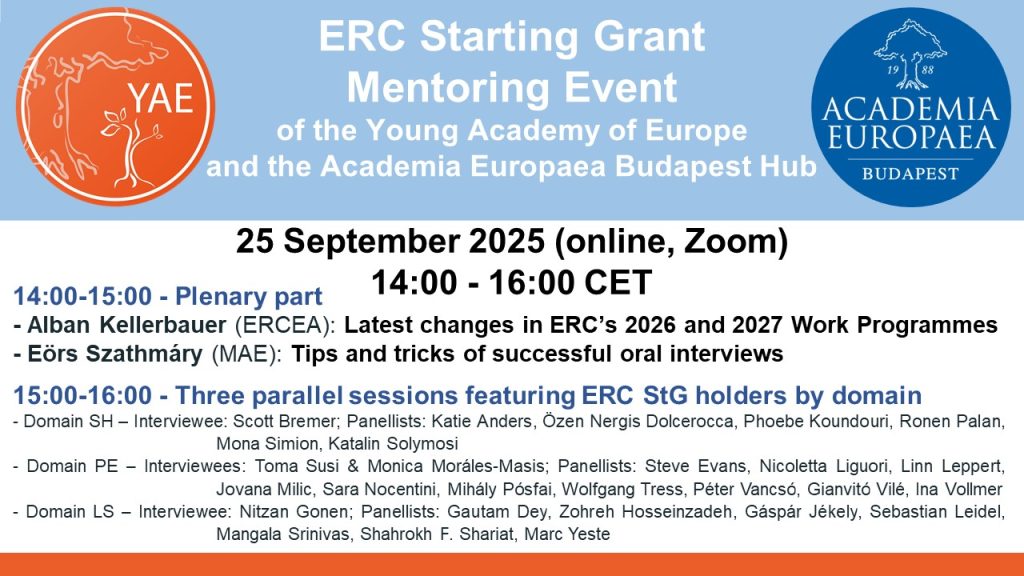
The second part of the event focused on providing insights into how oral interview panels work and how interviewees should present their project and answer questions from the evaluation panel. Although these were only mock interviews and panels, we believe that they offered an important opportunity for applicants to gain key insights into what makes a successful ERC application and a better understanding of the evaluation process. We had three parallel sessions by domain, featuring as interviewees YAE members who have received an ERC StG, and expert panel members with relevant expertise in oral interview evaluation.

Programme

Plenary session (14:00-15:00 CET)

14:00-14:05 Opening (Katalin Solymosi, YAE and AE Budapest Hub)

14:05-14:30 Information session, The European Research Council (ERC): Latest changes in ERC’s 2026 and 2027 Work Programmes (Alban Kellerbauer, ERCEA, FYAE, MAE)

14:30-14:45 Q & A

14:45-15:00 Tips and tricks of successful oral interviews (Eörs Szathmáry, MAE)

Moderator: Anna Kuppuswamy (YAE)

Parallel break-out sessions (15:00-16:00 CET)

1. Social Sciences and Humanities (SH) domain specific mock oral panel – interviewee: Scott Bremer (ERC StG obtained in 2018, panel SH2, Project title: CALENDARS – Co-production of seasonal representations for adaptive institutions). Panel members: Katie Anders (University of Bergen), Özen Nergis Dolcerocca (FYAE, University of Bologna), Phoebe Koundouri (MAE, Athens University of Economics and Business), Ronen Palan (City University London), Mona Simion (MAE, FYAE, University of Glasgow), Katalin Solymosi (FYAE, Eötvös Loránd University).

2. Life Sciences (LS) domain interviewee: Nitzan Gonen (ERC StG obtained in 2021, panel LS2, Project title: ENHANCE-SEX – Deciphering Gene Regulatory Networks governing Mammalian Sex Determination). Panel members: Gautam Dey (FYAE, EMBL), Zohreh Hosseinzadeh (FYAE, Radboud University Medical Center), Gáspár Jékely (MAE, COS Heidelberg University), Sebastian Leidel (MAE, FYAE, University of Bern), Mangala Srinivas (FYAE, Wageningen University and Research), Shahrokh F. Shariat (MAE, Medical University of Vienna), Marc Yeste (FYAE, University of Girona).

3. Physical Sciences and Engineering (PE) domain interviewees: Toma Susi (ERC StG obtained in 2017, panel PE5, Project title: ATMEN – Atomic precision materials engineering) and Monica Morales-Masis (ERC StG obtained in 2019, panel PE8, Project title: CREATE – Crafting Complex Hybrid Materials for Sustainable Energy Conversion). Panel members: Steve Evans (MAE, University of Cambridge), Nicoletta Liguori (FYAE, IFCO), Linn Leppert (FYAE, University of Twente), Jovana Milic (FYAE, University of Turku), Sara Nocentini (FYAE, LENS), Mihály Pósfai (MAE, University of Pannonia), Wolfgang Tress (FYAE, Zurich University of Applied Sciences), Péter Vancsó (Centre for Energy Research, HUN-REN), Gianvito Vilé (FYAE, Polytechnic University of Milan), Ina Vollmer (Utrecht University).

The video recording of the plenary part of the event is available here, while the videos of the mock oral interview breakout sessions are available on the links below: SH mock oral interview panel, LS mock oral interview panel, PE mock oral interview panel.
We are grateful to all our members and alumni as well as the external experts involved in the panels (as moderators, interviewees or panelists) who made this well attended event happen. The event was organized by Katalin Solymosi (YAE and AE Budapest Hub) with help from the YAE Board, and the AE Budapest Hub (Katalin Borvölgyi and Nóra Deák).

Registration was open on this link. This was the text we shared with participants who registered to the event. “By registering for this event, you agree to the session being recorded on Zoom. Please note that we do not send separate registration confirmations, but the Zoom link will be emailed to registered participants a few days before the event. The registration form collects your data solely to manage attendance for the webinar. By registering, you consent to YAE’s Privacy Policy and Data Protection Policy as described here.

YAE panel at the 2nd Hamburg Science Summit

After the successful panel discussion on the prospects of academic careers in Europe organized by YAE at the 1st Hamburg Science Summit in 2024, we had been solicited again to organize a roundtable discussion this year on the 18 September, at the 2nd Hamburg Science Summit dedicated to “Europe’s Innovation Challenge”.

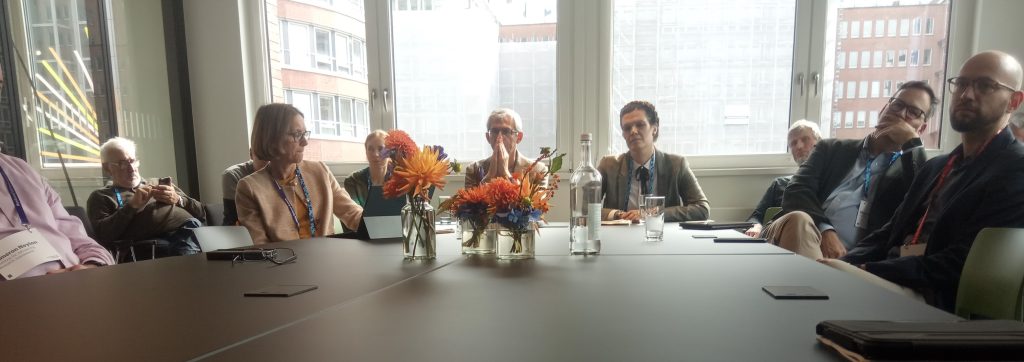
Alison Noble, Oleg Ruchayskiy and Anna Fabijańska at the roundtable discussion

The YAE panel entitled “Science by AI: Promise or threat?” was organized and moderated by Katalin Solymosi (Outgoing Chair, YAE), and featured Philip Campbell (Former Editor-in-Chief, Springer Nature), Anna Fabijańska (Co-Chair, SAPEA Working Group AI in Science), Alison Noble (Vice President and Chair AI Working Group, Royal Society) and Oleg Ruchayskiy (CEO, Prophy AI).

A roundable discussion hosted by the Max Planck Society entitled ‘Scientific policy advice: Between policy relevance and scientific independence‘ featured former YAE Chair, and former Chair of the Group of Chief Scientific Advisors to the European Commission, Nicole Grobert as panellist.

This year’s event featured among others prestigious speakers of the European science policy landscape like Manuel Heitor (Chair, EU Horizon Expert Group), Maria Leptin (President, ERC) and Robbert Dijkgraaf (President elect, ISC). On 19 September, the Körber European Research Prize was handed over. For further details and registration to the event please check the homepage of the event. Videos of the plenary sessions are available here.

Member talk series: 3 July 2025 – 13-14 CET

Speaking Minds: Detecting Neurological Disorders through Language

The aim of these webinars is for our membership to share what they are working on, and for YAE discussants to open a dialogue on the interdisciplinary potential of this work. Following a successful webinar in late April, the next event is the 3rd of July from 13.00-14.00 CET:

Speaking Minds: Detecting Neurological Disorders through Language

The discussion focuses on how language features, decoded through machine learning, can become powerful biomarkers for neurological disorders. We spotlight cutting-edge trends and suggest future research synergies poised to revolutionize early, non-invasive diagnosis, unlocking new frontiers in detecting brain health through language.

Speaker: Georgios Georgiou – Georgiou – Young Academy of Europe

Discussant 1: Valantis Fyndanis – Fyndanis – Young Academy of Europe
Discussant 2: Ioana Podina – Podina – Young Academy of Europe
Discussant 3: Kevin Tang – Tang – Young Academy of Europe

Please sign up via here (link will be active from Saturday 14 June)

YAE member conversations – 29 April 14.30-15.30

Some of the most innovative and groundbreaking ideas come from collaborative efforts across disciplines. We at the YAE are a unique group of individuals from wide ranging disciplines, in our most scientifically productive phase of our careers, and potentially at a stage when we are actively seeking to look beyond the boundaries of our own niches. To harness this potential, this year’s member talk series has taken the form of ‘conversations’ between scientists to explore new avenues of collaborative thinking.

The first of this series showcases 2 such conversations. Please join us on the 29th April 2025 14.30 to 15.30 CET. Register Here:

Drs Gianvito Vile, Chao Zhang and Wolfgang Tress will be “Rethinking Chemical Manufacturing with Atomically-Precise Materials“. This conversation will explore into how atomically-precise materials, such as single-atom catalysts and well-defined nanostructures, are enabling a new era in chemical manufacturing. The talk will highlight breakthroughs in selectivity, sustainability, and process integration, with broader implications for sustainable industry and society.

Drs Jan De Graaf, Emilian Mihailov and Scott Bremer will be discussing “Golden Age Lost? Social Mobility and Democracy in Contemporary Europe”. This conversation starts from social cohesion and democratic participation in contemporary European history, and ambitions to knit closer ties between Eastern and Western Europe. The three will explore shifting notions of democracy in Europe in relation to, among other things, grand societal challenges, freedoms, and how social life is organised in time.

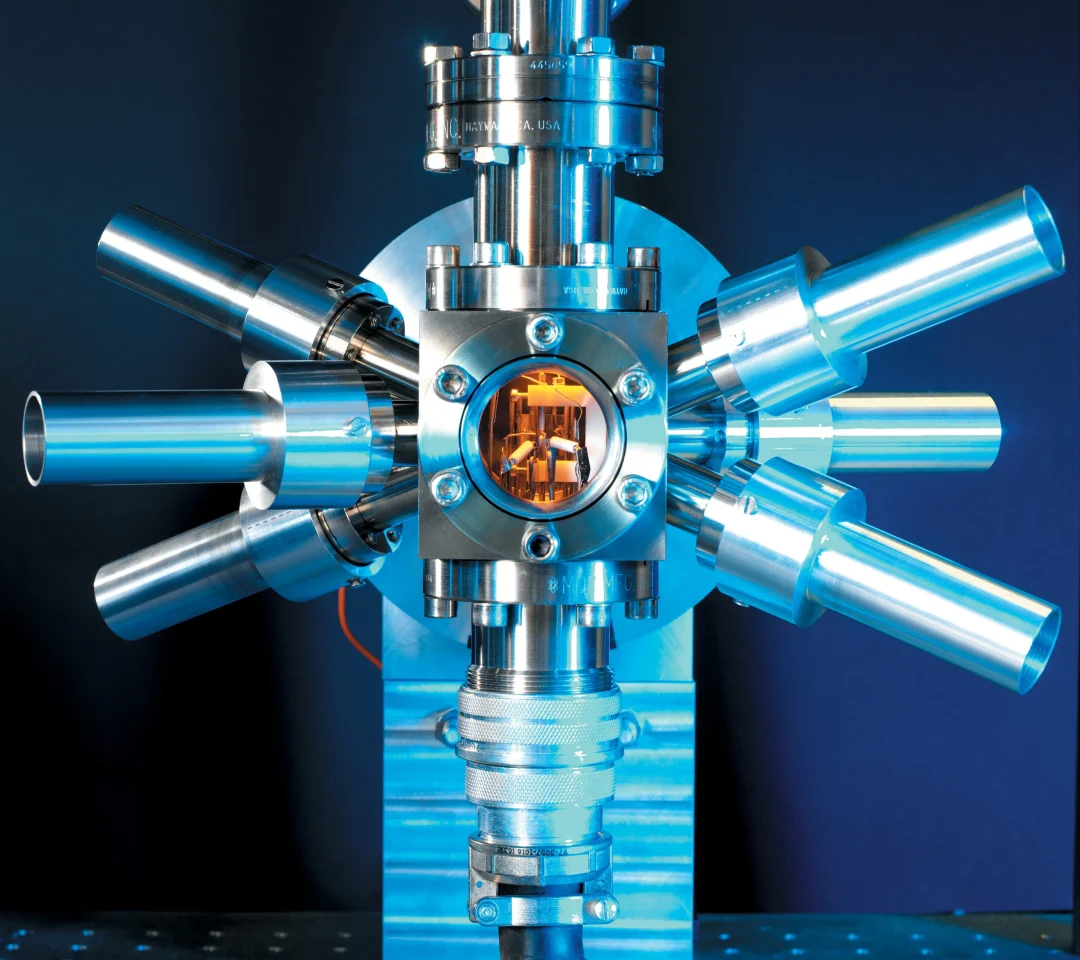
(Image: Atomic clock – Andrew Brookes, National Physical Laboratory/SPL)

Art & Science exhibition at BB2024

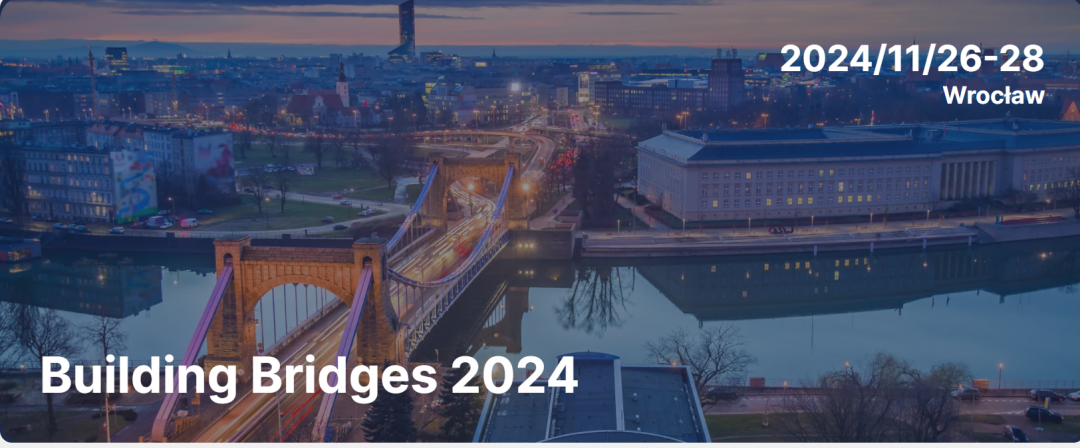
In June 2024 we launched a call for members announced by the Academia Europaea, the Academia Iuvenum of the Wroclaw University of Science and Technology and the Young Academy of Europe to co-create a unique Art & Science exhibition at the Building Bridges 2024 Conference in Wroclaw, on the 26-28th of November 2024.

Nowadays, art and science are considered divergent realms and often portrayed as polar opposites. While science seeks to unravel the mysteries of the universe through empirical observation and logical deduction, arts explore the depths of human experience through creativity and imagination. Despite their different methodologies, both disciplines are driven by curiosity and a desire to make sense of the world. In science communication, very often, a dynamic interplay between arts and science is present, where they enrich each other in a reciprocal relationship of inspiration and innovation. Arts have the ability to simplify complex concepts, evoke emotion, inspire curiosity, and transcend cultural barriers. Thus, by harnessing the communicative potential of visual arts, researchers and educators can engage and empower lay audiences to explore and more deeply appreciate the beauty of the natural world and the complexity of science.

This arts and science exhibition aims to showcase and, at the same time, embrace the diverse Art & Science-related activities of the members of Academia Europaea, the Young Academy of Europe, and the Academia Iuvenum of the Wroclaw.Tech.

In this open call, we asked all Academia Europaea, Young Academy of Europe and Academia Iuvenum members to submit maximum three of their high-resolution Art & Science related images. Along with the submission, authors should provide the title of the image(s) and a short description of each of their works (max. 2-3 sentences, 500 characters with spaces, including the scientific ‘story’ behind the given image and the used microscopic technique) to Arts&Science2024@yacadeuro.org before the 10th of October 2024. Due to the limited exhibition space, we will not consider other types of artistic representations this time, so please do not send drawings, graphical abstracts or illustrations. Please note that the submission of the images means that the submitting author holds the necessary copyrights or authorization to publish those images and is consenting to the transfer of those rights (i.e., to the use of those images, with proper credit to the author, by the organizers of the BB2024 Conference for this exhibition).

A jury of members of the Organizing Committee of the Building Bridges 2024 Conference and of the participating academies will then select the final images to be showcased in Wroclaw based on criteria of scientific and artistic excellence and diversity. Selected images will be printed and exhibited on poster stands at the conference venue and showcased on digital screens available at the venue throughout the conference.

Organizers:

Katalin Solymosi (YAE, biologist, ELTE Eötvös Loránd University, Hungary, https://katalinsolymosi.elte.hu)

Bernardo Cesare (MAE, geologist, University of Padova, Italy, https://microckscopica.altervista.org/en/)

Slawomir Czarnecki and Anna Dzimitrowicz (Academia Iuvenum of the Wroclaw.Tech)

For a brief summary of the event see here. The final list of exhibiting artists was the following:

Margarida Araujo (EMBL)
Dominika Benkowska-Biernacka (WroclawTech)
Bernardo Cesare (AE – University of Padova)
Gautam Dey
(YAE – EMBL)
Nitzan Gonen
(YAE – Bar-Ilan University)
Olga Kaczmarczyk
(WroclawTech)
Aleksandra Królicka (AIM – WroclawTech)
Katalin Solymosi
(YAE – Eötvös Loránd University)
Weronika Urbanska
(AIM – WroclawTech)
Andrzej Zak
(AIM – WroclawTech)

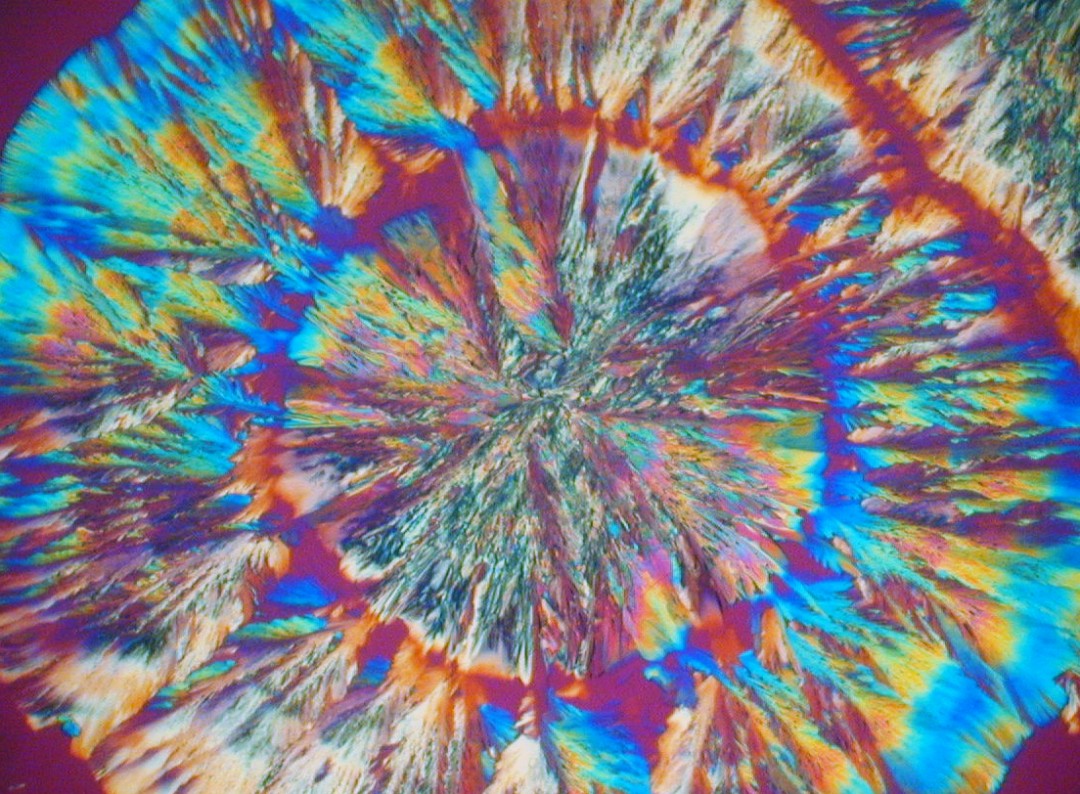
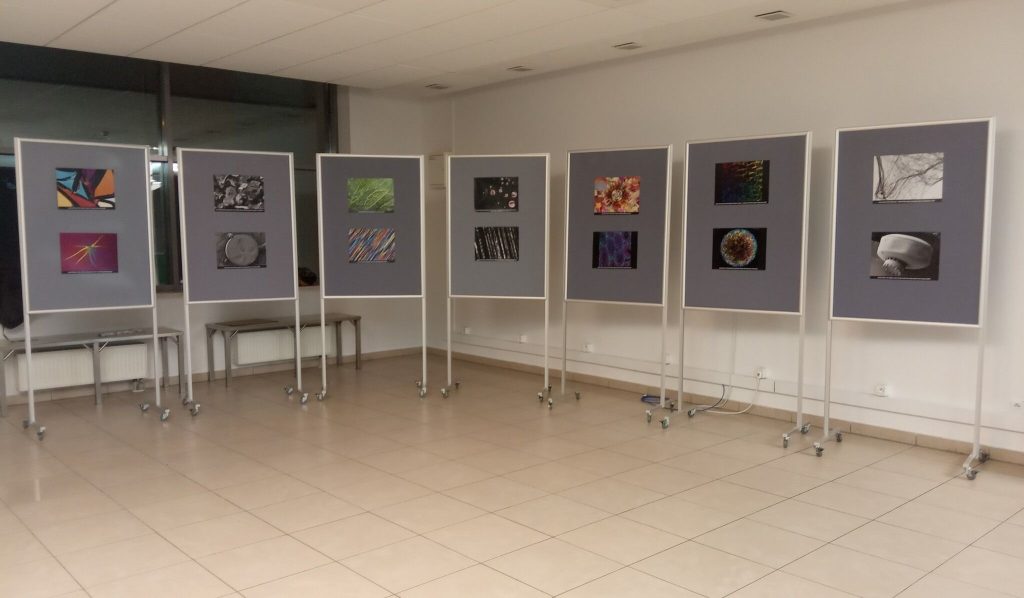
Selected microscopic images of the Art&Science exhibition at the Building Bridges 2024 Conference in Wroclaw at the conference venue

For considerations of sustainability, only few images of the participants were printed out and displayed in poster stands at the venue, other selected images were displayed in this video on YAE’s YouTube channel for science outreach purposes. The video was added to the playlist featuring YAE’s previous Art&Science webinar series.

YAE participated in four side events at the World Science Forum 2024 and contributed to its final statement

During summer 2024, Katalin Solymosi (as Chair of the Young Academy of Europe, YAE) along with the leaders of the Marie Curie Alumni Association (MCAA), the European Council of Doctoral Candidates and Junior Researchers (Eurodoc) and the International Consortium of Research Staff Associations (ICoRSA) prepared two side event propositions for the World Science Forum 2024 (WSF2024), which took place between 19-23 November, 2024 in Budapest (Hungary).

The first side event, titled “Engaging Researchers and Researcher Associations in Science Advice, Diplomacy, and Science for Peace” took place on November 19 from 14:00 to 15:30 CET at the Reading Room, Hungarian Academy of Sciences. The event was dedicated to discussions and a keynote lecture by Stella Reschke (Secretariat of the EU Science Diplomacy Alliance) about the involvement of young researchers and research staff organizations in science diplomacy and science advice. It featured, among others, Scott Bremer (YAE Chair) as speaker and Katalin Solymosi (Outgoing Chair) as rapporteur. The detailed programme of the event is available on this homepage of the WSF2024 and here.

Organizers, rapporteurs, moderator and speakers of the WSF2024 science diplomacy related side event of Eurodoc, MCAA, ICORSA and YAE (on the picture from left to right): Norbert Bencze, Hannah Schoch, Katalin Solymosi, Pil Maria Saugmann, Mostafa Moonir Shawrav, Rosarii Griffin, Stella Reschke, Irene Castellano Pellicena and Scott Bremer

The second side event co-hosted with the above organizations was titled “How to Make Academic Careers Attractive and Sustainable” and was held on 20 November, from 14:00 to 15:30 CET at the Ceremonial Hall of Pesti Vigadó. The event was moderated by Rosarii Griffin (ICoRSA), with panelists Slaven Misljencevic (Policy Officer, European Commission), Carl Vannetelbosch (Policy Officer, UNESCO), Nicola Dengo (Vice-President, Eurodoc), Katalin Solymosi (Outgoing Chair, YAE) and Gian Maria Greco (Chair of the MCAA). Moderators of the discussion included Pil Maria Saugmann (President of Eurodoc), Philippa Warren (Activities Chair, Young Academy of Europe) and Mostafa Moonir Shawrav (MCAA). Hannah Schoch (Secretary and board member, Eurodoc), Norbert Bencze (General Board Member, Eurodoc), Pavlo Bazilinskyy (Treasurer, MCAA), and Sal Music (ICORSA) were rapporteurs and moderators facilitating the discussion. One of the main take-home-messages of the event was that early to mid-career researchers would like to have their seats and their voices heard at all tables where important decisions on the future of European and global R&I are taken. The video of the event is available here, its detailed description is featured on the WSF2024 website and here.

Moderator and panelists of the Eurodoc, MCAA, ICORSA and YAE WSF2024 side event related to academic careers (on the picture from left to right): Rosarii Griffin, Gian Maria Greco, Katalin Solymosi, Nicola Dengo, Carl Vannetelbosch and Slaven Misljencevic

In the morning of November 19, Katalin Solymosi (Outgoing Chair of YAE) took part as panelist and speaker on the 16th High Level workshop of Science Europe, in a panel entitled “Reducing R&I disparities in Europe: best practices to promote the freedom and excellence of research in Europe“, where she gave some insights to the topic from early to mid-career researchers from EU13 countries. This workshop was also a side event of the WSF2024 (for details see here and here) also organized in line with the Hungarian EU Presidency. A detailed report of the event is available here.

Participants of the 16th High Level Workshop of Science Europe on the European Research Area

On 20 November 2024, between 9:00-10:30 in the Makovecz Hall of Pesti Vigadó, Katalin Solymosi (Outgoing Chair of YAE, founding member and previous co-chair of the Hungarian Young Academy) and Pil Maria Saugmann (President of Eurodoc) featured as panelists in a side event at the WSF2024 in Budapest, organized by ALLEA (The European Federation of Academies of Sciences and Humanities), the Coalition for Advancing Research Assessment (CoARA) and the HUN-REN. The title of the side event was “Rethinking Research Assessment to Shape Innovative, Inclusive, and Impactful Science in Europe”. Other panelists were Andrea Balla (Hungarian Academy of Sciences), Natalia Manola (OpenAIRE AMKE) and Tung Tung Chan (Erasmus University Rotterdam), and the event was moderated by Erzsébet Tóth-Czifra (CoARA). The video of the event is available here, and its description can be found on the WSF2024 homepage as well as here.

Moderator and panelists of the World Science Forum side event dedicated to rethinking research assessment (on the picture from left to right): Tung Tung Chan, Natalia Manola, Katalin Solymosi, Pil Maria Saugmann, Erzsébet Tóth-Czifra and Andrea Balla.

Participants of the side events took part in other panels of the Forum, and the four collaborating organizations (Eurodoc, ICoRSA, MCAA and YAE) also contributed to the drafting of the declaration of the WSF2024. It was our proposition to add a sentence to the final declaration about the importance of involving early-career researchers in science policy.

YAE AGM in Strasbourg

The 13th Annual General Meeting (AGM) of the Young Academy of Europe (YAE) was held between 26-27 August 2024, in Strasbourg. The detailed programme of the event is available here. The event was hosted by Selection Committee Chair, Artur Ciesielski at I.S.I.S.

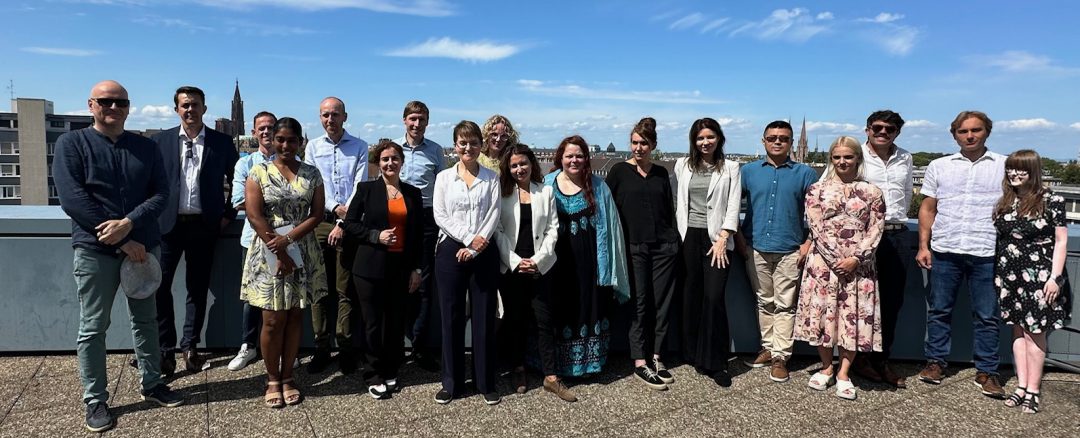
Participants of the 2024 AGM of YAE in Strasbourg

On the first day of the event, Katalin Solymosi as YAE Chair summarized YAE’s activities since the previous AGM, whilst Linn Leppert as YAE Treasurer provided the financial report for the previous year. These were followed by a talk given by the president of Academia Europaea, Prof. Marja Makarow who presented the activities and the future strategy of the organization. Then Katalin Solymosi welcomed the new YAE members elected since the last AGM and handed them over the membership certificates prepared by Philippa Warren (Membership Chair).

After a coffee break, Marc Yeste (Secretary) moderated the elections: a new Chair (only candidate, Scott Bremer), a new Vice-Chair (only candidate, Anna Kuppuswamy) and 6 newly elected Board members (out of 12 candidates) had to be elected. The composition of the new Board is available here. The AGM also voted on changes in the bylaws proposed by the Board. The votes were followed by a section dedicated to Art&Science with Eamon O’Kane as speaker, and then the voting results were announced.

On the second day of the AGM, participants first listened to research talks by selected new members. A discussion in two sessions followed about YAE’s communication strategy and science-policy related work, moderated by Katalin Solymosi.

In the afternoon of the second day, Artur Ciesielski led and moderated an emphatetic leadership workshop for the participants.

Building Bridges 2024 Conference of Academia Europaea and the Young Academy of Europe

Between 26-28 November 2024, the 35th Annual Conference of Academia Europaea and Conference of the Young Academy of Europe called Building Bridges Conference (BB2024) will be organized in Wroclaw. The detailed programme and the link for registration for the event are available here. This post advertises the event, a detailed report published after the Conference is available here.

The event will feature among others the handing over of the 2024 André Mischke Young Academy of Europe Prize for Science and Policy to Jacek Kolanowski and his talk, and Edyta Roszko (FYAE) as speaker. On the 26th of November, the YAE will have its own programme with several panels and sessions. In addition, we are inviting all of our members, as well as members of the Academia Europaea and the Academia Iuvenum (of the Wroclaw University of Science and Technology) to join us in the co-creation of a unique Art & Science exhibition, by submitting their high-resolution Art & Science related images for being exhibited in Wroclaw in the venue of BB2024, with a submission deadline on 15 September. For more details about the initiative see here. We are looking forward to seeing you there!

Tentative programme of the YAE:

26th November

9:00 12:00Conference of the Young Academy of Europe

9:00 9:30 Registration, networking

9:30 – 10:00 Presentation of YAE’s latest activities and collaborations, the Art & Science initiative – Katalin Solymosi (Chair, Young Academy of Europe)

10:00 11:00 Scientific talks by YAE members

10:00 – 10:20: Borja Franco Llopis (SH): Museums and alterity. The construction of the other in the museum discourses of the 21st century

10:20 – 10:40: Philippa Warren (LS): Drawing breath after spinal cord injury

10:40 – 11:00: Alejandro Criado (PE): Chemical innovations in graphene for enhanced FET biosensor diagnostics

Moderator: Anna Kuppuswamy (Selection Committee Vice-Chair, Young Academy of Europe)

11:00 12:00 Future directions for the Young Academy of Europe – Moderator: Marc Yeste (Secretary, Young Academy of Europe)

12:00 13:00 Lunch

Young Academy of Europe and Academia Iuvenum panel at Building Bridges 2024, 26th November, Wroclaw

13:00 15:30 State-of the art of early- to mid-career researchers’ organisations in Europe

13:00 – 13:20: Slawomir Czarnecki (Chair, Academia Iuvenum): Presenting the exemplary development program, Academia Iuvenum (AIM) at the University of Wroclaw

13:20– 13:40: Maciej Sałaga (Chair, Polish Young Academy): Polish approach of investing in early career researchers

13:40– 14:00: Katalin Solymosi (Chair, Young Academy of Europe): The mission and activities of the Young Academy of Europe

14:00 – 15:30 Panel about the different early- to mid-career research organisations in Europe and Q&A Session

Panellists:

Steve Evans – Academia Europaea (AE)

Slawomir Czarnecki and the future vice-chair or chair of AIM (to be determined in October) – Academia Iuvenum of WroclawTech (AIM)

Maciej Sałaga, Łukasz Sadowski, Jacek Kolanowski – Polish Young Academy (AMU PAN)

Katalin Solymosi, Anna Dzimitrowicz – Young Academy of Europe (YAE)

Abstract:

Over the past 23 years, there has been a notable increase in the establishment of national young academies and similar entities, which are now spanning at least 68 countries. Additionally, there are 4 international young academies, like the Global Young Academy and the Young Academy of Europe (YAE), with memberships crossing national boundaries. The value of launching these organizations and understanding their roles has become increasingly recognized. On the other side, surveys among early- and mid-career researchers (EMCRs) frequently reveal feelings of exclusion from strategic decisions not only at the national or global level, but also and especially within their institutions or departments. In regions lacking robust traditions of trade unions, institutional or university young academies can empower EMCRs to advocate for themselves. These entities play diverse roles, fostering networking among EMCRs, providing mentorship and engaging in science outreach, as well as enhancing the reputation and public image of their respective institutions. During this event, representatives of an institutional young academy (Academia Iuvenum of the Wroclaw University of Science and Technology), a national young academy (Polish Young Academy) and of a regional young academy (Young Academy of Europe) as well as a senior regional academy (Academia Europaea), will explore best practices of these organizations, and discuss timely issues related to the young academy ‘movement’ within Europe and globally.

The YAE at the Hamburg Science Summit 2024

Katalin Solymosi as the Chair of the Young Academy of Europe (YAE) was invited to organize and host a panel at the inaugural Hamburg Science Summit 2024, to be held on 19 September, 2024. The event organized by the Körber-Stiftung and the Ministry of Science in Hamburg was dedicated to Europe’s technological sovereignty, and concluded with the presentation of the highly prestigious Körber European Science Prize on 20 September 2024 to Erin Schuman. For the detailed programme and further details see here.

The Hamburg Science Summit brought together experts and decision-makers from science, politics, business, and think-tanks from across Europe. Driven by the vision of a competitive and self-confident Europe, it aimed to strengthen Europe’s position as a hub for science and innovation. This year’s Summit focused on Europe’s technological sovereignty. Key questions discussed included: How can Europe remain competitive in crucial fields such as AI, energy, or medical technologies? In which fields of technology, if any, should Europe strive for scientific and market leadership? What kind of financial and political conditions are needed to promote Europe’s technological sovereignty? Researchers, policy experts, innovators and representatives of institutions were invited to participate.

Participants of the panel hosted by the YAE at the Hamburg Science Summit (Photo: Virág Vas)

The panel hosted by YAE was entitled “Embarking on a PhD and an academic career in Europe – What are the prospects?“. A diverse set of panellists was chosen to represent all career stages – from doctoral candidates and postdoctoral researchers to young principal investigators and senior high-profile researchers involved also in the work of funding agencies – and related researcher associations (e.g. Eurodoc, MCAA, YAE and Academia Europaea as well as the European Research Council).

The panellists – Katalin Solymosi (Chair, Young Academy of Europe), Eystein Jansen (Vice-President, European Research Council, Academia Europaea), Nadine Ritter (University of Copenhagen), Farah Islam (Board Member, Marie Curie Alumni Association) and Karl Kilbo Edlund (Board Member, European Council of Doctoral Candidates and Junior Researchers) – discussed the following questions important for the situation of the future generations of the European academic landscape under the current global challenges: How attractive are doctoral training and research careers in Europe for the X, Y and Z generations? What initiatives can we take to attract and retain the best talents in Europe? How can we improve doctoral training and career prospects to overcome issues such as precarity, the unidirectional brain-drain within Europe, the relatively low salaries, and the constant publish or perish competition leading to poor mental health in academia?

Panelists of the YAE hosted session at the Hamburg Science Summit: Eystein Jansen, Farah Islam, Nadine Ritter, Katalin Solymosi and Karl Kilbo Edlund. (Photo: Nicola Spaldin)

Consultation on YAE’s strategic goals and changes in the YAE bylaws

Similarly to our January membership consultation on the Young Academy of Europe’s (YAE) science policy work, in July we plan to have another consultation dedicated to discussions about YAE’s priorities, as well as a few suggested changes in its bylaws to be voted on during our AGM in Strasbourg.

In recent years, YAE has been involved in a large number of various international collaborations and projects (COARA, YASAS, cooperation with Academia Europaea, the Initiative of Science in Europe, the European Network of Young Academies, the International Science Council, Eurodoc, MCAA, ICoRSA, etc.). Given the lack of administrative support for YAE, housekeeping tasks and these initiatives have taken up much of our members’ and the board’s engagement.  Thus, although they contributed to several of YAE’s missions, like advocating for early- to mid-career researchers and involvement in science advice for policy, they also hindered the development of a unique strategic mission or agenda of YAE.

On the 10th of July, 14:00-16:00 (CEST), we plan to have another membership consultation webinar on which we would like to discuss with our members YAE’s future priorities and goals and also explore a few propositions of the Board related to changes of our bylaws.For the latter, the Board would like to suggest some updates and modifications in the nomination procedure to better adhere to CoARA principles and to increase equity, diversity and inclusion. We would like to hear the opinions of our members and involve them in the discussion about these changes in the bylaws.​ At the same time, the event might be useful for members wanting to be better engaged with YAE or the future YAE Board to discuss these topics.

In order to plan and run a secure event, please notify the YAE board at the following email address if you are interested in attending (and we will send you a zoom link closer to the time): event_registration@yacadeuro.org.