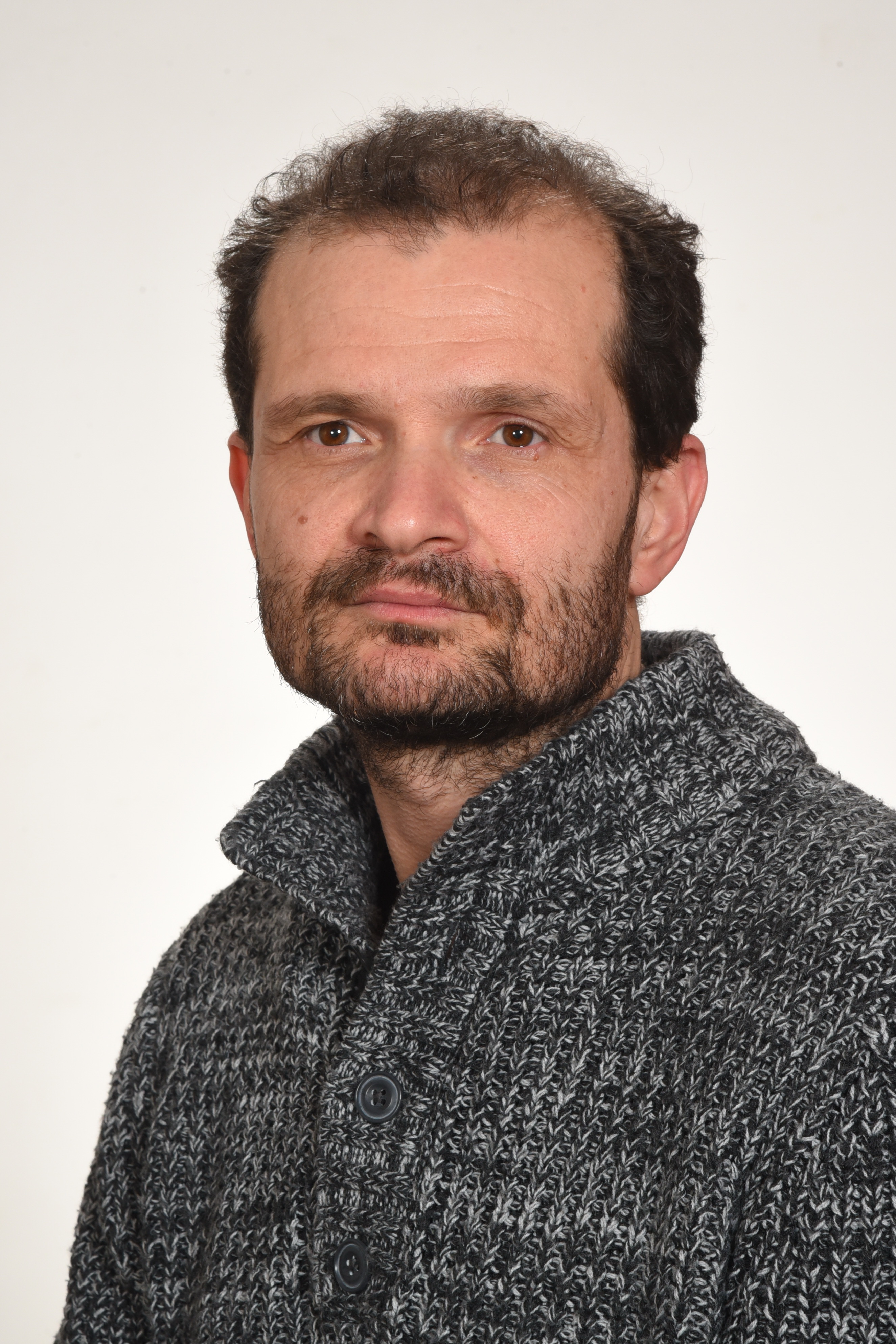
Guillen i Fabregas


Affiliation: Universitat Pompeu Fabra, Barcelona, ES


Keywords:

 

Webpage


Full profile:

Albert Guillén i Fàbregas was born in Barcelona in 1974. In 1999 he received the Telecommunication Engineering Degree and the Electronics Engineering Degree from Universitat Politècnica de Catalunya and Politecnico di Torino, respectively, and the Ph.D. in Communication Systems from Ecole Polytechnique Fédérale de Lausanne (EPFL) in 2004.

Since 2011 he has been a Research Professor of the Institució Catalana de Recerca i Estudis Avançats (ICREA) at the Department of Information and Communication TechnologiesUniversitat Pompeu Fabra. He is also an Adjunct Researcher at the Department of EngineeringUniversity of Cambridge, where he was a Reader and a Fellow of Trinity Hall. He has held appoinments at the New Jersey Institute of Technology, Telecom Italia, European Space Agency (ESA), Institut Eurécom, University of South Australia, as well as visiting appointments at Ecole Nationale des Télécommunications (Paris), Universitat Pompeu Fabra, University of South Australia, Centrum Wiskunde & Informatica and Texas A&M University in Qatar. His research interests are in information theory, coding theory and communication theory.
Geris

Liesbet Geris
Affiliation: University of Liège, BE


Keywords:


Webpage


Full profile:
Liesbet Geris (DOB 04.06.1979) is Professor in Biomechanics and Computational Tissue Engineering at the Department of Aerospace and Mechanical Engineering at the university of Liège and Associate Professor at the Department of Mechanical Engineering of the KU Leuven, Belgium. From the KU Leuven, she received her MSc degree in Mechanical Engineering in 2002 and her PhD degree in Engineering in 2007, both summa cum laude. In 2007 she worked as a postdoctoral researcher at the Centre of Mathematical Biology of Oxford University.
Her research interests encompass the mathematical modeling of bone regeneration during fracture healing, implant osseointegration and tissue engineering applications. The phenomena described in these mathematical models reach from the tissue level, over the cell level, down to the molecular level. She works in close collaboration with experimental and clinical researchers from the university hospitals Leuven, focusing on the development of mathematical models of impaired healing situations and the in silico design of novel treatment strategies. She is scientific coordinator of Prometheus, the skeletal tissue engineering division of the KU Leuven. Her research is financed by European, regional and university funding (up to date 3.5 M€ as PI and co-PI). In 2011 she was awarded an ERC starting grant to pursue her research.

Giardina

Irene Giardina
Affiliation: Istituto dei Sistemi Complessi, Roma, IT


Keywords:


Webpage


Full profile:

I am a theoretical physicist, with a background in Statistical Physics. I have been working for years on Disordered Systems and Glassy behaviour in Condensed Matter, and recently moved to Biology.
I am a member of the Department of Physics, Sapienza University and an associate member of the Institute for Complex Systems (ISC-Sapienza) of the National Research Council CNR.
The ISC-Sapienza unit is based in Rome, at the Department of Physics, Sapienza University, and at the nearby offices of ISC headquarters.
I am also associated to the The Complex System Group at the Department of Physics.

Gomez

Hector Gomez
Affiliation: University of A Coruña, ES


Keywords:


Webpage


Full profile:
We develop new modeling and computer-based simulation techniques to address a number of problems in engineering, physics and life sciences. Particular research interests include Computational Mechanics, Complex Fluids, Phase-field Methods, Biomechanics, Tumor-growth modeling, and Multiphase Flow.

Granek

Filip Granek
Affiliation: Wroclaw Research Centre EIT+, PL


Keywords:


Webpage


Full profile:

Greco

vincenzo greco
Affiliation: Istituto Nazionale di Fisica Nucleare, Sezione di Catania, IT


Keywords:


Webpage


Full profile:

Grobert

Nicole Grobert
Affiliation: University of Oxford, UK


Keywords: nanoparticles, nanotubes, nanorods, graphene, 2D nanomaterials


Webpage


Full profile:
Nicole Grobert’s Research Group focuses on the synthesis, processing, and characterisation of novel carbon and non-carbon based nanomaterials, including nanoparticles, nanotubes, nanorods, graphene and other 2D nanomaterials. Close collaboration with internationally leading industries enables us to develop multifunctional hierarchical nanostructures for their implementation in the health-care sectors and for their use in energy and structural applications.
Young Academy of Europe
Production routes for the controlled manufacturing of nanomaterials include chemical vapour deposition, template routes, arc discharge, and wet-chemical techniques. State-of-the-art in-situ characterisation plays a crucial role in order to elucidate the importance of individual growth parameters for the controlled formation and the study of structure properties relationships of these novel nanomaterials.

Gyürky


Affiliation: Institute of Nuclear Research of the Hungarian Academy of Sciences, Debrecen, HU


Keywords:


Webpage


Full profile:
A senior research fellow of the Institute of Nuclear Research (ATOMKI) in Debrecen, Hungary working mainly in the field of experimental nuclear astrophysics.

Hartnell

Jeff Hartnell
Affiliation: University of Sussex, Brighton, UK


Keywords:


Webpage


Full profile:

I am a member of faculty in the department of Physics and Astronomy. Originally I came to Sussex on a national STFC research fellowship at the end of 2007 and was appointed as Lecturer in 2008 followed by Reader in 2013. Before that I was a postdoctoral researcher at the UK’s Rutherford Appleton Laboratory, working there from 2005-2007. I studied for my DPhil (PhD) at the University of Oxford and obtained my undergraduate degree from the University of Nottingham.

In 2013 I was awarded the Institute of Physics HEPP Group Prize for my research into neutrinos. I currently hold a five year European Research Council grant “AntineutrinoNOvA” that funds my NOvA group and allows me to focus the large majority of my time on research. I am an elected member of the NOvA Executive Committee and a convenor of the muon (anti)neutrino disappearance analysis group.