Keywords: medical image computing, machine learning / artificial intelligence, health data science, musculoskeletal disorders, osteoarthritis, research translation
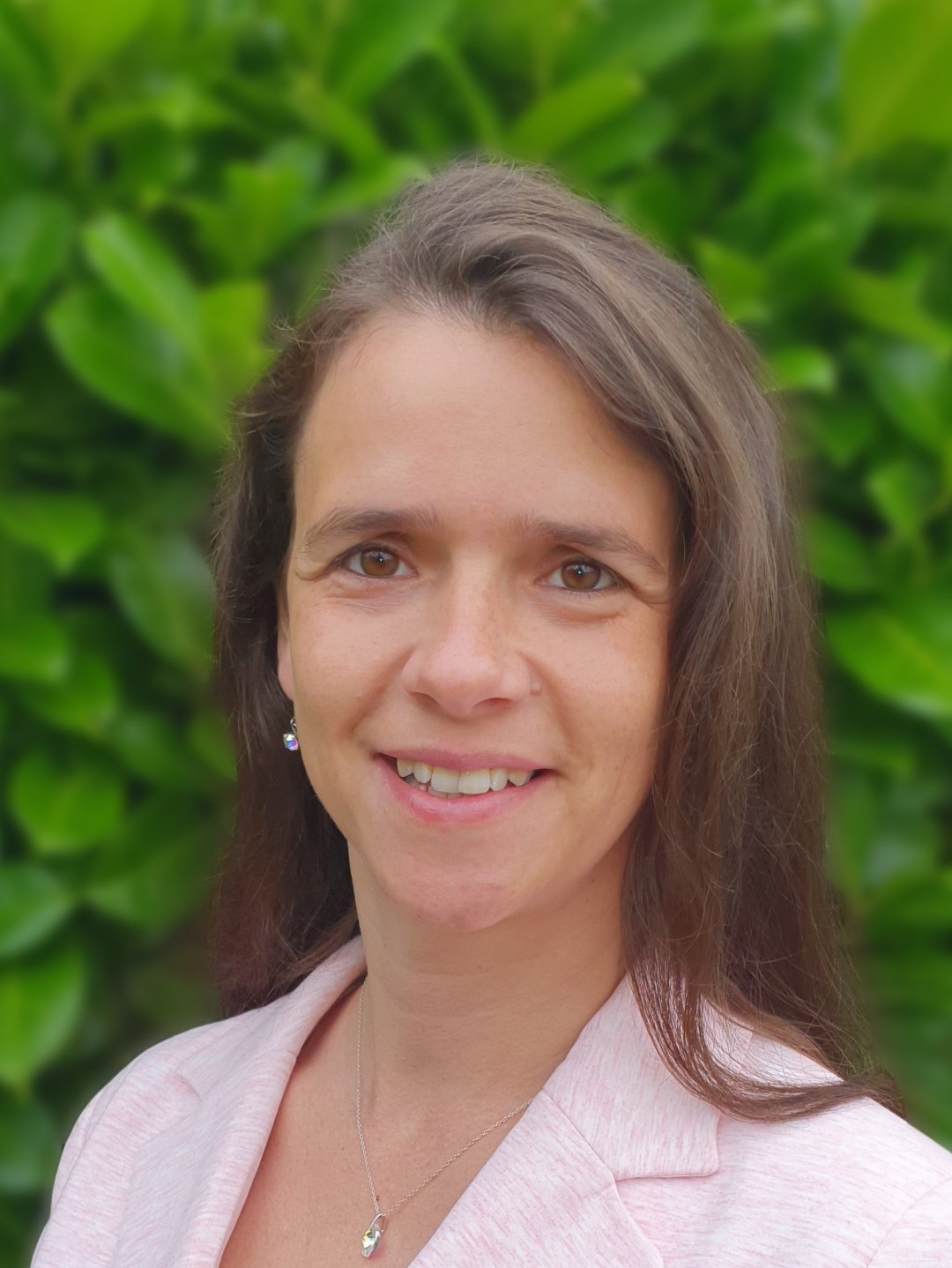
Dr Claudia Lindner is a certified IT Specialist in Software Engineering (2002, German Chamber of Commerce and Industry). She received the BSc (2005) and the MSc (2007) degrees in Computer Science, both with distinction, from the Heinrich Heine University Düsseldorf, Germany, and the PhD (2014) degree in Medical Image Computing from the University of Manchester, UK. She joined the University of Manchester as a Research Associate in 2014 and was promoted to Research Fellow in 2016. Claudia held a Rutherford Fund Fellowship at HDR UK from 2017 to 2021. Currently, she is a Sir Henry Dale Research Fellow jointly funded by the Wellcome Trust and the Royal Society.
Claudia’s career includes over 15 years in the development and application of computational methods working within multi-disciplinary teams in industrial and academic settings in Germany, Australia and the UK. She is the Early Career Researcher Lead for the Christabel Pankhurst Institute for Health Technology Research and Innovation, and a member of the steering committee of the World COACH Consortium, an international collaboration of experts studying osteoarthritis and morphological data of the hip. Her research was awarded multiple competitive grants by UK Research and Innovation, the Wellcome Trust, Versus Arthritis and the UK National Institute for Health Research. Claudia has won several national and international awards. She was Highly Commended at the 2019 L’Oréal-UNESCO UK & Ireland Fellowships for Women in Science programme, and received the Wellcome-Beit Prize for outstanding biomedical researchers in 2021.
Claudia’s research interests include the automated analysis of medical images to study, diagnose and manage musculoskeletal disorders. She uses methods from computer vision, machine learning and data science to develop accurate systems for outlining and analysing structures in widely used medical images such as radiographs. To enable patient benefit from digital healthcare research, she develops general guidance and strategies on how to bring such systems into the clinic. The overall goal of Claudia’s work is to transform clinically collected image data into useful medical information to benefit healthcare at individual and societal levels – driven by her passion to make a difference to people’s lives.
Affiliation: Ca’ Foscari University of Venice, IT; Young Academy of Spain / Academia Joven de España (AJE), ES; Global Young Academy (GYA)
Keywords: European Contemporary History, European Integration History, European Studies, International Relations, EU Enlargement, Mobility, Migration and Human Rights, Free Movement of Persons, Spanish Contemporary History, Transitions to Democracy, EU Politics, Comparative Regional Integration, Temporalities, Critical Discourse Analysis (CDA), History of Concepts, Global History of the Present, Digital Humanities
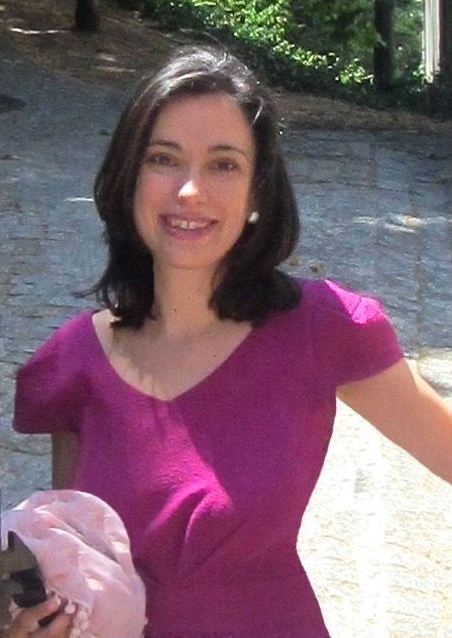
Cristina Blanco Sío-López is Marie Skłodowska-Curie Senior Global Fellow and Principal Investigator (PI) of the EU Horizon 2020 research project ‘Navigating Schengen: Historical Challenges and Potentialities of the EU’s Free Movement of Persons, 1985-2015’ (NAVSCHEN) —European Commission Grant Agreement (GA) No: 841201— at the European Studies Center (ESC) — EU Jean Monnet European Centre of Excellence (JMEUCE) of the University of Pittsburgh (2019-2021) and at the Ca’ Foscari University of Venice from 2021. The EU H-2020 NAVSCHEN project will produce the first dedicated historical analysis of all worldwide available primary sources on the transnational roots, debates and conditions for the implementation of the European Union (EU)’s free movement of persons (FMP) as a fundamental Human Right to have rights.
She previously was Assistant Professor in European Culture and Politics at the University of Groningen and ‘Santander’ Senior Fellow in Iberian and European Studies at the European Studies Centre (ESC) – St. Antony’s College of the University of Oxford, where she remains a Senior Member.
Dr. Blanco Sío-López is also Leading Associate Researcher R4 at the Institute of Contemporary History (IHC) — New University of Lisbon and was a Senior Lecturer on ‘Qualitative Approaches to Human Mobility and European Integration’ for the EU Science Hub Evidence-informed policymaking – European Commission – Joint Research Centre (JRC) at the International Institute for Applied Systems Analysis (IIASA) in Laxenburg, Austria. In 2017 she was ‘Jean Monnet EUCE – ULS’ Research Scholar in Residence at the ESC – University of Pittsburgh and Invited Expert at Shanghai University – 上海大学.
She previously worked as Principal Investigator (PI), Lecturer and Leading Researcher R4 in European Studies at the Centre Virtuel de la Connaissance sur l’Europe – University of Luxembourg (2009-2015). She also worked as Experienced Researcher R3 at the Robert Schuman for Advanced Studies (RSCAS) in Florence (2006-2009), as well as at the DG Enlargement of the European Commission and at the European Parliament in Brussels and at the US Congress in Washington, D. C. She completed an astronaut training traineeship at the NASA’s Marshall Space Flight Center in Huntsville, Alabama, US.
Dr. Blanco Sío-López was also Invited Expert in European Studies at the London School of Economics and Political Science – LSE (2013 and 2016); the Yale Law School (2016); All Souls College, University of Oxford (2016 and 2019) and at the Faculty of Law and the Sydney Sussex and Darwin Colleges (POLIS) of the University of Cambridge (2014, 2016 and 2017). She was Section Chair for the European International Studies Association (EISA), Salzburg Global Seminar Lecturer and EUI Global Governance Program Network Member.
She obtained her PhD in History and Civilization (European Integration History) at the European University Institute of Florence (EUI). Her thesis, ‘The Illusion of Neutral Time: Myths and Perceptions of the process of Eastward Enlargement of the EU, 1990-2004’, focused on EU enlargement policy temporalities and on the effects of the instilment of transitional time perceptions by the European Commission’s Communication Policy on Eastward enlargement. She approached this subject by means of Critical Discourse Analysis (CDA), relying upon extensive transnational archival consultations and Oral History interviews with the key players of this the game changing process at the end of the Cold War. Her thesis was recognized with the FAEY’s ‘Helmut Kohl – Charles V’ Best PhD Thesis European Research and Mobility Award in 2008.
She also expresses her research results via the visual arts (painting exhibitions, etc.) and via the empowering expression of poetry. Indeed, she received the Oxford German Society Poetry Award 2020 at the University of Oxford for her poem ‘Velvet with a Spark’, recognizing her work in intertwining research and verses as part of an empowering continuum.
In short, Dr. Blanco Sío-López coordinated and participated in numerous international research projects, conferences and peer-reviewed publications in Europe, Asia, and the Americas. Her research and publications focus on European Integration History —with an accent on EU enlargement policy temporalities and the Schengen Area fundamental rights— Global Governance, Comparative Regional Integration and Digital Humanities.