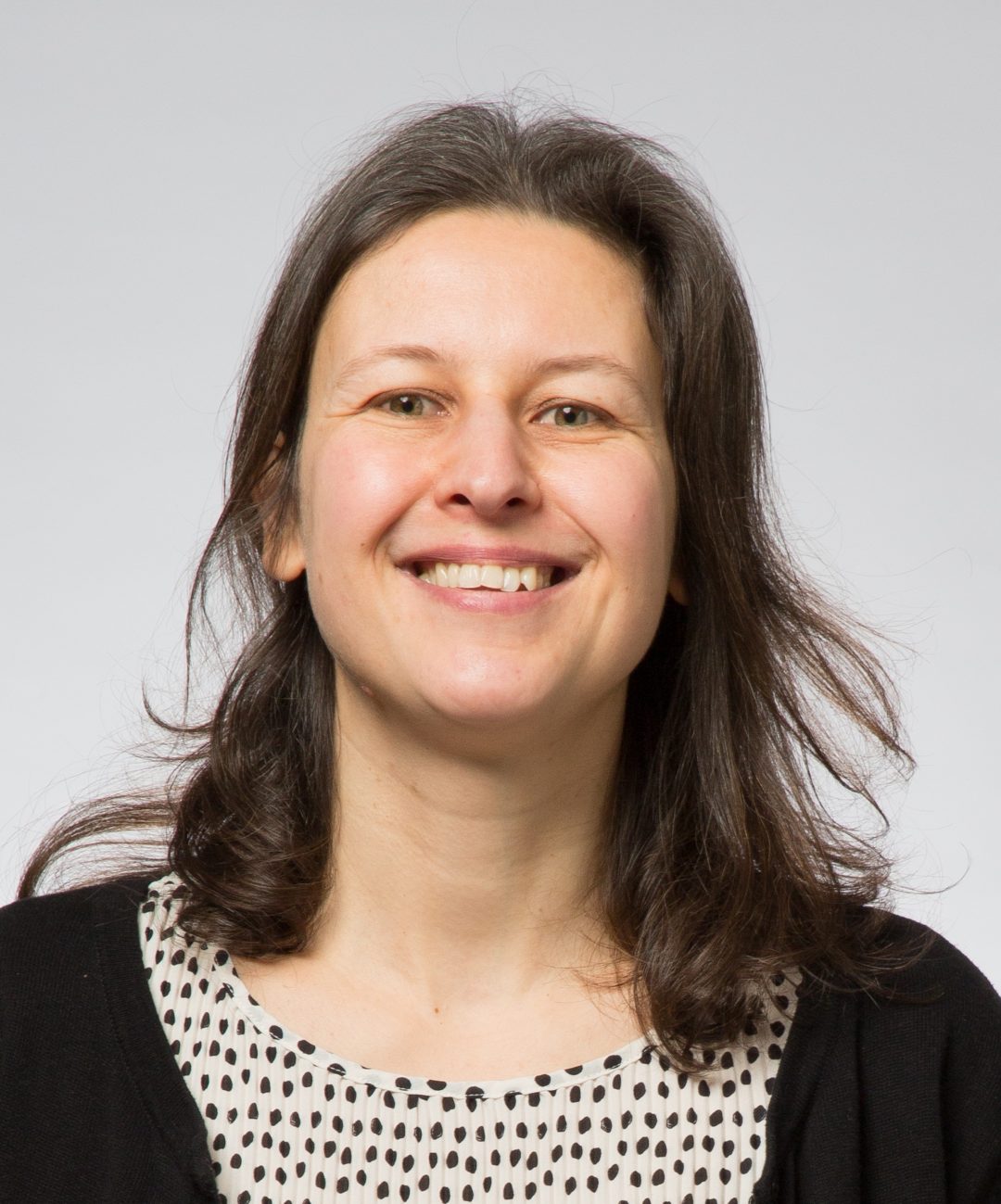
Full profile: Kinga is a cognitive developmental psychologist, with a focus on complex thinking processes. She completed her undergraduate and MSc degrees at the Lorand Eotvos University in Hungary before obtaining a PhD from the University of Plymouth (UK). She subsequently worked as a post-doctoral researcher at the University of Geneva (Switzerland) and at the University of Cambridge (UK), before taking up the position of Lecturer in Psychology at Queen’s University Belfast (Northern Ireland).
She is currently a Senior Lecturer in Mathematical Cognition at Loughborough University (UK). Kinga’s main research focus is on mathematics learning, but her research interests also encompass reasoning and decision-making, the motivational and emotional aspects of learning, and educational approaches to improving thinking skills. Kinga also researches the atypical development of cognitive skills, in autism and in developmental dyscalculia. Kinga has secured 18 research grants since the start of her research career, with a total value of over £8 million as a co-investigator, and over £350,000 as principal investigator. She has authored or co-authored more than 60 peer-reviewed publications, and works as Associate Editor or Editorial Board Member of several scientific journals. She is also a member of the UK Young Academy.
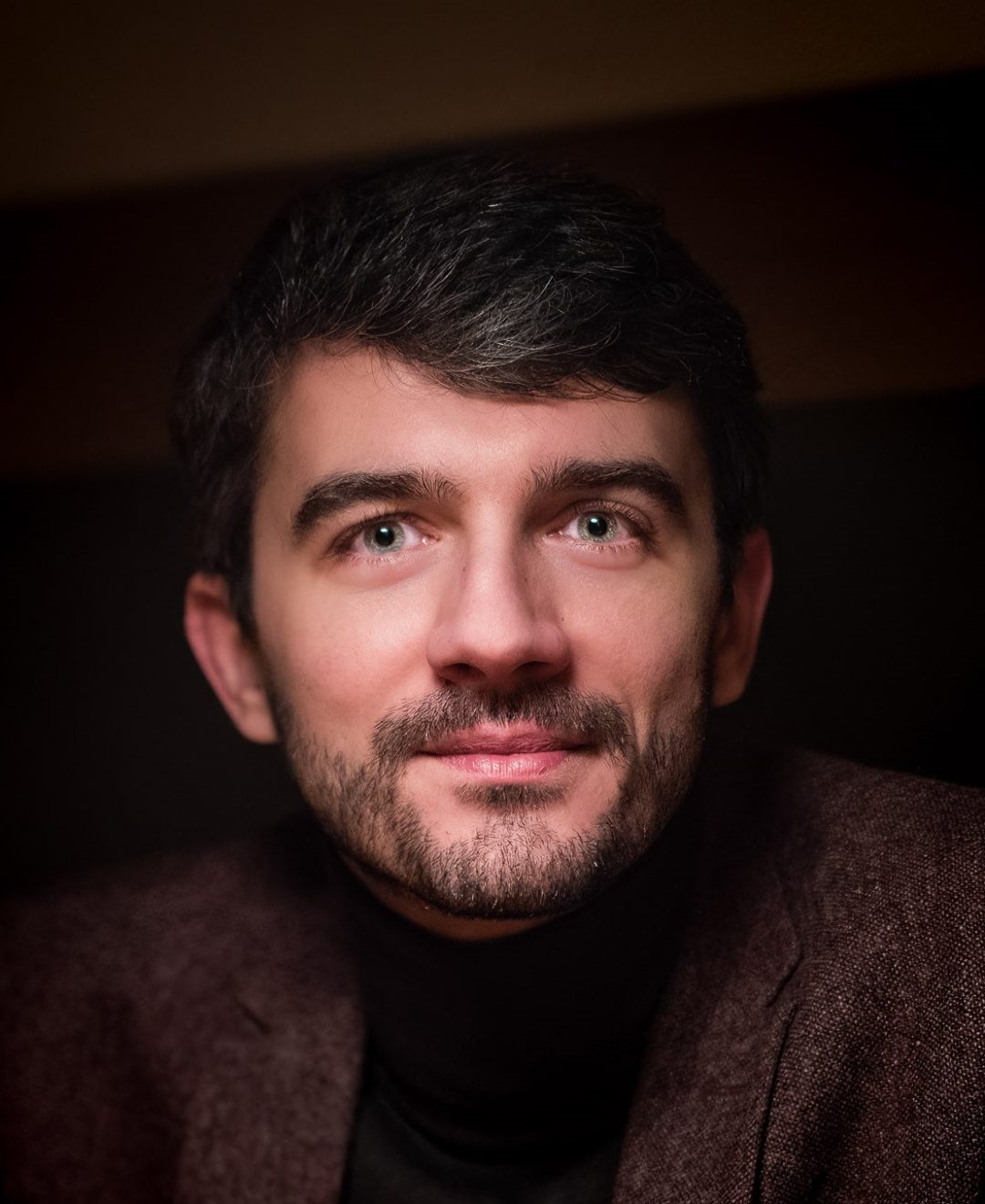
Full profile: Emilian Mihailov is an associate professor at the Faculty of Philosophy, University of Bucharest. In 2012 he obtained his Ph.D. title with a thesis on Kant’s moral philosophy, under the supervision of Valentin Mureșan. Emilian Mihailov has published numerous articles in prestigious journals about the nature of moral judgement, impartial beneficence, neuroenhancement, online moral outrage. In 2018 he took the position of director of the Research Centre in Applied Ethics, at Faculty of Philosophy, University of Bucharest, developing research partnerships with the Oxford Uehiro Centre for Practical Ethics, University of Oxford, and the Institute of Biomedical Ethics, University of Basel. Emilian has given many invited talks and been on advisory panels for legislative bodies, such as at the Health Commission of the Romanian Parliament, where he offered expertise on draft legislation concerning assistive reproductive technologies.
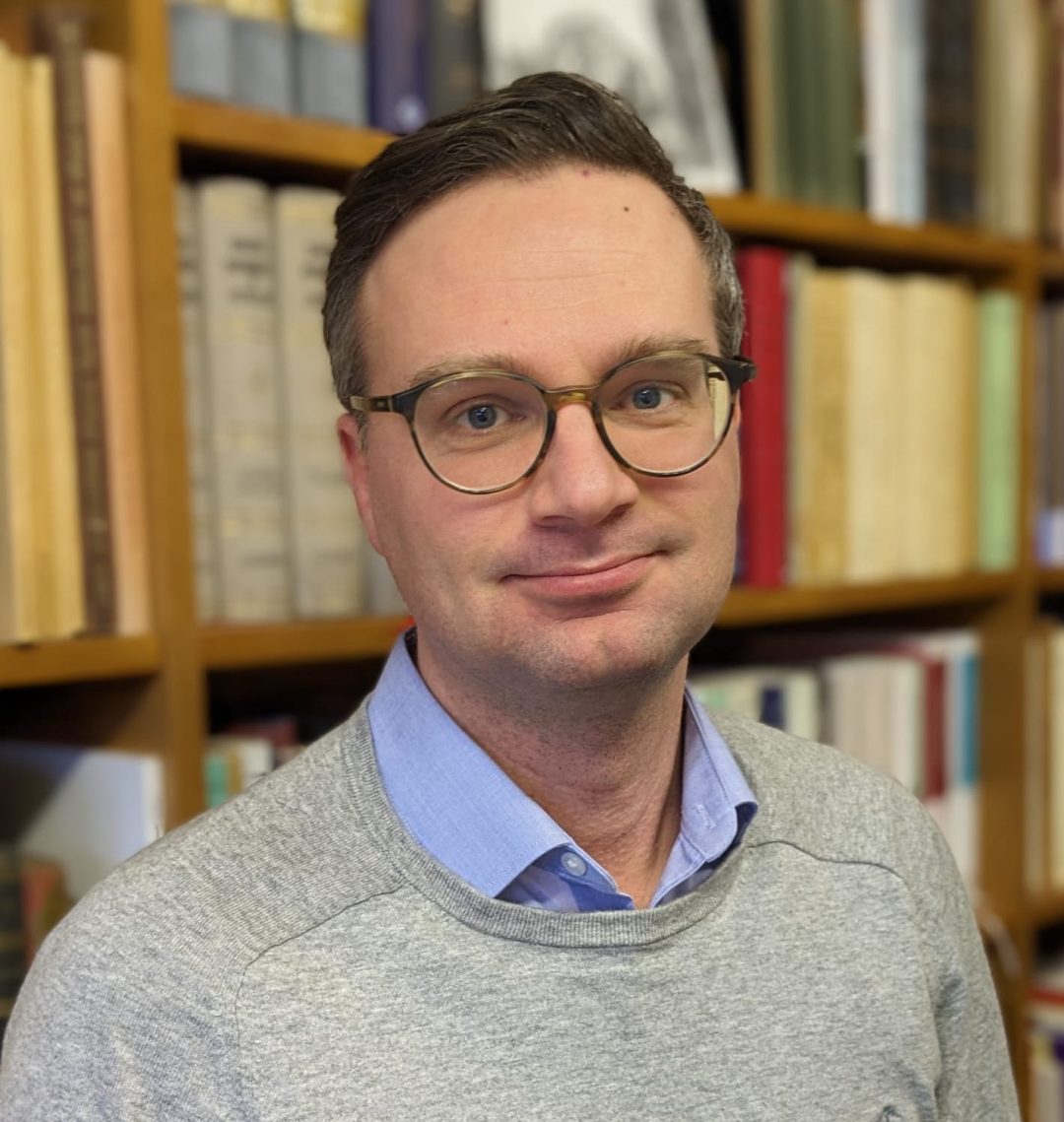
Christopher Markiewicz is an associate research professor in Ottoman and Islamic Studies in the Department of Languages and Cultures and the Department of History at Ghent University.
Previously, he was an associate professor in History at the University of Birmingham and a junior research fellow at Exeter College, University of Oxford. Christopher Markiewicz completed his doctoral studies in 2015 at the University of Chicago in the Department of Near Eastern Languages & Civilizations. His dissertation was awarded the Malcolm H. Kerr Dissertation Award from the Middle East Studies Association of North America (2016).
His research focuses on the political culture of late medieval and early modern Islamic lands, especially with respect to the Ottoman Empire. In this regard, his past work explored how ideas about history and the nature of kingship in the Ottoman Empire were connected with wider intellectual, cultural, and religious currents across the Islamic world in the early modern period. These interests resulted in the publication of his first book, The Crisis of Kingship in Late Medieval Islam: Persian Emigres and the Making of Ottoman Sovereignty (Cambridge University Press, 2019). He has also published on aspects of diplomatic history, the circulation of intellectuals and ideas, and historical writing in Islamic lands in the fifteenth and sixteenth centuries.
Christopher Markiewicz is the principal investigator of an ERC Starting Grant, ‘Islamic Endowments (Waqf) and State Formation in the Ottoman Empire (1450-1650)’, a project which examines the role of pious endowment in the development of the Ottoman state within the wider context of the transition within Islamic lands from a long period of political fragmentation to the imperial consolidation of the early modern period. He is the series editor of The Ottoman Empire and the World (I.B Tauris in collaboration with the British Institute at Ankara), and a trustee of the EJW Gibb Memorial Trust.
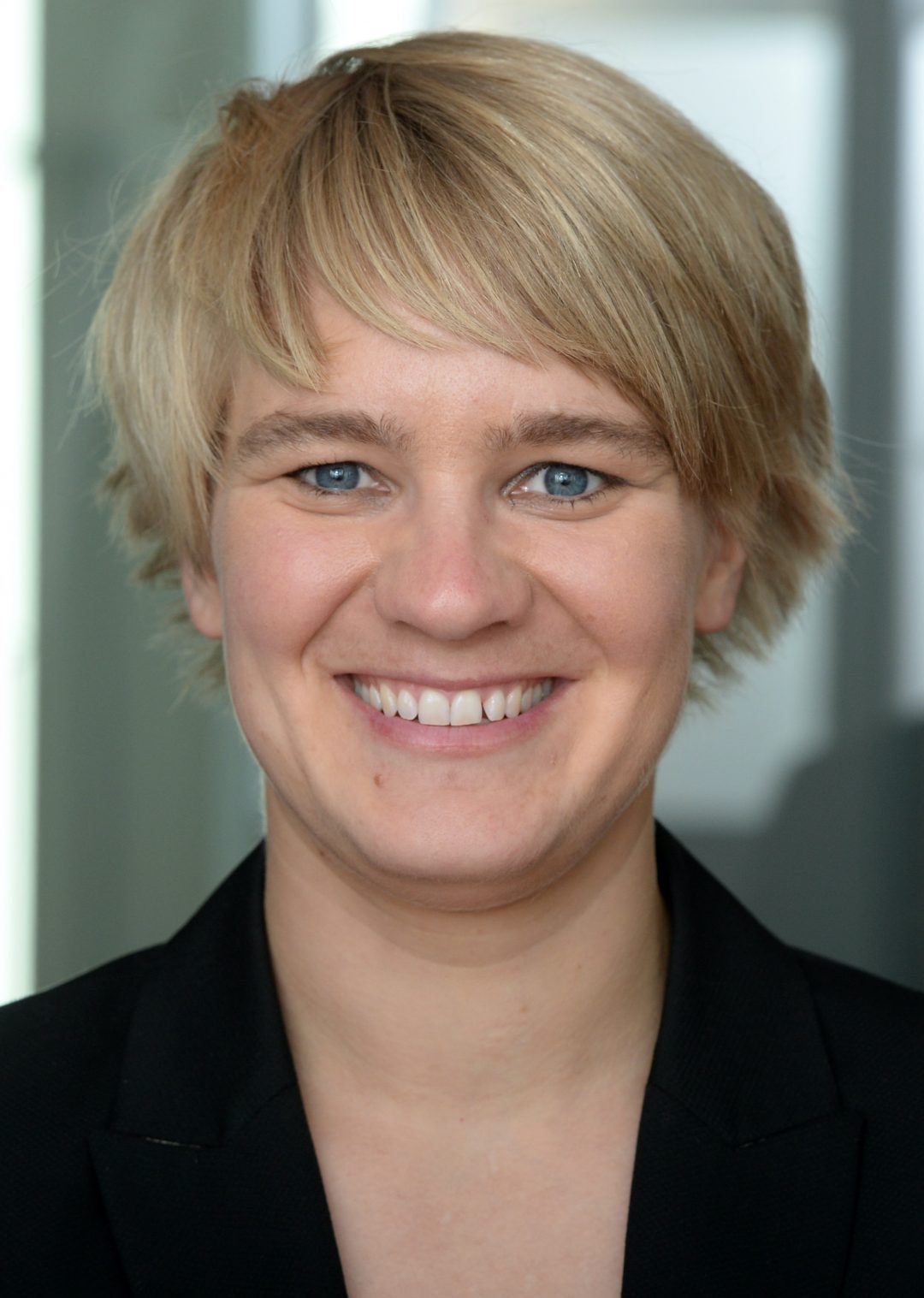
Full profile: Anna studied law at the universities of Frankfurt/Main (Germany) and Linköping (Sweden). Following the completion of the German legal clerkship, she worked on and completed her PhD at Maastricht University (The Netherlands). Anna currently holds the Chair in Private Law and Social Theory at the Faculty of Law of Maastricht University. This appointment follows previous positions at the same Faculty, as an Associate (2022-2023) and Assistant (2015-2022) Professor. Prior to her faculty appointment, Anna was a postdoctoral Max Weber Fellow at the European University Institute Florence (2015-2016).
In her work, Anna researches the interaction between the central institutions of private law, such as contract, tort, company, and current societal transformations. For this purpose, she uses methods from law and sociology to conduct comparative, doctrinal, and theoretical-normative research. Anna’s research was awarded prizes (German Dissertation Prize by the Körber Foundation) and has been offered grants by prestigious funders (ERC, MSCA, European Commission). Currently, Anna is the Principal Investigator of the ERC Starting Grant CHAINLAW, which aims to develop a normative legal language to respond to the current socio-economic phenomenon of global value chains. Besides this larger project, she also interested researches appropriate private law responses to the digital transformation of society.
Full profile: Víctor Vilarrasa is a tenured scientist at the Spanish National Research Council (CSIC) and a full member of the Young Academy of Spain, the Global Young Academy and the Young Academy of Europe. He leads an international research group, currently composed by 16 members. He performs interdisciplinary research in a collaborative environment, combining concepts of hydrogeology, geomechanics, geochemistry and seismology, which allows him to address complex geoengineering challenges.
His group is part of CSIC’s Interdisciplinary Thematic Platform PTI-TRANSENER, which aims at contributing to the global challenge of the transition of the energy model. He counts with an extensive network of international collaborators and is very active disseminating and communicating his findings. His research has been supported by prestigious grants, such as the Starting Grant and Proof of Concepts of the European Research Council (ERC) and Doctoral Networks of the Marie Skłodowska-Curie Actions (MSCA-DN), being coordinator of one MSCA-DN.
His main scientific contributions are related to the understanding of coupled thermo-hydro-mechanical-chemical processes involved in deep fluid circulation: (1) the proposal for cold (dense) injection of CO2 for geologic carbon storage, which reduces energy requirements by a factor around 5 and improves mechanical stability; (2) the concept of high pressure injection test, to characterize geomechanical properties of caprocks; and, most importantly, (3) his advances on the understanding of induced (micro)seismicity required to minimize the risk of inducing felt earthquakes, which will permit a successful deployment of geo-energy projects – a necessary step to reach net-zero emissions of GHGs. His scientific achievements have been recognized by several awards.
Full profile: Mikolaj Ogrodnik is a group leader at the LBG Senescence and Healing of Wounds. He received his PhD at the Newcastle Institute for Ageing (Newcastle upon Tyne, UK) and did his post-doctoral research at the Mayo Clinic (Rochester, MN, US). Ogrodnik’s laboratory explores a wide range of subjects including the early-onset responses of skin to injury, the mechanisms of scar formation, molecular basis of cell senescence in skin, relationship between cytoskeletal proteins and cell migration and engineering of artificial skin. For that, the laboratory utilizes methods including high-resolution histology, in vitro cell culture, transgenic and wild-type pre-clinical models of wounding and ageing, bioinformatics including single-cell RNA sequencing and tissue engineering. The aim of this research is to broaden our understanding about healing and aging of skin and to improve the lives of people with non-healing wounds.
The third seminar in a programme culminating in the AGM, titled: ‘Arts and Science: Mutual Creativity and Inspiration’.
In the third Arts & Science event of the Young Academy of Europe, we will host a panel discussion between three scholars with different perspectives on art as a means of science communication, with a focus on the important ethical considerations in doing this work. With rapidly growing interest from scholars in working with the creative arts, toward novel channels of communicating science to new audiences, it is important to be mindful of the pitfalls of this work and to craft these collaborations with care.
Peter Weingart is a Professor Emeritus of Sociology, Sociology of Science and Science Policy at the University of Bielefeld, interested in science advice to politics, science–media interrelation, and science communication.
Miriam Sturdee is a lecturer at the University of St Andrews in the School of Computer Science, focusing on the intersection between computing and the arts, and is especially interested in how arts-based approaches can inform technical fields within STEM.
Joseph Lindley is a Senior Research Fellow at ImaginationLancaster. He aims to capture and communicate the value of Design Research, showing its relevance to help address the 21st century’s socio-technological challenges.
Sign up to this event by clicking on the button below and we will send you a Zoom link on the day of the panel.
Full profile: I work as a radiologist at Semmelweis University and the National Oncology Institute. In addition to general radiology, my specialty is thoracic imaging and cardiovascular ultrasound examinations. As a radiologist at Semmelweis University, I am a consultant radiologist of interstitial lung diseases (pulmonary fibrosis) board at the University. I am a board member of the Hungarian Section of the American Hungarian Medical Association, and I am also a member of the Hungarian & European Society of Radiologists and Pulmonogists. I regularly attend international and Hungarian conferences.
In addition to patient care, I also do research, my main topics are imaging, genetics and epigenetic research, especially twin research. I have published more than 100 Hungarian and international publications so far, I obtained my PhD degree in 2013 at Semmelweis University. I completed professional internships in several countries, obtained a professional qualification in chest wall ultrasound in Oxford, and also gained professional experience in imaging interstitial lung diseases. I am a member of the public body of the Hungarian Academy of Sciences. I speak English and German, I take part in the education of Hungarian, German and English medical students at Semmelweis University. I also take part in resident and specialist training in radiology. Between 2016-2020, I was the head of the Department of Ultrasound at the Semmelweis University Radiology Clinic. In November 2016, I received the Junior Prima award at the MTA. Since 2018, I have been an editorial member of the Hungarian Radiology journal. In 2019, I completed my habilitation at the University of Szeged. From 2020, I became the head physician of the Diagnostic Imaging Department of the National Oncology Institute.
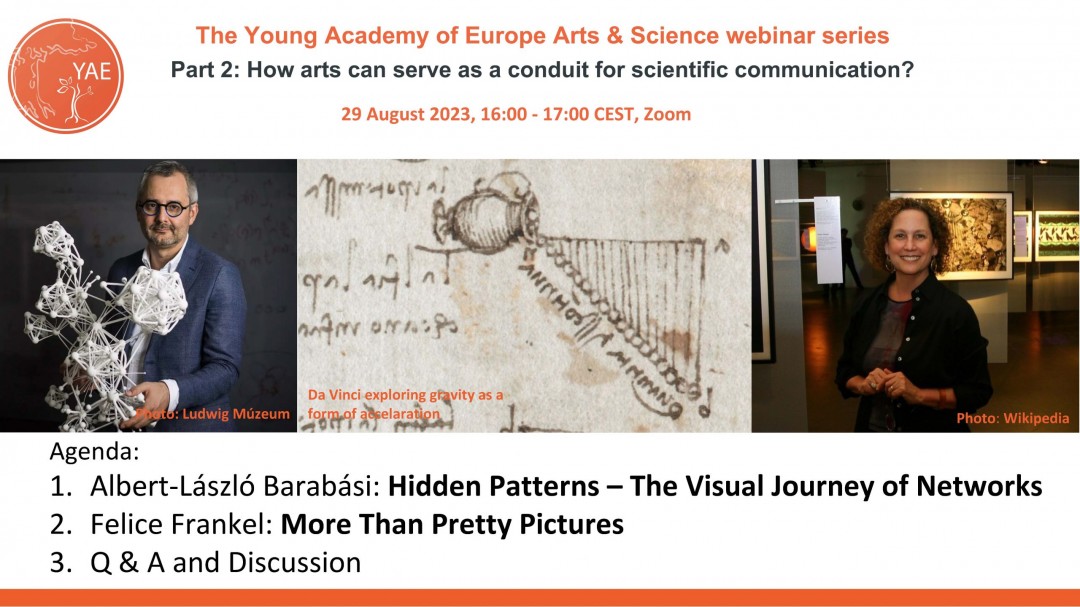
In the second Arts & Science event of the Young Academy of Europe, we will explore how arts can serve as a conduit for scientific communication. Complex scientific concepts can be made more accessible and engaging through artistic representations. Visualisations, animations, and interactive exhibits bridge the gap between the abstract and the tangible, enabling the public to grasp intricate scientific phenomena and foster a sense of wonder and curiosity.
In addition to his widely recognized scientific work and bestselling books aimed at a broader audience, Albert-László Barabási is a pioneer in the visualization of network science and had several artistic exhibitions showing the beauty of network science data in prestigious art galleries. Besides being a scientist, Felice Frankel is also an award-winning photographer developing workshops, courses and conferences, and writing books with the aim to explore new approaches to promote the public understanding of science through visual expression. Please find below the title and a short summary of their 20-20 min talks, after which we’ll have discussion around the topics raised by our speakers and the audience.
Register via Eventbrite by clicking on the button below, and you will be sent the Zoom link closer to the time:
Hidden Patterns: The Visual Journey of Networks
Albert-László Barabási
Network Science Institute, Northeastern University Division of Network Medicine, Harvard University, Department of Network and Data Science, Central European University
The essence of complexity lies in connectivity. Whether we examine the vast expanse of the World Wide Web, the intricacies of a cell, or the marvel of the human brain, their complexity invariably stems from intricate interconnected networks. Connectivity is foundational to our biological makeup, our social Felicfabric, and our communicative prowess. In this talk, I will chart the 25-year odyssey of BarabásiLab in crafting the visual lexicon of networks and connectivity. It will be a journey from the “interactome”—the subcellular networks that underscore our health—to the “connectome”—the neural network that delineates our consciousness. I will chart the transition from the nebulous ‘hairballs’ to the clear connections of 3D printed physical networks, from datavis to the dataism, and from research papers to art museums.
More Than Pretty Pictures
Felice Frankel
Massachusetts Institute of Technology
Graphics, images and figures — visual representations of scientific data and concepts — are critical components of science and engineering research. They communicate in ways that words cannot. They can clarify or strengthen an argument and spur interest into the research process. The process of making a visual representation requires you to clarify your thinking and improve your ability to communicate with others. In this talk, I will show my own approach to creating depictions in science and engineering—the successes and failures. Included will be a discussion about how far can we go when “enhancing” science images.
Christian Wolff is a physicist and researcher specializing in the field of photovoltaics, solar energy harvesting and spectroscopy.
Currently, he leads a group at the Ecole Polytechnique Federale de Lausanne with a research focus on highly efficient tandem solar cells, setting new standards in the field of emerging photovoltaics. Before that he pursued postdoctoral research at EPFL based on a Marie Skłodowska-Curie fellowship, after pursuing a doctorate at the University of Potsdam, focusing on halide perovskite solar cells. He graduated in Physics from Ludwig-Maximilians-Universität München, focusing on nanoparticular photocatalysts for water splitting.
Dr. Wolff’s career is marked by several awards including the prestigious Marie Skłodowska-Curie Actions individual fellowship, the Carl-Ramsauer-Price of the Physical Society of Berlin, and several Publication/Conference Awards.
He is dedicated to research and innovation, promoting diversity and inclusion in science, and scientific communication, and contributing to global solutions through science.