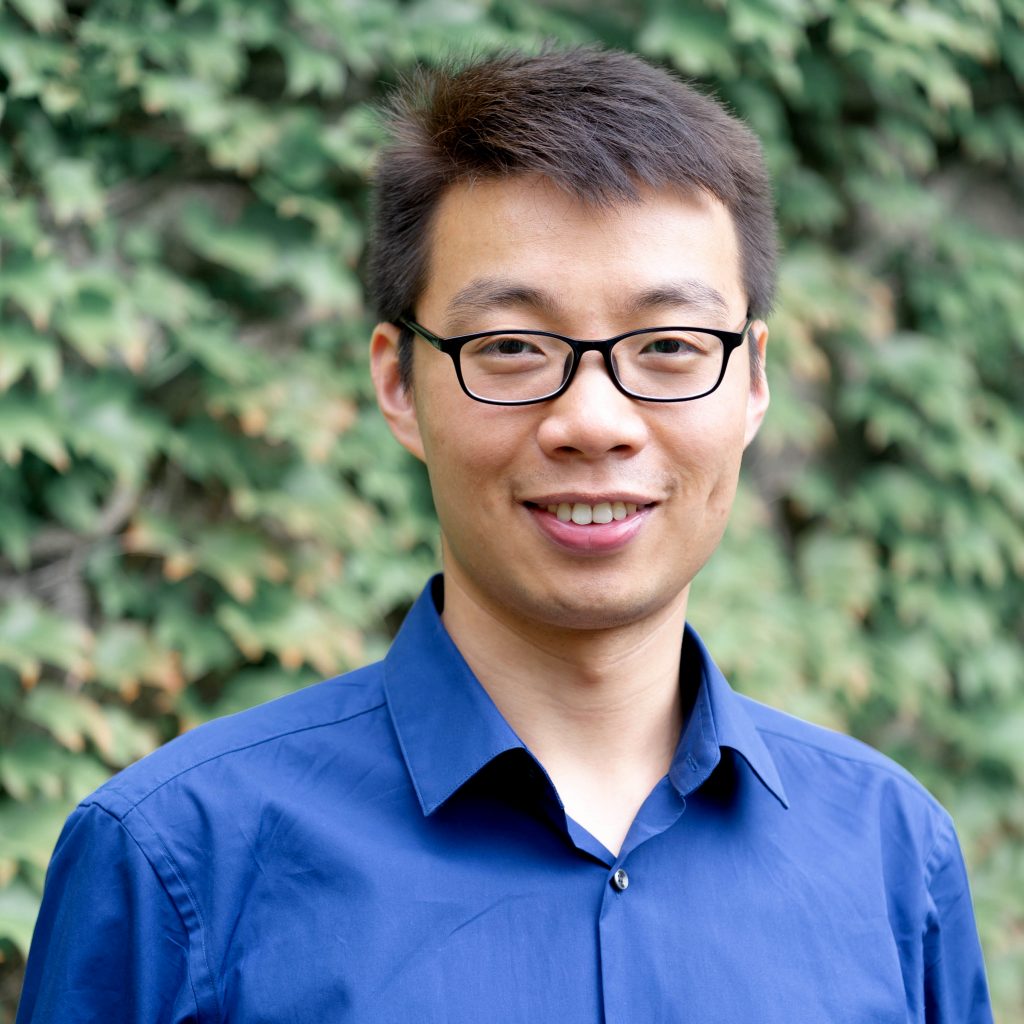
Weidlich

Affiliation:  Humboldt-Universität zu Berlin

Keywords: 

Databases, Process Mining, Information Systems, Event Stream Processing,
Data Science

Webpage

Orcid identifier

Full profile: 

Since 2018, Matthias has been a full professor and Chair of Databases
and Information Systems at the Department of Computer Science at
Humboldt-Universität zu Berlin (HU). He joined the department in April
2015 as a junior professor, supported by German Research Foundation
(DFG) through the Emmy-Noether Programme. Earlier, he worked as a
research associate at the Department of Computing at Imperial College
London and as a research fellow and adjunct lecturer at the Technion –
Israel Institute of Technology. He holds a PhD in Computer Science from
the Hasso Plattner Institute (HPI), University of Potsdam.

Matthias’ research interests include data-driven approaches to the
analysis of process-oriented systems, aka process mining. These
techniques help to improve operations and resource utilization in
domains such as health care and logistics. Another stream of work
relates to algorithms for efficient processing of streaming data, for
instance, for the detection of patterns in data streams emitted by
distributed Internet-of-Things infrastructures. A third pillar of his
work are models and methods for exploratory data analysis. That includes
interdisciplinary collaborations with scientists in astrophysics and
bioinformatics on scientific workflow systems to facilitate
reproducible, portable, and trustworthy analysis of large-scale
scientific data.

His work has been recognized by several awards, including Best Paper
Awards at the ICPM 2023, ACM DEBS 2022, and BPM 2017 conferences. In
2016, he received the Berlin Young Scientist Award, awarded by the
Governing Mayor of Berlin to a single scientist across all scientific
disciplines. He has also been a Junior-Fellow of the German Informatics
Society (GI).

Matthias is further active in the scientific community as part of
various service roles. He is a member of the Steering Committees of the
BPM conference series and the ACM DEBS conference series,
Co-Editor-in-Chief of the Information Systems journal, and Associate
Editor of The VLDB Journal and Process Science. Moreover, for several
years, he has been one of the organizers of the mentoring programme
offered by the German Informatics Society that brings together students
and experienced mentors.
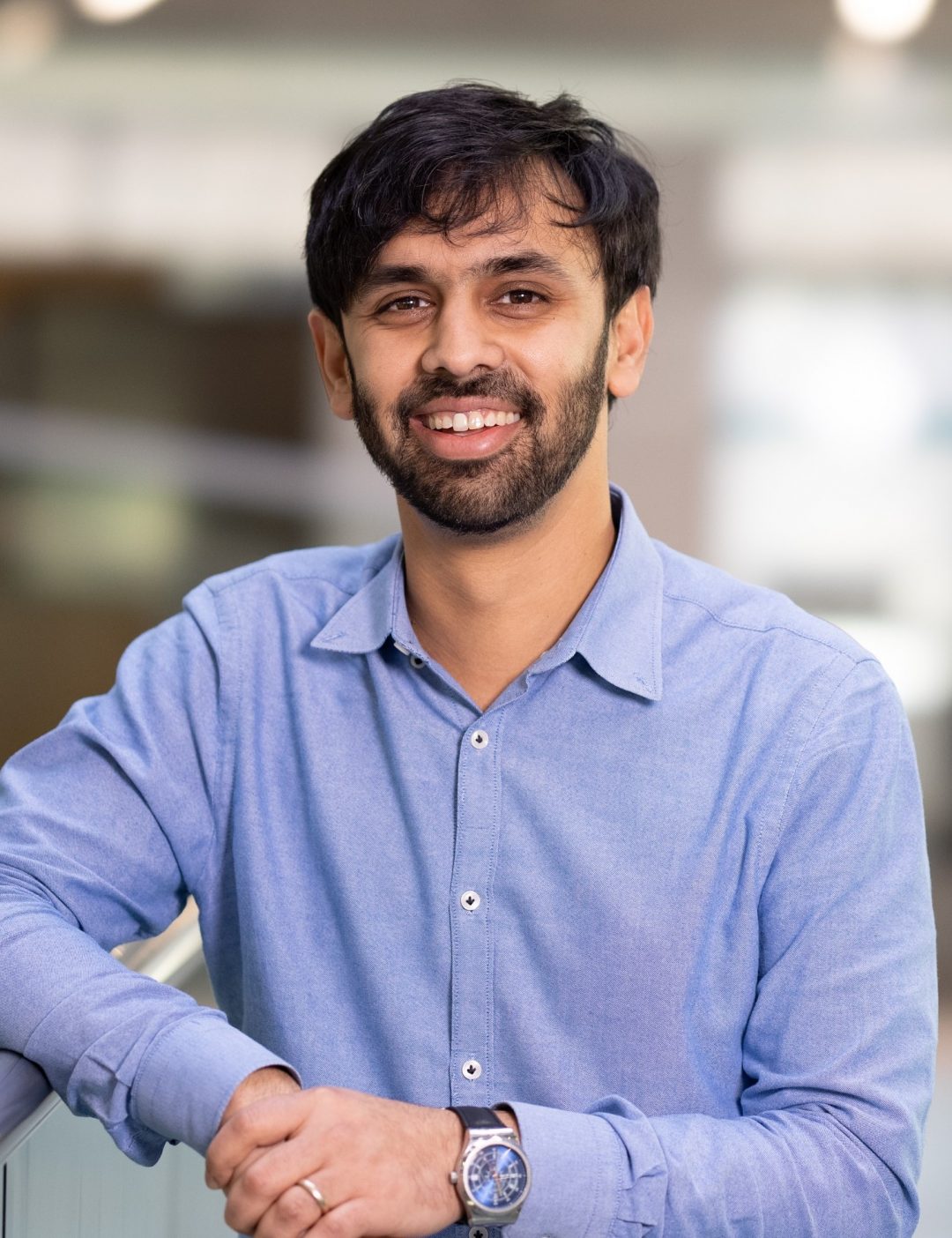
Dey

Affiliation:  European Molecular Biology Laboratory

Keywords: Evolutionary cell biology, mitosis, nuclear organisation, eukaryotic microbiology, comparative genomics, experimental evolution

Webpage

Orcid identifier

Full profile: 

Gautam is a Group Leader at the European Molecular Biology Laboratory (EMBL), based in the Cell Biology and Biophysics Unit of its Heidelberg headquarters. His research group investigates the evolution and diversity of mitosis and nuclear remodelling across eukaryotes using a combination of comparative cell biology, experimental evolution and genomics.

Gautam started his group at EMBL in early 2021, after a postdoc in London working on the evolution of cell division with Buzz Baum. Gautam holds a PhD in systems biology from Stanford University and a research MSc from the National Centre for Biological Sciences in Bangalore, India. Gautam is an ERC Investigator (2023-2028) and a previous holder of a Marie-Sklodowska Curie postdoctoral fellowship (2017-2018) and a Stanford Graduate Fellowship in Science and Engineering (2009-2012).

Hosseinzadeh

Affiliation: Radboud University Medical Center, NL

Keywords: Vision, Electrophysiology, Retina, Stem cells-derived Organoids, Computational Neuroscience, Extracellular vesicle, Neuroprotection, ion channels.

Webpage

Orcid identifier

Full profile: Dr. Zohreh Hosseinzadeh (Associate Prof. in Tenure Track) is a group leader for cell biology of vision at Raboudumc. She received her “Habilitation (Associate Prof.)” in physiology (2019) and PhD in Biology at Eberhard-Karls University, Tübingen. She was head of ophthalmic department and a group leader at Leipzig university (2019-2023), senior researcher at the Centre for Regenerative Therapies (CRTD) at TU Dresden (2018), deputy of the Experimental Retinal Prosthetics group at Eberhard-Karls University(2015-2018) and headed the electrophysiology lab at physiology institute.

Her research interest lies in exploring the functionality (healthy) or dysfunctionality (degeneration) of retinal cells and circuits by interdisciplinary approaches:  electrophysiology, molecular biology, stem cells technology, material science and computation neuroscience. She aims to develop human retina from stem cells with naturalistic electrical features. This human retina is suitable for gene-, cell/tissue-based replacement therapies, a platform to unravel disease pathology and develop novel therapies.

Dr. Hosseinzadeh has authored over 63 publications in respected journals. Her outstanding contributions have been recognized with prestigious awards and external funding (>6 Million) including: ERC starting, Hypatia talent track, DFG principal investigator,  Marie Curie Doctoral Network, EuProNet, Cambridge bursary from eye trust, AcademiaNet for the excellent woman, Tübitak award as a visiting professor, Pro-Retina award in cooperation with University of Harvard, Leipzig graduate academy award, Team UNIBUND postdoc award (Halle-Jena-Leipzig), Maria Reiche program award, DAAD award, and excellent PhD student award.

Desai

Affiliation:  University of Edinburgh

Keywords: Legal Theory, Social Theory, Law and Development, Expertise, Comparative Law, Interdisciplinarity

Webpage

Full profile: 

Deval is Reader in International Economic Law at Edinburgh Law School, where he was Lecturer from 2020-2023. He held a personal postdoc at the Geneva Graduate Institute from 2017-2020, prior to which he took his doctorate in law from Harvard Law School. He also has a decade of experience working for the World Bank on rule of law and governance in sub-Saharan Africa; as well as advising the UN on rule of law issues.

Deval’s work focuses on law and development, administrative law and regulation, theories of the state, and patterns of knowledge and authority across the Global North and South. His articles appear in leading journals in law, political science, and development studies. His work has been recognised in a range of venues: he is a Member of the Young Academy of Scotland and a Fellow of the Royal Society of Arts; and he received a “Chancellor’s Award” from the University of Edinburgh (one of the university’s highest honours). His work has also been supported by grants from funders in the Netherlands, Switzerland, UK, and USA; including as a PI on a major SNSF Sinergia grant called “Reversing the Gaze”. He is also a committed mentor to early career researchers from underrepresented communities in the academy, and was highly commended for this work by the University of Edinburgh’s Susan Manning Award.

Hajdu

Affiliation: Eötvös Loránd University, Budapest, HU

Keywords: Biological anthropology, bioarchaeology, prehistory, early medieval, population history, infectious diseases, paleooncology

Webpage

Orcid identifier

Full profile: Tamás Hajdu is an associate professor and the head of the Department of Biological Anthropology at the Institute of Biology, Faculty of Sciences, Eötvös Loránd University. His research field is biological anthropology and paleopathology. He specializes in population history of the Carpathian Basin in Prehistory and in Migration Period, as well as in evolution of infectious diseases and in paleooncology.

Consultation on science policy work

22 January 2024 14.00 – 15.00 (CET) – On-line

One of the YAE’s missions is to contribute to developing European science-policy and science-for-policy. This sees the YAE solicited for an array of task forces and committees, with a concrete impact on the European science governance landscape. This is important work, and a list of these committees can be seen below, along with the current YAE representatives.

Up to now, it has been YAE board members who have been most active in this committee work. But in discussion at the AGM in Munich, it was agreed that the wider YAE membership ought to have an opportunity to contribute. This may be by providing input to the current YAE representative, or even by acting as YAE representative on a committee or working group.

To this end, we will have an event on the 22nd of January 2024, from 14.00 – 15.00 CET, where YAE members interested in any of the committees listed below can drop in and listen to current YAE representatives report on progress, provide input, or get involved in a more substantial way.

In order to plan and run a secure event, please notify the YAE board at the following email address if you are interested in attending, and we will send you a zoom link closer to the time: event_registration@yacadeuro.org.

The Zoom link for the meeting is here:

Organisation or eventTask forces or working groupsYAE representative
Initiative for Science in Europe – Horizon Europe
– Researchers’ careers
– Science Advice – Science Diplomacy
– CoARA
– European Research Area Forum
– Mona Simion


International Science CouncilHow to better engage young academies in ISC – Katalin Solymosi
Task Force for Environment, Sustainability and Climate of Academia Europaea (AE TFESC)– Scott Bremer

– Katalin Solymosi
Coalition for the Advancement of Research Assessment (CoARA)Reforming Academic Career Assessment
Improving practices in the assessment of research proposals
– Early-and-mid-Career Researchers (EMCRs) – Assessment and Research Culture
– Moniek Tromp


– Mona Simion


– Marc Yeste
Peer Exchange Platform for narrative-style CVs (PEP-CV)Advertising, testimonials, mentoring Katalin Solymosi
Young Academies Science Advice Structure (YASAS)Nominating experts for various topics requested by the ECMoniek Tromp,
Viktorija Vaštakaitė-Kairienė
Euroscience Open Forum 2024 Katowice, June 12-14, 2024Submission of panel proposalsKatalin Solymosi

Franco Llopis

Affiliation:  UNED (Spain)

Keywords: Art history, otherness, Muslim-Christian relations, Moriscos, Early Modern Art, critical race theory

Webpage

Orcid identifier

Full profile: Borja Franco Llopis is Associate Professor at the UNED (Spain) and his research is devoted to the visual and literary representation of the otherness in Europe. His research explores topics such as race, migration and otherness in the late medieval and early modern periods and their understanding in contemporary societies. He has published 5 books in Spanish and Italian, coordinated 9 more (two in press) in important presses such as Brill, Leuven University Press, Genoa University Press.

He has also published almost 100 articles and book chapters. He combined this work with the production of documentaries about Muslim-Christian relations, which were broadcast on RTVE TV2 and its international station in Iberoamerica, as well as in youtube. He was the Principal Investigator of 3 Spanish Research Projects, and he was the working group leader of the COST Action COST Action 18129: Islamic Legacy: Narratives East, West, South, North of the Mediterranean (1350-1750). He has been a visiting scholar in several institutions such as the School of History and Archaeology in Rome, the Istituto Storico per el Medievo (Rome), the Warburg Institute (London), Johns Hopkins University, University of California (Berkeley), Harvard University, Columbia University, Universidade Nova of Lisbon and NYU; and Visiting Professor at the University of Genoa.


He has obtained important scholarships such as the Ramón y Cajal, Santander Iberoamérica, José Castillejo, Leonardo Scholarship (BBVA Foundation) and the Gondra Barandiarán Junior at the Museo Nacional del Prado. He is a member of the evaluation panel in Art History and Literature of the State Research Agency of Spain, that oversees the research projects and postdoctoral grants granted by the Spanish Ministry of Sciences. Since 2022 he is a fellow member of the Young Academy of Spain.

Jastrzebska

Affiliation:  Warsaw University of Technology

Keywords: Nanomaterials, Nanocomposites, 2D materials, Graphene, MXenes, Surface Engineering, Functional Hybrid Structures, Bioactivity, Photoactivity, Photocatalysis, Sensing, Energy

Webpage

Orcid identifier

Full profile: Agnieszka holds a master’s degree in chemical technology. She received her Ph.D. in 2012 and her habilitation in 2018 as a young scientist in materials science, to finally become appointed as a university professor at the Warsaw University of Technology, Poland. She leads an interdisciplinary research group, ‘Bioactive nanomaterials’, at the Faculty of Materials Science and Engineering.
Agnieszka research is primarily centered on novel two-dimensional (2D) materials for multifunctional nanocomposite hybrid structures. Among my most recent investigations, Agnieszka engaged in bridging the gap in understanding their stimuli-responsiveness concerning their electronic, optical, and catalytic features. She also delves into 2D materials’ self-assembly processes in complex environments, emphasizing their cyto- and ecotoxicological effects observed at relevant exposures. Beyond her research endeavors, Agnieszka is actively championing the principles of ‘safe-by-design’ and ‘sustainable-by-design’ in developing advanced nanomaterials.
The cross-disciplinary nature of Agnieszka research reflects her background as a chemist, further knowledge achieved in materials engineering, and broad knowledge gained in collaboration, scientific visitations to fellow materials scientists, biotechnologists, and the MXene community. Her research group has published many high-tier articles and demonstrated proficiency in acquiring and executing third-party-funded projects funded by the National Science Centre (NCN), Excellence Initiative – Research University, and Horizon. Agnieszka also actively participates in European COST Action.
Agnieszka is also a spin-off company founder, shareholder, and CEO, which licenses patents for obtaining novel silver and copper nanoparticles, surface modified with aluminum nano-oxide and nano-silica. Her commercialization endeavors were awarded in 2021 by a Minister of Education and Science through an Award for industrial implementations.
She also actively participates in scientific associations, being a member of the Materials Research Society and the American Chemical Society, USA, the Council of the Faculty of Materials Engineering, and the Council of the Materials Engineering Discipline. At the turn of 2020/21, she became a member of the working group of policymakers for academic promotion criteria and researchers’ assessment. From 2022, she has been a member of the Council for Science, Higher Education, and Innovation within the National Development Council of the President of the Republic of Poland.
Agnieszka is also an expert in Polish and foreign institutions financing science, such as the European Research Council (ERC), Horizon 2020, the National Center for Research and Development (NCBR), the Polish National Agency for Academic Exchange (NAWA), as well as the Polish and Czech Fulbright foundations as part of the MoRePro program, Slovak Academy of Sciences. She has also been reviewing scientific articles submitted to high-tier JCR journals for many years.
Throughout her career, Agnieszka has actively advocated for the inclusion and advancement of women in these disciplines, recognizing the immense value they bring to research and innovation. As a YAE member, she amplifies the voice of women in science. She promotes initiatives encouraging their participation and leadership in this collective effort to create a more inclusive and vibrant scientific landscape.
All these make Agnieszka well-suited to provide specific guidance and mentorship in fostering evidence-based policy and play a valuable role in YAE towards supporting young scientists, especially in STEM. She strongly believes in the fresh perspective of young researchers and champions their involvement in shaping the future of research in the EU and transformative processes.

Avallone

Affiliation:  Politecnico di Torino

Keywords: Aeroacoustics, Fluid dynamics, Computational Aeroacoustics

Webpage

Orcid identifier

Full profile: Francesco holds a PhD in Fluid Dynamics from the University of Naples Federico II (Italy). Afterwards, he moved to Delft University of Technology (the Netherlands) where he worked first as PostDoc and later as Assistant Professor. Since May 2023, he is Full Professor in Fluid Dynamics at Politecnico di Torino (Italy).

Francesco works with his team on several topics related to aeroacoustics ranging from wind turbine to propeller noise (both for drone and aircraft applications) prediction and reduction, conventional and novel acoustic liners flow physics, and noise propagation in complex scenario with both experimental and numerical methods.

His work has been supported by the ERC Starting Grant and the Aeroacoustics Research Consortium. Francesco is working on several national and international projects ranging from research to education. Francesco is co-funder of Mutech, a startup company developing noise reduction technologies for wind turbines. Francesco was board member of the Delft Young Academy in 2022.

Yu

Affiliation: Technische Universität Dresden

Keywords: 2D layered materials, supercapacitors, aqueous batteries, dual-ion batteries, multivalent metal batteries, rechargeable batteries

Webpage

Orcid identifier

Full profile: Dr. Minghao Yu, PI, research group leader at Technische Universität Dresden. He received his doctoral degree in Material Physics and Chemistry from Sun Yat-sen University in June 2017.

He joined Technische Universität Dresden as a postdoctoral researcher under the support of Humboldt Research Fellowship in November 2017. In March 2019, he was appointed as a research group leader of the Chair of Molecular Functional Materials at Technische Universität Dresden.

His research interest includes 1) development of novel organic and inorganic 2D layered materials, 2) development of advanced artificial interphases and electrolytes for next-generation batteries, 3) fundamental charge and ion dynamics during electrochemical energy storage processes, and 4) sustainable energy storage device fabrication, including supercapacitors, hybrid-ion capacitors, aqueous batteries, dual-ion batteries, and multivalent metal (Zn, Mg, Al) batteries. Besides, he is also an associated member of cfaed, associated group leader at MPI-Halle, highly cited researcher (Clarivate Analytics, 2018-now), 2023 ERC Starting Grant winner.