The Young Academy of Europe AGM and Academia Europaea’s Building Bridges

In opening the AGM on Tuesday 25 October, Gemma Modinos, the chair of the YAE welcomed the participants and presented the activities of the YAE in 2021-22, from the workshops organised by the YAE for its own members, to how board members participated in meetings at a European level on science outreach and research assessments. Gemma then awarded the new YAE members their certificates, and Zeila Zanolli presented her treasurer’s report.

The first session of the afternoon gave time to the participants to brainstorm about the future activities of the taskforces of the YAE. This was followed by a Wikipedia hackathon organised by the Science Outreach taskforce, given by Jess Wade. Jess Wade presented how crucial Wikipedia is as a tool to spread scientific knowledge and make science more inclusive and diverse. She also gave tips to get started with creating and editing articles on Wikipedia.

The final workshop of the first day was given by David Budtz-Pedersen and Rolf Hvidtfeldt. Called a ‘Science Communication Lab’, this workshop allowed participants to reflect on the impact of their research on audiences beyond the scientific community and gave them tools to plan their communication so that it can reach maximum impact.

On the second day of the AGM, on Wednesday 26 October, three new members of the YAE presented their research: Maria Górna on protein function, Filip Ivanović on Byzantine philosophy and Monica Morales-Masis on solar cells. The elections for the new board also took place: Moniek Tromp was elected as new chair of the board; Scott Bremer and Katalin Solymosi were elected as new vice-chairs of the board; Serim Ilday, Pierre-Héli Monot, Carme Font Paz, David Fernández Rivas and Mona Simion were elected as new members of the board. After the official end of the AGM, the attendants participated in a session given by Bart Veys on the European Cooperation in Science and Technology COST Actions.

Building Bridges, co-organised by the Academia Europea and the YAE, started on Wednesday 26 October in the afternoon with a debate session on hot topics in science policy, in which the YAE was represented in two panels. Moniek Tromp participated in the panel ‘Science policy for the future’ and insisted on the importance of revising assessment instruments to better evaluate and support the careers of young researchers. Linn Leppert chaired a panel organised by YAE in which Katalin Solymosi participated, entitled ‘Towards an inclusive and representative academic landscape’, which mapped out best practices and efficient measures in current Equality, Diversity and Inclusion policies in European research institutions. Related to the panel, Linn Leppert and Katalin Solymosi were briefly interviewed by the Academia Europaea Cardiff Hub.

On the second day of Building Bridges, Gemma Modinos gave the YAE Andre Mischke Prize to Gergely Toldi. He received this award for his outstanding work in the neonatology field, and his research on the immunological response of neonates, especially premature babies, to breastfeeding, but also for his engagement for other early career researchers, as one of the founders of the Hungarian Young Academy. In his talk, Gergely Toldi not only presented his research, but also reflected on the career path of academic clinicians and its challenges.

It was an important moment in the life of the YAE to be able to hold our AGM again on site and to co-organise Building Bridges after two years of online and hybrid AGMs, especially as we are celebrating our 10th anniversary, on which Gemma and Moniek reflected in this short interview. We hope to see many of our members again next year!
The YAE Board for 2023

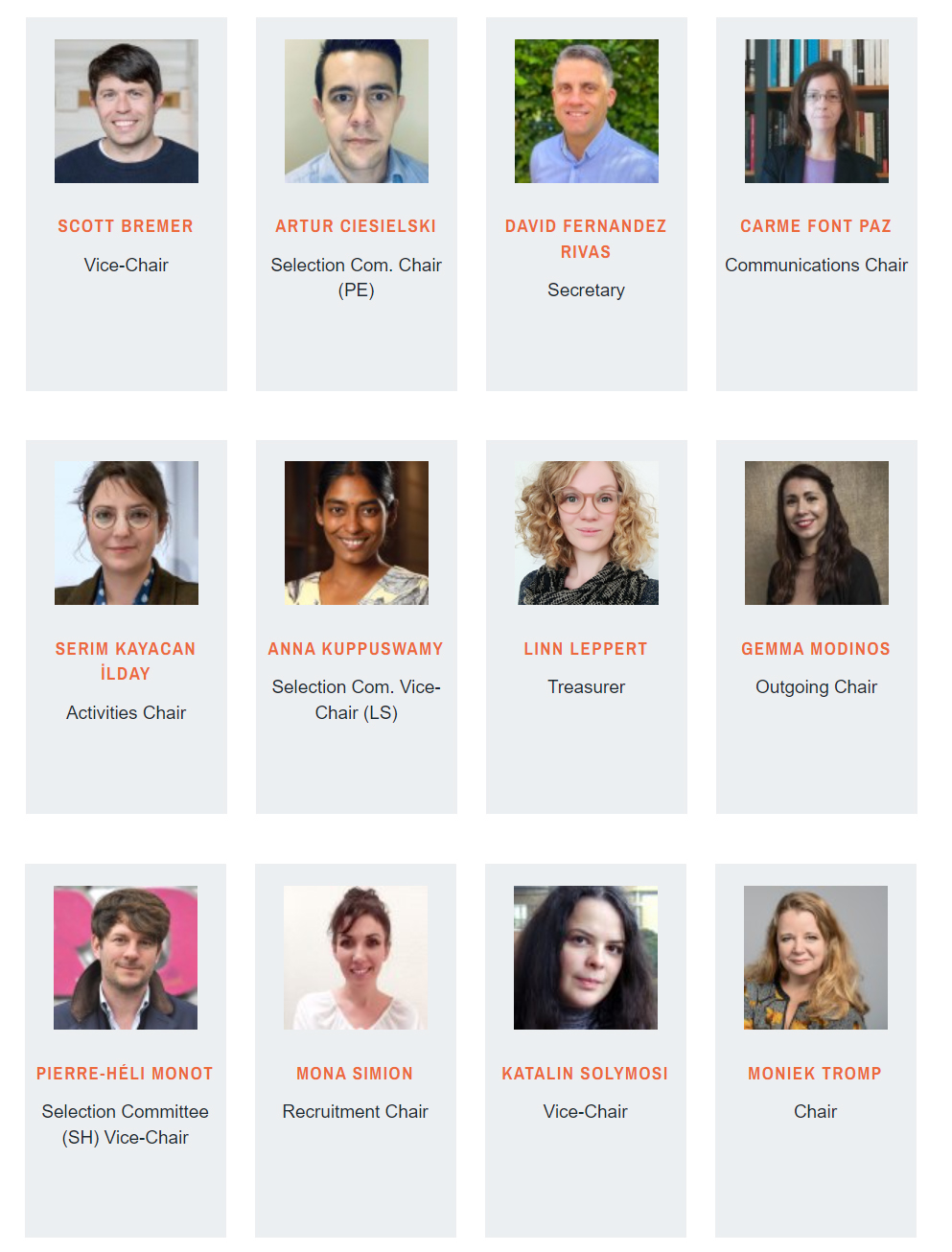
This year’s AGM in Barcelona saw a new YAE board elected for 2023. It saw quite a change in the guard, with Moniek Tromp becoming Chair, Katalin Solymosi and Scott Bremer becoming co-vice-chairs, and five new members elected to the board. A couple of weeks later, the board was able to hold its first meeting, and as a result, members roles were decided on. Meet your new board:

Gemma Modinos: Outgoing chair
Moniek Tromp: Chair
Scott Bremer and Katalin Solymosi: Co-vice-chairs
Linn Leppert: Treasurer
David Fernandez Rivas: Secretary
Artur Ciesielski: Selection Committee (PE) Chair
Anna Kuppuswamy: Selection Committee (LS) Vice-Chair
Pierre Monot: Selection Committee (SH) Vice-Chair
Serim Ilday: Activities Chair
Carme Font: Communications Chair
Mona Simion: Recruitment Chair

Between now and the end of the year we will be transferring responsibilities from outgoing board members to incoming members and establishing some new systems of working with the Bergen Hub, who have begun to kindly provide administrative help.

Feel free to take contact with any of the above board members if you have any questions, or ideas for the YAE; perhaps an event you want to organise? Or something worth communicating? Or something for members to collaborate on? You can always reach the chair and vice-chairs of the academy at chair@yacadeuro.org.

Picture of David Cerny

Černý

Affiliation: Institute of State and Law and Institute of Computer Science, Czech Academy of Sciences

Keywords: Ethics, Philosophy, Artificial Intelligence, Biomedicine

Webpage

Orcid identifier

Full profile:

David is a philosopher who works at the Czech Academy of Sciences and lectures on applied ethics (medical ethics, bioethics, ethics of artificial intelligence) at several Czech universities. He is the author of several monographs on the ethics of stem cell research, animal rights, death and dying, allocation of scarce resources in times of pandemics, euthanasia, and the ethics of modern technologies. He is also the author of Cerny, D. The Principle of Double Effect. A History and Philosophical Defense (New York: Routledge, 2020, 2022) and co-author of Jenkins, R., Černý, D., Hříbek, T. (eds.). Autonomous Vehicle Ethics. The Trolley Problem and Beyond (New York: Oxford University Press, 2022).

David is currently working on just war theory, particularly the use of autonomous military robots.

In the Czech Republic, David frequently appears in the media (TV, radio) and has written many articles in newspapers. He is also involved in science popularization.

Facebook: https://www.facebook.com/david.p.cerny

Twitter: @DavidPCerny

Jambrak

Affiliation: Faculty of Food Technology and Biotechnology, University of Zagreb

Keywords: Nonthermal processing, advanced thermal processing, sustainability, food processing, Industry 4.0, digitalization, food chemistry, food physics

Webpage

Orcid identifier

Full profile: She is at position of full professor (from 2018.) and scientific advisor (permanent title) from 2017, in food engineering (biotechnical sciences). From 2019, she is head of Laboratory for sustainable development. She obtained PhD, in 2008.

Thesis: Ultrasonic effect on physical and functional properties of whey proteins. She was trained abroad at Coventry University, UK and at the University of Avignon, France. Her field of research is nonthermal processing, advanced thermal processing, sustainability, food processing, Industry 4.0, digitalization, food chemistry, food physics etc. In the period from 2007.

Anet Režek Jambrak has published over 110 significant scientific papers with citation more than 4650, (h-index 35) and author of book chapters in recognized scientific publishers like Wiley, Elsevier, Springer etc. She received many prizes and awards: In 2021. she received Emerging Sustainability Leader Award from MDPI Sustainability Foundation; 2019. she was titled Highly Cited Researcher, among 0.1% world scientists (powered by Web of Science https://publons.com/awards/highly-cited/2019). In 2019. she received national award for Science, Parliament of the Republic of Croatia, Ministry of Science and Education, Government of the Republic of Croatia; in 2016. was awarded Young Scientist Award – International Union of Food Science and Technology (IUFOST) etc.

Professor Anet Režek Jambrak was appointed Editor in Trends in Food Science and Technology, Elsevier; Assistant Editor, Journal of Food Processing and Preservation, Hindawi; Editor, Food Engineering Reviews, Springer Nature; Section Editor-in-chief (2020-2022), Processes, MDPI; and Editor-in-Chief, Journal of Food Quality, Hindawi. She is teaching courses related to nonthermal and advanced thermal processing, food engineering, physical properties of foods, sustainability, Industry 4.0 in biotechnical sciences etc. She is member of Global Young Academy (GYA), European Union of Food Science and Technology (EFFoST) and International Academy of Food Science and Technology (IAFoST).

Kismihók

Affiliation: TIB, Hannover

Keywords: Knowledge management, Artificial Intelligence in Education, Technology Enhanced Learning, Learning Analytics, Researcher Mental Health and Wellbeing

Webpage

Orcid identifier

Full profile:

Since I obtained my summa cum laude PhD in management sciences (information management) in 2012, I have been concentrating my research efforts on the multi-disciplinary area of matching processes between education, labour market, and individuals. Within this field I have been carrying out research on 1) Artificial Intelligence (AI) and (in)formal learning 2), Utilising Open Educational Resources (OERs) for upskilling and re-skilling of individuals, 3) changing nature of work and its impact on education, 4) role of knowledge and the assessment of knowledge in bridging the education – labour market divide. Usually my work has both strong technical and social components. A major output of these research efforts is an open, AI driven learning platform, called eDoer

Currently, I work on the above mentioned research topics as the head of the Learning and Skill Analytics Research Group at the TIB – Leibniz Information Centre for Science and Technology in Hannover, Germany. Previously, together with Dr. Stefan Mol, I founded the Center of Job Knowledge Research at the Amsterdam Business School, University of Amsterdam (UvA). Since then I have supervised nine doctoral researchers in four different organisations, in the intersection of Knowledge Management, Learning Analytics, Data Science and Organisational Behaviour. 

During the past 18 years most of my research was funded by EU and national (German, Dutch and Hungarian) research and innovation grants (e.g. COST, Horizon2020, Horizon Europe (HE), FP7, Erasmus+, BMBF). I participated in 29 research projects with a total value of €19,5M. From these 29 projects I was coordinating 9, and the funding which was directly fed into my research was €4,3M. I have been successfully shaping up and managing large scale innovation networks (e.g. Eduworks with a budget of €3,6M and a working staff of 25-30 people), smaller scale innovation projects (e.g. oscar-ai.eu with a budget of €500k and a working staff of 10-15 people), and research project proposals. In addition, I am a member of expert panels reviewing proposals for EU funding (HE, COST).

When it comes to academic life, I put strong emphasis on the improvement of the academic environment. Therefore I’m an initiator and member of bottom-up, researcher led initiatives. I was elected as the chair of the Researcher Mental Health Observatory (ReMO) COST Action (250+ members from 41 countries). Previously, I chaired the Career Development and the Research Funding Working Groups of the Marie Curie Alumni Association (MCAA). I’m the first author of two signature publications, the Declaration on Sustainable Researcher Careers by the MCAA and Eurodoc, and the Researcher Mental Health and Well-being Manifesto of ReMO. 

As the coordinator and lead investigator of the Eduworks EU FP7 MSCA ITN project, I have developed a multi-disciplinary training programme for doctoral researchers. This includes the development of a transversal (e.g. writing and communication skills) and a personalised, research specific training programme covering methodological (advanced statistical methods, research design) and technical (data science, basic coding skills) courses for social scientists. Utilising the above-mentioned training, I co-organized a number of summer and winter schools. Further, I worked out a complex quality management system to monitor the training progress of a multi-disciplinary group of graduate students. These efforts led to a non-profit, social startup called SciLink Foundation, which I led during its incubation period.

Wilhelm

Affiliation: Biological Research Centre, Szeged, Hungary.

Keywords: Neurovascular unit, blood-brain barrier, neuroinflammation, aging,
brain metastasis

Webpage

Orcid identifier

Full profile: Imola Wilhelm is a senior research associate in the Biological Research Centre, Szeged, Hungary. Her research interest is focused on cerebral
circulation, the neurovascular unit and the blood-brain barrier. She is a leading scholar of the neurovascular unit, especially pericytes, in brain metastases, neuroinflammation and aging.

She is the author of numerous peer-reviewed articles in the field and is the principal investigator of several scientific grants. As a recognition of her work, she received several prizes including the Junior Award and the Bolyai János Research Fellowship of the Hungarian Academy of Sciences and the L’Oreal-UNESCO Women in Science national scholarship.

She has mentored and supervised several BSc, MSc, MD and PhD students. Since 2020, she has been a Szent-Györgyi mentor of the National Academy of Scientist Education. She joined the Hungarian Young Academy in 2021, presently serving as an executive board member. She is active in science communication as a lecturer at Researchers’ Night (since 2014) and Brain Awareness Week (since 2018). In addition, she appeared in multiple news outlets to popularize science. She is married and a
mother of one daughter.

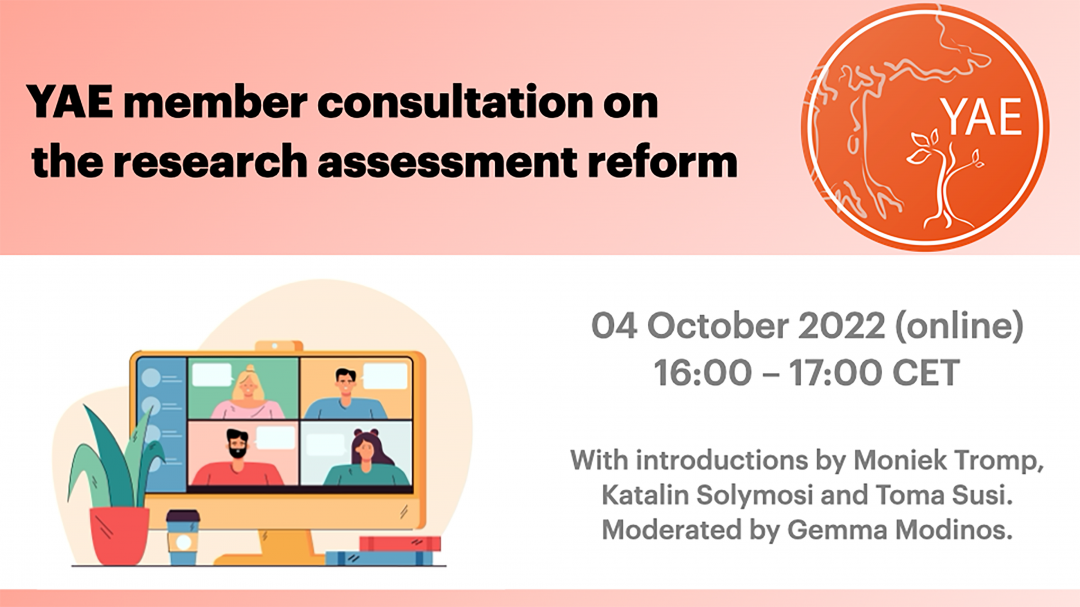
YAE member consultation on the research assessment reform

We would like to invite you to a closed meeting among YAE members as a consultation on your views about the current initiative to reforming the way research and researchers are evaluated in Europe. The meeting will be held online on Tuesday 4th October at 4pm CET – this will be an informal discussion among YAE members as the YAE Board would like to hear your views on this process. In particular, we are seeking a diversity of views in terms of the disciplines and geography that encompasses our membership.

To provide some background, the YAE has played an active role in a recent initiative between research stakeholders across Europe and the European Commission that culminated in the recent publication of a list of core commitments towards the research assessment reform. The agreement was put together after months of consultations among a coalition of a core group of 20 organisations (including the YAE), and more than 350 interested stakeholder organisations from across Europe. 

Briefly, these core commitments describe a new way to evaluate research outputs that recognises the diversity of research careers and contributions to science; bases research assessment primarily on qualitative evaluation by peers; abandons the “inappropriate uses” of journal and publication metrics; and avoids the use of international rankings of research organisations in research assessment. The agreement can be found here.

Please join us in this consultation so that we can have a better understanding of the position of the YAE membership on this matter. The session will be organised by Scott Bremer (YAE Activities Chair), moderated by Gemma Modinos (YAE Chair), and will have brief introductions to the topic and the YAE work on it by Moniek Tromp (YAE Vice-Chair), Katalin Solymosi (YAE Recruitment Vice-Chair), and Toma Susi (YAE member and former YAE Vice-Chair). You can also find more information on this initiative through the recent talk that Toma gave with the Commission for the European Research Area (ERA) here (video duration 11 mins).

Please register using this link:

Please note that the event is restricted to current YAE members only.

Login details will be circulated to registered attendees closer to the event. If you have any questions about the event please contact Scott (activities@yacadeuro.org) or Gemma (chair@yacadeuro.org). 

Portrait of Wouter van den Bos

van den Bos

Affiliation: Developmental Psychology Department of the University of Amsterdam

Keywords: Computational modeling, decision-making, reinforcement learning, adolescence, development, social learning, social networks, teenagers.

Webpage

Orcid identifier

Full profile:

Wouter van den Bos has a broad background in both neuroscience and developmental psychology and his research broadly investigates the relation between the developing brain and changes in behavior. More specifically his research is focused on how changes in brain function and structure relate to typical and atypical development of learning and decision-making.

To approach these questions he uses computational models, social network analyses and methods form experimental economics. Computational models are used to quantify behavior and the complex processes underlying learning and decision-making. The parameters from these models support spanning the bridge between developmental theories and neurobiology and enable to identify more specific processes that underlie developmental change.

Using these techniques he has have investigated the neurocognitive development of risky & intertemporal choice, basic learning mechanisms, social decision-making and social learning. Currently Wouter is an Associate Professor at the Developmental Psychology Department of the University of Amsterdam & Director of the Connected Minds Lab and an adjunct Research Scientist at the Max Planck Institute for Human Development Center for Adaptive Rationality. His work is funded by national (NWO, DFG, NSF) and international (ERC) funding agencies.

Sternai

Affiliation: Department of Earth and Environmental Sciences DISAT, University of Milano-Bicocca

Keywords: Climate-Tectonics interactions, Geodynamics, Geophysics, Numerical Modeling

Webpage

Orcid identifier

Full profile:

Portrait of Pietro Sternai

Pietro Sternai graduated in Geology at the University of Milano (Italy) and obtained his Ph.D. at ETH Zurich (Switzerland) in 2012. Two subsequent Postdocs brought him at the University of Orléans (France), Caltech (USA) and the University of Cambridge (UK).

He then moved to the University of Geneva (Switzerland) as an ‘Ambizione’ Fellow funded by the SNSF. In 2019, he became Assistant Professor of Structural Geology at the University of Milano-Bicocca (Italy) and in 2022 he was promoted to Associate Professor in the same Department.

Pietro Sternai currently leads the Coupled System (CoSy) research group, whose main target is to unravel the climate-tectonics interactions and the role of magmatic-volcanic activity in affecting the geological carbon cycle using geodynamic and landscape evolution numerical modeling constrained by all sorts of geological observables. This multidisciplinary research is, and has been, supported by prestigious grants such as the Ambizione (SNSF) and Levi Montalcini (Italian Ministry of Education) fellowships and the Progetto Dipartimenti di Eccellenza 2018-2022 (Italian Ministry of Education).

In 2019, 2020 and 2021, Pietro Sernai was awarded with three Young Talent Prizes by the University of Milano-Bicocca and Accademia Nazionale dei Lincei (the most prestigious Italian Scientific Academy) and, in 2022, he won the Flinn-Hart award of the International Lithosphere Program. Pietro Sternai is Associate Editor of Journal of Geophysical Research – Solid Earth since 2020 and has been invited to become a member of the Young Academy of Europe in 2022.

Cserép

Affiliation: Institute of Experimental Medicine, HU

Keywords: Microglia-neuron interactions, intercellular communication, quantitative immunohistochemistry, high-resolution optical microscopy, 3D electron microscopy

Webpage

Orcid identifier

Full profile:

Portrait of Csaba Cserép

Csaba Cserép studied Medicine and received his PhD in theoretical medicine from the Semmelweis University, Budapest, Hungary. After working in the Laboratory of Cerebral Cortex Research he moved to the Laboratory of Neuroimmunology (Institute of Experimental Medicine), where he is responsible for high resolution 3D anatomical and functional studies. His research concentrates on understanding how microglia communicate with other brain cells in health and disease, with a special emphasis on direct cell-cell interactions. He played a leading role in the discovery of microglia-neuron somatic junctions, substantially influencing future research directions of the field. His current focus is to understand the role of mitochondrial signaling processes in intercellular communication. The ultimate goal of these directions is to understand the detailed structural-functional correlates of the brain’s immune system, which is indispensable for the development of future therapeutic strategies.

He contributed actively to the introduction of cutting-edge imaging methods in Hungary, as he pioneered STORM superresolution imaging and transmission electron tomography. The methodological repertoire also includes STED superresolution imaging and 3D scanning electron microscopy. He is also board member of the Hungarian Microscopy Society.

He published 20+ scientific papers mainly for neuroscience and neuroimmunology focused journals. His scientific activity was supported and recognized nationally and internationally with various scholarships and prizes (János Bolyai Research Fellowship, Hungarian National Excellence Program, Outstanding Paper Award of the European Microscopy Society, Award from the Hungarian Society for Microscopy, Young Investigator Award of IEM HAS). His students received 10+ prizes at various national and international scientific competitions.

He is active in competitive sailing as an athlete himself (competed at the 2004 Athens Olympic Games), and also at the organizational level, being Vice President of the International 29er Class Association, board member of Balatonfüredi Yacht Club and president of the Hungarian 9er Class Association.