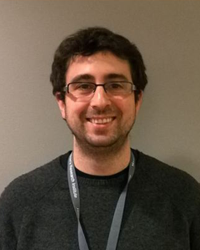
Hoogenraad

Casper Hoogenraad
Affiliation: Utrecht University, NL


Keywords:

 

Webpage


Full profile:

Casper Hoogenraad is a member of “De Jonge Akademie (DJA)”, which is part of the Royal Academy of Arts and Sciences (KNAW). DJA focuses on three themes – interdisciplinarity within science and scholarship, science policy and science and society. See short introduction video (in Dutch). For more information about De Jonge Akademie, please see their website.

Research summary

The primary goal of the lab is to understand how intracellular protein trafficking underlies neuronal development and function. This work is significant because neurons are dependent upon very precise localization of proteins to support their ability to send and receive information.

Neuronal cells represent a unique model for addressing fundamental questions in molecular and cellular biology. The size, shape and specialized functions of neurons permit analyses of neuronal migration, axon and dendrite outgrowth, and synapse formation and function. By understanding the basic cellular mechanisms and development of individual neurons, we can better understand how the nervous system develops and functions in an entire animal.

We particularly focus on the areas of microtubule cytoskeleton, synaptic cargo trafficking and synaptic plasticity. The research in the lab can roughly be divided in three themes:

Cytoskeleton dynamics during neurodevelopment and synaptic plasticity
Motor proteins and adaptors as regulators of synaptic transport
Neuropsychiatric disorders linked to intracellular transport
Our research relies on combining different genetics, biochemistry, molecular, and cellular biology methods in in vitro (neuron cultures), ex vivo (brain slices), and in vivo (mice) systems. In addition we employ immunofluorescent confocal microscopy, high-resolution live cell imaging (spinning disc microscopy and total internal reflection fluorescence microscopy, TIRF) and quantitative analysis using advanced high-resolution microscopy (photo-activated localization microscopy, PALM).


Husby

Affiliation: Uppsala University, SE

Keywords: Phenotypic plasticity, Adaptation, Statistical genetics, Seasonality.

Webpage

ID_symbol_B-W_128x1280000-0003-1911-8351

Full profile:

Arild Husby completed his MSc in quantitative biology at the Norwegian University of Science and Technology (NTNU) in 2005 before moving to Edinburgh to take up a Marie Curie PhD position in quantitative genetics (awarded in 2010). He then moved to Uppsala University for a post doc position before being awarded a grant from the Norwegian Research Council to return to NTNU to study genomics of phenotypic plasticity using two wild bird populations as model system. In 2014 he was recruited to University of Helsinki for a tenure-track position in ecological genomics and to start his own group. In 2015 he was awarded a large national grant from the Norwegian Research Council (“Young talented researcher”) and in 2016 he was elected as fellow of the Young Academy of Europe. In 2018 he moved to Uppsala University for a lectureship where he is currently based and has his own research group.

His research focuses on understanding how organism can adapt to changing environmental conditions, in particular the genetic basis of adaptation to phenotypic traits that are involved in seasonal rhythms. He has published over 40 papers in leading scientific journals, is regular part of PhD thesis examinations and reviewer for grant funding bodies (e.g. National Science Foundation, Swedish research council, Estonian research council) and for many different scientific journals. Husby is actively engaged in science policy through YAE (vice chair of selection committee for life sciences) and a strong advocate of evidence based policy making.

Edgar Huitema

Edgar Huitema
Affiliation: University of Dundee, UK


Keywords:


Webpage


Full profile:

My current research is aimed at understanding the mechanisms by which Phytophthora sp., cause epidemics on crop plants. More specifically, work in my group focuses on the functions of the Crinklers, a novel class of cytoplasmic effectors from Phytophthora. In addition, we are interested in the events that couple signaling cues to developmental transitions during pathogeningress. We hypothesise that these processes are critical for disease establishment and form a possible basis for regulation of effector secretion and delivery.

Kops

Geert Kops
Affiliation: University Medical Center Utrecht, NL


Keywords:


Webpage


Full profile:
Geert Kops is Professor of Molecular Tumor Cell Biology in a shared appointment between the department of Molecular Cancer Research and department of Medical Oncology, at the University Medical Center Utrecht, The Netherlands. He obtained his PhD in 2001 at Utrecht University for his investigations into the PI3kinase-PKB/Akt–FOXO pathway and its role in cellular proliferation. He then pursued postdoctoral studies in the lab of Don Cleveland at the Ludwig Institute for Cancer Research in La Jolla, California, where he investigated aspects of the mitotic checkpoint. He returned to the Netherlands in 2005. His primary research interests include signaling networks that regulate chromosome segregation, and the potential use of targeting these networks as an anti-cancer strategy. He is the recipient of the NVBMB prize 2004 and was awarded an ERC Starting Independent Researcher Grant from the European Research Counsil in 2009.

Kornfeld

Jan-Wilhelm Kornfeld
Affiliation: Max-Planck Institute for Metabolism Research, DE


Keywords:


Webpage


Full profile:
My research interest lies within the identification, molecular understanding and therapeutic targeting of signaling pathways dysregulated in two classical ageing-related diseases: Cancer and obesity-associated insulin resistance.

Next-Generation RNA Sequencing efforts have revealed the pervasive transcription of mammalian genomes which gives rise to thousands of noncoding RNA (ncRNA) genes, the number of which probably matches that of classical, protein-coding genes. Better understanding the regulatory principles excerted by these ncRNA, which are often expressed in a temporally and spatially specific manner, will hopefully lead to novel anti-ncRNA therapeutics against complex diseases.

Romain Koszul

Romain Koszul
Affiliation: Institut Pasteur, Paris, FR


Keywords:


Webpage


Full profile:

Kurz

Thimo Kurz
Affiliation: University of Dundee, UK


Keywords:


Webpage


Full profile:
Thimo Kurz was born in Malsch, a small German town in the southwestern state of Baden-Württemberg. He attended the Eberhard-Karls University of Tübingen, from where he obtained the German Diplom in Biology (equivalent to a Master’s degree) in 2001. He then moved to Bruce Bowerman’s laboratory at the University of Oregon USA, where he obtained his Ph.D. in 2003 for studies on the mechanisms governing the first mitotic divisions of the early C. elegans embryo. This work led to the realization that proper cytoskeletal organization during C. elegans embryogenesis requires the activity of a cullin-3 based E3 ubiquitin ligase, which is regulated by the ubiquitin-like protein Nedd8. In 2003, Thimo took up a postdoctoral position with Matthias Peter in the Institute of Biochemistry at the ETH Zürich, Switzerland, to study ubiquitin and ubiquitin-like proteins in more detail. Here he identified and characterized the evolutionarily highly conserved Nedd8 E3 ligase Dcn1.

In 2008 Thimo Kurz was appointed Programme Leader in the newly formed Protein Ubiquitylation Unit of the Scottish Institute for Cell Signaling. His work focuses on the function and regulation of Ubiquitin and Ubiquitin-like protein conjugation systems. He is especially interested in elucidating the molecular mechanisms underlying E3 ligase activity, and how defects in these enzymes cause human diseases.

Leidel

Sebastian Leidel
Affiliation: Max Planck Institute for Molecular Biomedicine, Münster, DE


Keywords:


Webpage


Full profile:
The origin of life is almost impossible to track. Chemical conditions on early earth were harsh and complex and are very difficult to reconstruct. Thus, it is challenging to understand how a system of biomolecules that supports Darwinian evolution could evolve out of organic molecules of prebiotic origin. In recent years, theoretical and experimental chemistry combined with analysis of extreme chemical environments on earth and on extraterrestrial missions have helped our understanding of early life’s chemistry.

Today, we assume that the earliest moment in molecular evolution that allowed for heredity is represented by an “RNA world”. This term describes a scenario, where the genetic information was passed on in the form of RNA, which also acted as the key catalyst. Nowadays, RNA has lost the function of information storage to DNA and the function of catalysis to proteins. Nevertheless, it is still critical for all cellular functions. It acts on multiple steps in the translation of DNA sequences into proteins. Furthermore, RNA can act as a ribozyme and through a plethora of small and long non-coding RNA (ncRNA) regulates gene expression and protein translation.

Thus, it is not surprising that RNA has reentered the central stage of biomedical research in recent years. The use of small interfering RNA has revolutionized experimental research and drug discovery allowing for genome-wide screens for virtually every cellular process. New classes of ncRNA have opened new avenues for our understanding of gene regulation and may provide new mechanisms and targets for medical interventions. Therefore, RNA research is experiencing an extremely exciting period of new discoveries that will not only change our view about how life came to place but may also affect our daily lives in the future.

Maurice

Madelon Maurice
Affiliation: University Medical Center Utrecht, NL


Keywords: Molecular Cell Biology


Webpage


Full profile:

Quintana

quintana-albertAffiliation: Institut de Neurociències, Universitat Autònoma de Barcelona, ES

Keywords: Mitochondria, Mitochondrial disease

Webpage

ID_symbol_B-W_128x1280000-0003-1674-7160

Full profile:
The Quintana lab investigates the molecular mechanisms defining why some neuronal populations are particularly affected by mitochondrial disease, with the overarching goal of identifying novel targets that lead to improved treatments for mitochondrial disease patients.

Dissecting neuronal susceptibility to mitochondrial disease

Mitochondria are the powerhouses of the cell. Mutations that render mitochondria unable to generate energy cause a group of rare and usually fatal pathologies collectively known as mitochondrial disease. It has been estimated that 1 in 5000 children in the US will develop a mitochondrial disease. Currently, there is no cure for mitochondrial disease and the treatments available are mostly ineffective. Energy-demanding cells such as neurons are especially sensitive to mitochondrial disease, and they account for most of the clinical signs and symptoms observed in humans, such as hypotonia, ataxia, seizures and early death. However, even if every single cell in the body carries the mutation, only specific brain areas seem to be affected by the deficiency. The Quintana lab current research focuses on identifying the neuronal populations susceptible to mitochondrial disease and which mechanisms are making these neurons die. This knowledge is essential to understand and fight these incurable diseases. The Quintana lab uses a wide array of approaches, combining molecular biology, stereotaxic surgery, mouse genetics and behavior, biochemistry, histology, optogenetics and in vivo electrophysiology to reveal novel pathways and mechanisms in neuronal function and pathology and open new and unexplored lines of research and therapeutic targets to treat mitochondrial disease encephalopathy.