Former YAE Chair Nicole Grobert joins Group of Chief Scientific Advisors to EC Commissioner Moedas

In 2015, the European Commission initiated a new Scientific Advice Mechanism (SAM). In SAM, a select Group of Chief Scientific Advisors coordinates evidence-based science policy for the European Commission. European Academies are included in this process through SAPEA (Science Advice for Policy by European Academies) of which the Young Academy of Europe (YAE) is part through its strategic partnership with the Academia Europaea.

Nicole Grobert joins Group of Chief Scientific Advisors
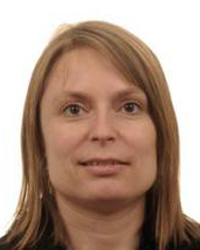
Professor Nicole Grobert, Former YAE Chair

Today, the EC has announced that Professor Nicole Grobert, former YAE Chair, has been selected to become a member of the Group of Chief Scientific Advisors who work closely together with European Commissioner Carlos Moedas. Similarly, she will now be at the receiving end for the evidence-based policy advice that the SAPEA consortium will provide to the Group of Chief Scientific Advisors and the EC. The YAE congratulates Nicole for this major achievement.

A full press release can be found here. The EC announcement can be found here. 

4th May 2018. For further information please contact info@yacadeuro.org

Bos

Jorunn Bos
Affiliation: James Hutton Institute, UK


Keywords:


Webpage


Full profile:

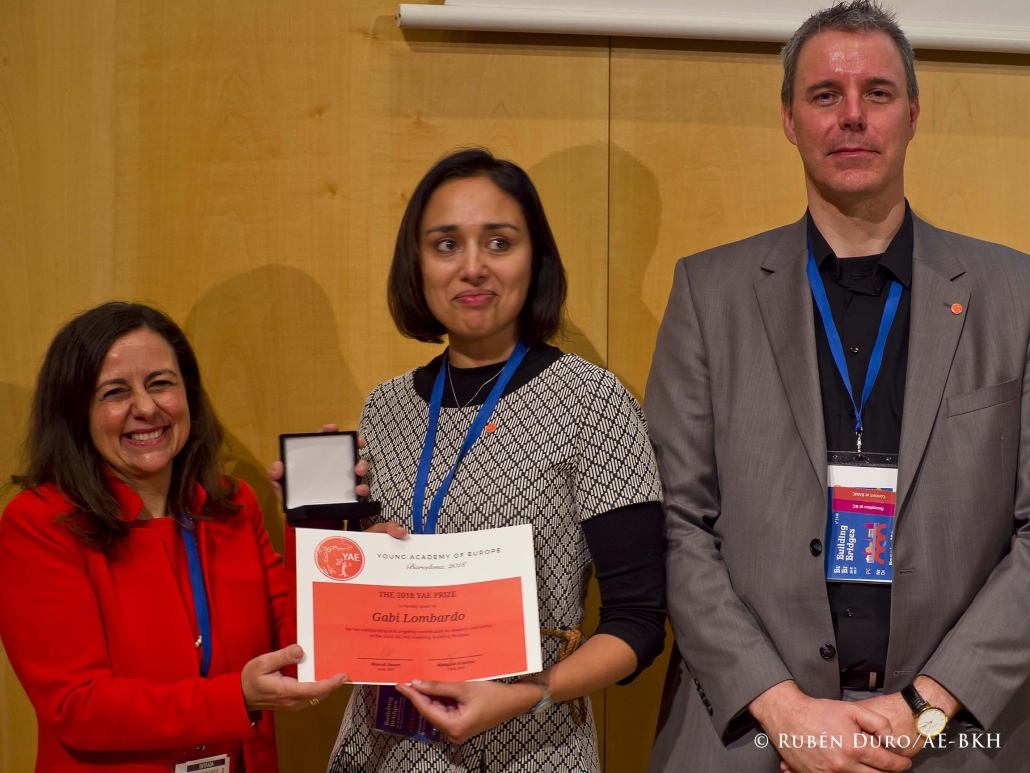
Dr Gabi Lombardo is awarded the YAE Medal 2018 by YAE Chair Dr Mangala Srivinas and former YAE Chair Marcel Swart

Second edition of the Annual YAE Prize awarded to Dr. Gabi Lombardo

Dr Gabi Lombardo is awarded the YAE Medal 2018 by YAE Chair Dr Mangala Srivinas and former YAE Chair Marcel Swart

We are pleased to announce that the second edition of the Annual YAE Prize has been awarded to Dr. Gabi Lombardo. This Prize will be awarded during the YAE Meeting in Barcelona next November. Dr Lombardo is an expert in global research funding, research and education policies, and international higher education. She has high-level experience in the interface of strategy, policy, research and business. Her field of work accompanies strengthening connections across the university and beyond, within a complex field of external, and international stakeholders. She holds an extensive record in the design and implementation of highly innovative projects, including public and private business investing in HE in the US, China and Europe. She has also a record of establishing multilateral institutional collaborations and university representative offices abroad. Dr Lombardo holds a senior level experience in strategic planning and ‘foresight’ planning in elite higher education institutions, international research funders and associations. She is a constant promoter of the value of the Social Sciences and Humanities from her position as the Director of The European Alliance for SSH, which is the largest science policy organization for SSH in Europe, and has a specific approach to give voice in the science policy debate to an international scientific community.

7th March 2018. For further information please contact info@yacadeuro.org

Csanád


Affiliation: Eötvös Loránd Tudományegyetem, HU

Keywords: high energy physics, heavy ion physics, femtoscopy, hydrodynamics, quark gluon plasma

Webpage

ID_symbol_B-W_128x128 0000-0002-3154-6925

Full profile:

Máté Csanád studied physics at the Eötvös University (Budapest) and partly at the Leopold-Franzens-Universität Innsbruck (Austria) and the Stony Brook University (USA). He obtained his PhD from the Eötvös University in 2007, based on his research in the fields of femtoscopy and hydrodynamics and their applications in high energy heavy ion physics. He is still working on this topic, as an associate professor at the Eötvös University. He is a member of the PHENIX Collaboration at RHIC, and the TOTEM and CMS Collaborations at the LHC. With these collaborations, he published more than 200 papers (cited >16000 times). He also published 35 few author papers (cited 500 times). He was a visiting researcher at CERN, at the Brookhaven National Laboratory and the Stony Brook University. He was honoured with, among others a Fulbright Scholarship, a Senior Leaders and Scholars Fellowship by HAESF, two Bolyai Scholarships. He was also supported by the New National Excellence Scholarship and the National Research, Development and Innovation Office of Hungary. He organized many international conferences, including the WPCF, Low-X, BGl conferences and the yearly Zimányi Schools. He is a member of the management board of the Hungarian Fulbright Association. He supervised or is supervising 25 theses on the BSc, MSc and PhD level. His students also won prestigious awards, such as 9 prizes at the National Student Research Council Prize, a Pro Scientia medal of the Hungarian Ministry of Human Capacities or diplomas at the International School of Subnuclear Physics (Erice, Italy).

The research interest of Máté Csanád are focused on the field of high energy heavy ion physics. He works on hydrodynamical modeling of the quark gluon plasma created in ultra-relativistic collisions, mostly with analytic solutions of relativistic hydrodynamics. His research interests also includes femtoscopy, to explore the femtometer scale space-time extend of the quark gluon plasma with quantumstatistical correlations. Besides these two main topics, he is interested in phenomenological models for diffraction and for the search of the critical
point of QCD.

YAE Statement on the next framework programme FP9

After the midterm evaluation of H2020 the next step towards “Maximising the Impact of EU Research and Innovation” is the preparation of the next framework programme, FP9. The YAE urges the EC to provide more funding for bottom-up blue-sky research with less administrative burden, in combination with strategies for supporting the brilliant minds of the whole European research area throughout their careers. See the YAE press release for more information.

20th January 2018. For further information please contact info@yacadeuro.org

The Joint YAE/AE/ALLEA Meeting

At the joint YAE/AE/ALLEA meeting in Budapest, it was great to see such a large input from many of our YAE fellows. One of the main contributions was from our Chair Marcel Swart, who was involved in a round-table session on SAPEA and joined by academies from the UK, Germany, Hungary, EURO-CASE, the Director-General Research and Innovation EU and the Presidents of ALLEA and Academia Europaea. Our Chair highlighted that the science policy discussed in SAPEA mainly affects young researchers in the future, and hence it is very important that young researchers should be involved in the SAPEA processes as they are through the YAE, with one of our fellows leading one of the chapters for the Food from the Oceans topic and another fellow being member of one of the Working Groups.

As well as taking part in many of the important discussion sessions in the joint meeting, some of our fellows also had the opportunity to share their research. In particular we heard from Mangala Srinivas who presented about Cellular Therapies in Europe: Current status and future possibilities in a plenary session titled Health and Disease, and Healthy Living. The session covered a broad area of health and disease, and ended with a panel discussion on the regulatory issues facing health care today. Regulatory issues are a major concern, given that many new types of therapies, including cell therapies, simply do not fit the schemes developed for traditional drugs and is something that Mangala highlighted in her talk. Mangala also commented,

“I’m not sure I would have received this invitation to talk if not for the YAE, so that’s just another benefit of being an active member!”

Another of our YAE members to talk about their research was Kate Hendry who spoke in the Climate, Environment, Water and Future Earth plenary session. Kate talked about the issues of high latitude and mountain glaciers melting at an ever increasing rate. Kate said,

“The removal of freshwater, locked up as ice on land, into the ocean is causing unprecedented rates of sea-level rise”

She also discussed the evidence that subglacial melt from the Greenland ice sheet releases a large quantity of key nutrients, such as phosphate and silicon, in addition to trace elements both in dissolved form and as reactive particles. As these nutrients escape into the ocean, they will have a major impact on the marine ecosystems, potentially changing algal populations that feed important fisheries. These changes will have clear impacts on local populations, reliant on natural marine resources. We can only mitigate against these impacts by curbing greenhouse gas emissions, which will take a global effort of multi-lateral agreements. We can also engage with local populations, and plan for changes and help with adaptation. However, we are only just beginning to understand the impact of ice sheet melt on nutrient cycling and oceanic ecosystems, and we don’t fully understand what the future holds for these marine resources. Kate ended her talk by reminding the audience that there is a clear need to put resources into modelling future outcomes, and include nutrient cycling and ecosystems into our future projections.

Having such a strong contribution from our YAE fellows in meeting such as the YAE/AE/ALLEA, is crucial in shaping future research and research policy. We hope that many more of our YAE fellows have the opportunity to speak and take a leading role in the next joint meeting.

Best wishes

YAE board

17th Oct 2017. For further information please contact info@yacadeuro.org

Canevaro


Affiliation: The University of Edinburgh, UK

Keywords: Greek history, Athenian democracy, Greek law, political institutions, political theory

Webpage

ID_symbol_B-W_128x1280000-0001-5884-1839

Full profile:

From Alessandria, a provincial town in northern Italy, Mirko Canevaro left for Torino to study Classics. There he was involved in politics, campaigned against authoritarian changes to the Italian constitution and started a project that brought teaching of Civic Education to many schools of Piedmont. A move to England landed him a Durham PhD – and a Geordie wife. He has held research positions in Greece (at the British School of Athens) and Germany (at the Universität Mannheim), and is now Reader in Greek History at the University of Edinburgh (after being Chancellor’s Fellow).
His research has been funded by the Arts and Humanities Research Council, the Alexander von Humboldt Foundation, the Leverhulme Trust, the Royal Society of Edinburgh and, most recently, the European Research Council. In 2014 he was appointed Member of the Royal Society of Edinburgh Young Academy of Scotland and he has been, since January 2015, Co-Chair of the Arts and Humanities in Society Working Group. In 2015 he was awarded a Philip Leverhulme Prize in recognition of his research achievements. In spring 2017 he was a Visiting Professor of Greek History at the Università di Cagliari. In 2017 he was also awarded the Royal Society of Edinburgh’s Thomas Reid Medal for Excellence in Arts, Humanities and Social Sciences, in recognition of his research on Greek politics and law.
Mirko is a Greek historian interested in institutional, social and economic history. His work has focused on the sources for Athenian legal and institutional history, on the ideology and procedures of constitutional reform in Athens, on the political philosophy of Aristotle, and on inequality of wealth and honour in the Greek city-states.

6th Annual Meeting of the Young Academy of Europe, 2017: an update from the Board

Dear Members of the Young Academy of Europe,

Many of you joined us in Budapest for our Annual General Meeting and joint meeting with the Academia Europaea. Those who were there, will agree that is was a wonderful occasion held in a beautiful backdrop of the Hungarian Academy of Sciences. We had a very productive first day where we were joined by hfp consulting, who lead an informative workshop on time management. We all then went on to enjoy the Launch Party for the YAE charity, were new and old members got to network and form new friendships. Due to the new charity status of the YAE we spent some time discussing the Bylaws and also heard some interesting presentations from several of the National Young Academies, which we hope will join us in helping to grow the YAE in numbers and status.

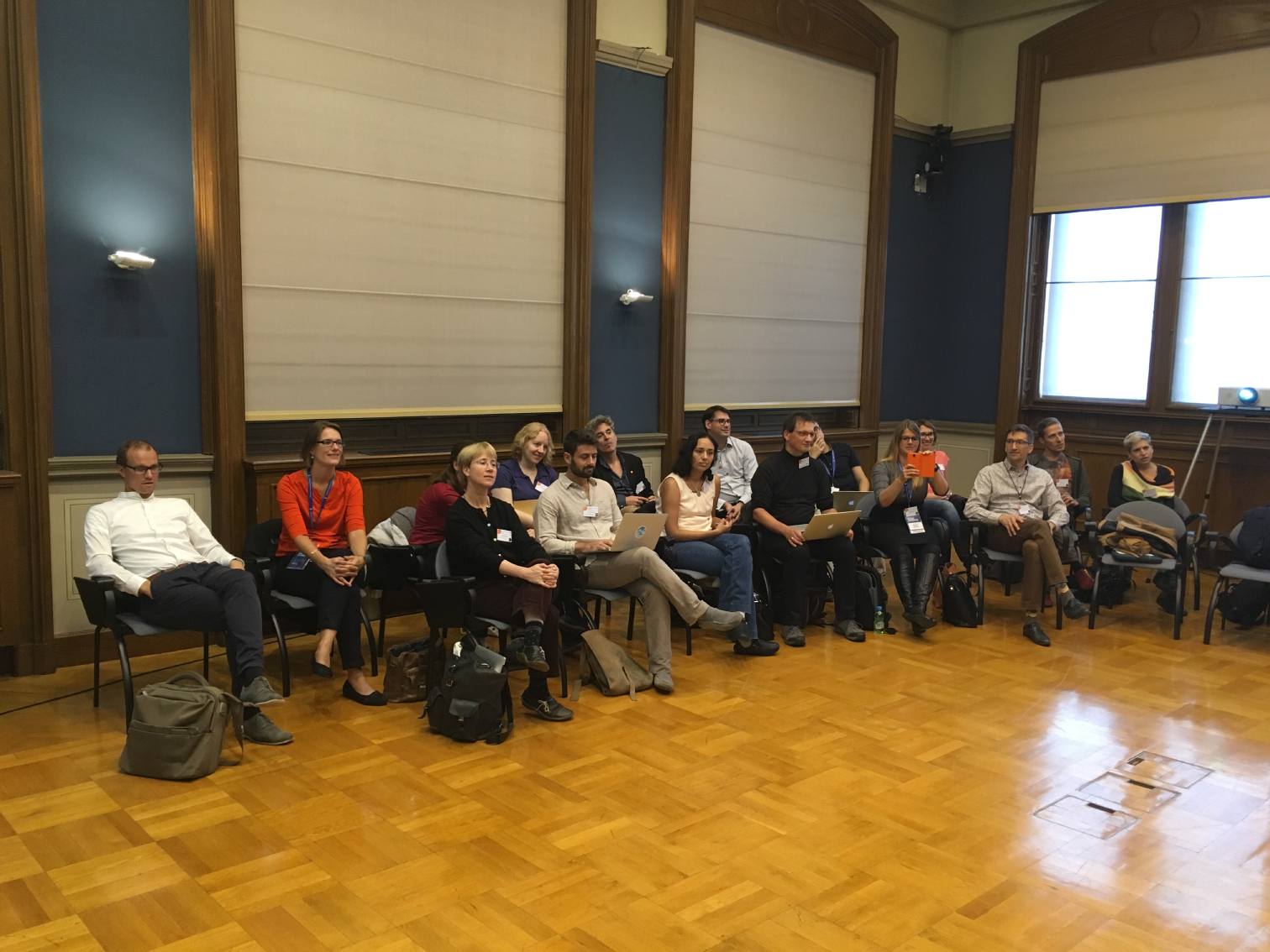
YAE Annual Group Meeting in Budapest

Finally we had the important business of electing our new board members in which there were 7 vacant positions. Members of the Board who stepped down were: Sven Bestmann, Nicole Grobert, and Alexander Fidora. Their contribution and countless efforts on behalf of the YAE were enormous and we owe them a great debt of thanks.
Following the outcome of the election, the composition of the new Board for 2017/2018 is as follows:

YAE Annual Group Meeting in Budapest Election Outome

Marcel Swart Chair
Mangala Srinivas Vice-Chair
Sebastian Leidel Treasurer
Monica Brinzei Secretary
Yan Lavallee Selection Committee Chair
Lydia Schumacher Selection Committee Vice-Chair
Sylvestre Bonnet Selection Committee Vice-Chair
Toma Susi Membership Chair
Karin Sigloch Membership Vice-Chair
Manuel Fernández-Götz Membership Vice-Chair
Kate Black Communications Chair
Raúl Arenal Communications Vice-Chair


Following our own AGM, there was the Joint AE/ALLEA/YAE meeting, where the YAE was well represented during the scientific sessions, both by speakers and session leaders. The highlight of the Joint Meeting however was the very first YAE Annual Prize, which was awarded to Rianne Letschert, Rector of Univ. Maastricht, you can read more about Rianne and the prize here.

We have already started planning the next annual AGM meeting, which will most likely take place in Barcelona in the third week of November. We hope many of you will be able to join us then.

Best wishes
YAE Board

Rianne Letschert is awarded the YAE Medal 2018 by Marcel Swart, former YAE Chair

First edition of the Annual YAE Prize awarded to Rianne Letschert

During the Joint AE/ALLEA/YAE Meeting in Budapest, we awarded the first edition of the Annual YAE Prize to Rianne Letschert. Professor Letschert has had an outstanding academic career, working in the field of international law, with a focus on minority rights and human rights, and is now the Rector Magnificus (equivalent to Provost) of Maastricht University – the youngest female rector ever appointed at a Dutch university. She has been an active member of the Dutch Young Academy since 2013 (De Jonge Akademie), becoming its chairperson in 2015. In 2015, she was appointed to the Identification Committee that assisted in selecting the members of the High Level Group at the heart of the Scientific Advice Mechanism. She is a vocal and active advocate of science communication for young people, and for promoting diversity. It is a great privilege for us that Professor Letschert allowed us to publish her acceptance speech on the YAE website.

YAE Prize winner 2017, Rianne Letschert
YAE Prize winner 2017, Professor Rianne Letschert

Distinguished audience, in particular dear members of the Young Academy of Europe,

I feel extremely honoured for being awarded the first annual YAE prize, by an organisation representing dedicated, intelligent, hardworking European scientists. In 2013, I was appointed as member of the Dutch Young Academy and as of April 2015 I was allowed to chair this fine group of outstanding young and ambitious talents. This, ladies and gentlemen, was a ground breaking experience for me. Members of the Young Academy constitute a unique community of young scientists from all scientific disciplines that is critical and cooperative at the same time.

Without exception, members of the Young Academy focus on broad issues; the academic system; the relationship between science and society; our responsibilities in this respect and the ways forward we should explore. During all the discussions I had in the last years, I experienced an attitude within the Young Academy that was geared toward deeper understanding and synthesis, and without exception, members contribute to the discussion in an altruistic and outgoing manner; never defending their personal agenda; never limited by the straight-jacket of their scientific discipline or their home university or faculty. The diversity of insights that they bring to the table is enormous and this further convinced me that an atmosphere of cooperation and diversity can make science and the university as a whole, strong, innovative and resilient.

I also would like to thank Professor Swart for his extremely nice words, and would like to explain to you why I actually made the choice to stop working full time as an academic, and becoming an administrator, the word alone may arouse allergic reactions….

It was a difficult choice, in particular because I still believe I work in one of the most intriguing fields of study, namely the field of international justice, in which I focus on victims’ needs, where topics relating to sustainability and resilience are at the heart of analysis. Some colleagues fiercely criticized my decision to temporarily lessen my academic work from full time to part time. I hope that my explanation to you today is convincing, but even more so I hope that my dreams for the future of academia may prove sustainable in the long run, strengthening also the still existing resilience of academics and the institutions representing them, which is under serious threat at the moment. Universities are frequently in the focal point of attention because things are allegedly not going well. Governors and authorities are focusing too much of their attention on rankings and performance indicators. Employees complain about stress at work and feel frustrated by the enormous pressure they feel imposed on them by the university system. Students call for more participation and democracy, and want to be actively involved in the process of managing a university. Media feast on fraud cases and amplify any kind of academic abuse they notice. Society in general wants to know what universities can contribute on their account and call upon us for knowledge utilization.

Now what has this all to do with my decision to become a university administrator… I will tell you… It all started just some two years ago, when I received a personal grant from the Dutch National Science Organisation of almost 1 million euro. The same day a regional newspaper wrote in headlines ‘2.4. million grant money for three scientists from Tilburg University’. All media, from within the university and externally that followed in that week, presented the news as an individual achievement from my side, a solo act.

Time and again the same academics are put in the spotlight, and it appears that more and more resources go to a smaller group of individuals. These ‘Scrooge McDucks of Science’ see their stars rise, since their CV’s include grant after grant. In the meantime, a large group of scientists feels frustrated, often because they failed to get their tenth submitted grant awarded, sometimes with a score not so far off from the lucky ones.
Does this say anything about their academic quality? Sometimes it does, sometimes it does not. Everyone who has obtained a grant, knows it is only partly based on your qualities as a researcher. To get a grant, you need to be a great scientist, but also an enthusiastic presenter, at times an excellent statistic, a creative thinker, a competent manager, an inspiring teacher, a tireless workhorse and so fort and so on…

We all know that the high earners of science probably do not possess all these skills. They lead a team. A team that often participated in writing the grant proposal. A team that together possesses all the skills I just referred to. A team with one or more Isaac Newton kind of thinkers, meaning researchers who are brilliant in their work, but may not always have the skills to write a grant proposal with the required language and parameters, and may also not always possess excellent presentation skills. Such researchers may become lost in the shadow of the stars, that sometimes you don’t see them at all anymore.

From the moment I received the grant in 2015, I emphasised it was a team effort. When I became rector of Maastricht University, I decided to leave the project in Tilburg. People asked me ‘Why? Wasn’t it my grant? My project’? ‘Nonsense’ I said. Together we had obtained the grant. My plea today is to shift the focus from the individual to the team, to talk about Team Science. Cause even Isaac Newton did not work alone!

I am convinced that the integration of team science in calls for scientific proposals but also in our evaluation mechanisms that measure performances of academics, could diminish the pressure on individual scientists but also on the current grant mechanisms, that both at the national and European level are overburdened by the number of proposals submitted. It will help stimulate our scientific endeavours and achievements and will increase attention for the vast group of academics that now miss out in the grants circus.

That cooperation improves scientific achievements is a known fact. Cooperation that crosses boundaries of disciplines, faculties, universities and national borders. From the history of science we know that major discoveries often take place in an environment free from competition. As the Roman author Publilius Syrus already wrote in the first age before Christ:

Ibi semper est victoria, ubi concordia est(freely translated: there is always victory when there is cooperation).

Research from the Nuffield Council on Bioethics shows that many academics are enthusiastic about more acknowledgment for teamwork and interdisciplinary research. Because it fosters innovation and better facilitates the translation from scientific knowledge to society.

What does this mean in practice? This first of all requires a culture change, at grant providing organisations such as the ERC and the National Research Councils, but also by scientists themselves. A new approach requires new indicators. Think of a Team Index instead of an H-index, where the T-index is determined by the diversity of competences within a team. Not only the CV of the principal investigator counts, but the cv’s of all team members is included in the appraisal of an application.

I see many advantages in such approach in awarding grants and in evaluating scientific successes. Talented scientists, who, for whatever reason, may not have succeeded in obtaining a grant, no longer have to fear their future. Currently, many young academics connect their future to their chances of obtaining a grant or not, or their employer will do so. Also I thought when submitting my national grant application and a starting grant ‘if I don’t get it, I need to stop in academia. My chances to obtain another grant will be almost zero and I will make myself useful elsewhere…’.

I will not say myself that that would have been a major loss for science, but in many other instances that could of course be the case. The current individualistic focus leading to personality cults discourages researchers, maybe the Isaac Newtons of the future. And this, my dear audience, was one of the reasons I decided to become rector of the University of Maastricht.

The Team Science Committee of the National Research Council of the US has extensively described that the involvement of team members in the preparation of a scientific project increases the effectivity of the study. When the grant is awarded, this should mostly be spend to finance the team that wrote the application, instead of only financing new post docs or phds. The development of the entire team is monitored in such approach.

As supporter of diversity, I cannot help to also argue for a diverse composition of teams. It seems an open door to say that the quality of scientific work improves because of diversity, but unfortunately this door is not that open everywhere. With diversity I do not only refer to a proportional composition between men and women, but also to a proper balance between nationalities, age and competences.

Luckily the trend of team science is growing. Internationally, in the last decade, we saw a rise in the number of granted projects that are led by more than one PI. For example in the US, by the National Science Foundation and the National Institutes of Health. Also these institutions view team science as an important approach to address the high application pressure and the low success rates, a problem many countries encounter.

Part of the transition towards team science is a discussion about the height of the grants awarded. A grant of 2.5 million is for one research group enormous whereas for another it is a tip. In several personal grant systems, the applicant feels more or less obliged to ask the full amount available where half could also have been sufficient. We should discuss whether this practice is not contradictory to the objectives we try to reach, which is enabling high quality research to flourish, which in some fields of study means that smaller grants may be just as, or even more effective. Not every field of science is as costly.

Allow me also to observe that not every academic discipline is adepted to cooperation. Where groups working in life sciences or the STEM areas jointly cross borders and boundaries all the time, I believe in social sciences and humanities there is still room for improvement. Also in my own field of study, international justice, academics have a tendency to rather compete than to cooperate.

The last few days you have been discussing topics relating to sustainability and resilience, now let me tell you that when reading the UN Sustainable Development Goals, you immediately note the interconnectedness of the various challenges (such as climate change, migration, food security, gender issues), which require a genuine effort to combine academic knowledge, cross disciplines and together as a united field take the responsibility to contribute addressing them.

If we want to take such responsibility, it also means remembering again why we wanted to engage in scientific work. Is it because we are thrilled when our H-Index improves, or is it when the knowledge we produce is being used to engage with our students, and to help contribute to the societal issues at hand that we study so passionately? For me the second objective has always been the most important one. However, if we are serious about taking responsibility, it also requires showing more courage, courage by European universities and research groups to make sharper choices in the areas of research where we can increase our level of knowledge and further develop it. Team science can be part of the strategy to reach this goal.

Developing costly expertise at different places or reinventing the wheel time and again will not help us in safeguarding the quality of our universities and in the long run it might even affect the sustainability of our institutions. Now I know academics are resilient, hard-working and intrinsically motivated people. But remember that it is these people that are our only human capital and we should cherish the enormous driving force they together bring to so many areas of study. But we should also be careful not to take it for granted. I challenge you to study the limitations of team science but also its potential and added value in order to maintain the quality of our work but, and to me just as important, also the happiness we perceive when conducting it.

Allow me to close my address with a few additional words on the value of cooperation. In particular in a period of time where the freedom of science and scientists is under pressure, such cooperation becomes even more important1. After decades of increasing contacts between scientists worldwide, following the long period of détente after the Second World War and in particular after the fall of the Berlin Wall, we see increasing violations of that freedom. Especially since 2008, when the financial crisis showed the world that our economic system is fragile, the Arab Spring which unfortunately developed into a fire of great proportions, renewed conflicts on the African continent, the invasion of Crimea by Russia, the recent aggression shown by North-Korea, it has become clear that differences between and within countries increase. The inability of Europe to give an adequate response to the increasing numbers of refugees, along with the rising East-West tensions have led to great concern among sections of the population, strengthened populist parties and led to an increasingly strong orientation towards one’s own country. These phenomena also affect the free movement and free expression of science.

The infringement of freedom of science has two forms. The recognizable easiest explicit form in which it is carried out can be seen, for example, in Turkey and Iran: a death penalty for a distinguished scientist, closing universities, dismissal of deans and scientists siding under the accusation of “opposition” or under the label ‘enemy of the state’. This is characteristic of totalitarian operating governments. This category also includes the proclaimed admission, or the muslim ban, of the government Trump. Here are people (including scientists) discriminated against on grounds of nationality and faith.

More difficult to spot, but just as dangerous, is the more implicit form which aims to discrediting science, often through social media. This is not a new phenomenon: the denial of the facts by climate sceptics is a common example, as well as undermining scientific studies by the tobacco industry. This too we witness in US government statements on Twitter about climate and vaccinations. All these developments hinder open communication, exchange of ideas and collaboration between research groups, and thus free science, and lead to a reduction of the societal benefits thereof.

The above developments will initially affect the scientists and science in the countries where it is taking place. But they can affect us all. The world needs free science desperately, to preserve and promote prosperity and well-being, and to contribute to solutions for the enormous challenges we are facing.

I would like to thank the board and members of the Young Academy of Europe again for awarding me with this prize, which I happily accept because it comes from young dedicated scientists, who are my driving force to each and every day try to ensure that also future generations can satisfactory and happily work in what I believe is a privileged and beautiful sector to work in.

The Dutch rectores magnificus submitted an opinion to a Dutch newspaper expressing these concerns, see NRC 16 February 2017 ‘Wetenschap moet vooral vrij blijven’. This section is based on our joint opinion, shared by 14 Dutch universities.

Lloret-Fillol

Julio Lloret-Fillol
Affiliation: Institut Català d’Investigació Química, ES

Keywords: Catalysis, Inorganic chemistry, reaction mechanism, Artificial photosynthesis, Light-driven chemistry, Electro- and photo-catalysis, Bio-inspired chemistry, Bio-inorganic chemistry, computational modelling

Webpage

ID_symbol_B-W_128x1280000-0001-9173-1105

Full profile:

Dr. Julio Lloret-Fillol graduated in Chemistry from the Universidad de Valencia in 2001 where he also obtained his PhD in 2006, working under the supervision of Prof. Lahuerta and Prof. J. Pérez-Prieto. After his PhD he moved to the University of Heidelberg where he stayed two years as a postdoctoral MEyC fellow and two years as a postdoctoral Marie Curie fellow. Since 2010 he has been working as independent research leader at Universitat de Girona (Ramón y Cajal programme). In 2014 he obtained a position as Young Research Group Leader at the Institut de Química Computational i Catàlisi (UdG). In November 2014 he move to the Institute of Chemical Research of Catalonia (ICIQ) within the CELLEX-ICIQ starting career programme. Since 2015, he is ICREA researcher professor at the ICIQ.

My research is mainly focused on designing new catalysts for a more sustainable chemistry through the use of artificial photosynthetic schemes (ERC Consolidator Grant). Although artificial photosynthetic schemes are a potential solution for a future sustainable society, basic science still needs to be done in order to achieve this objective. Accordingly, my research dream is to address the production of fine chemicals using solely CO2, water and light as driving force. To this end, we are working in developing new methodologies to employ light as a driving force to produce reductive organic transformation and in the understanding of one of the most important reactions in earth, the water oxidation; identified as one of the bottlenecks for the production of solar fuels. Mechanistic investigations will aid to understand multi-proton multi-electron transformations. These areas of research can open up new avenues for newer and greener synthetic methods.