Antonio Abate

Abate

Antonio Abate

Affiliation: Helmholtz-Zentrum Berlin für Materialien und Energie, DE

Keywords: Renewable energy, Energy materials, Solar cells, Photovoltaics, Halide perovskites 

Webpage

ID_symbol_B-W_128x1280000-0002-3012-3541

Full profile:

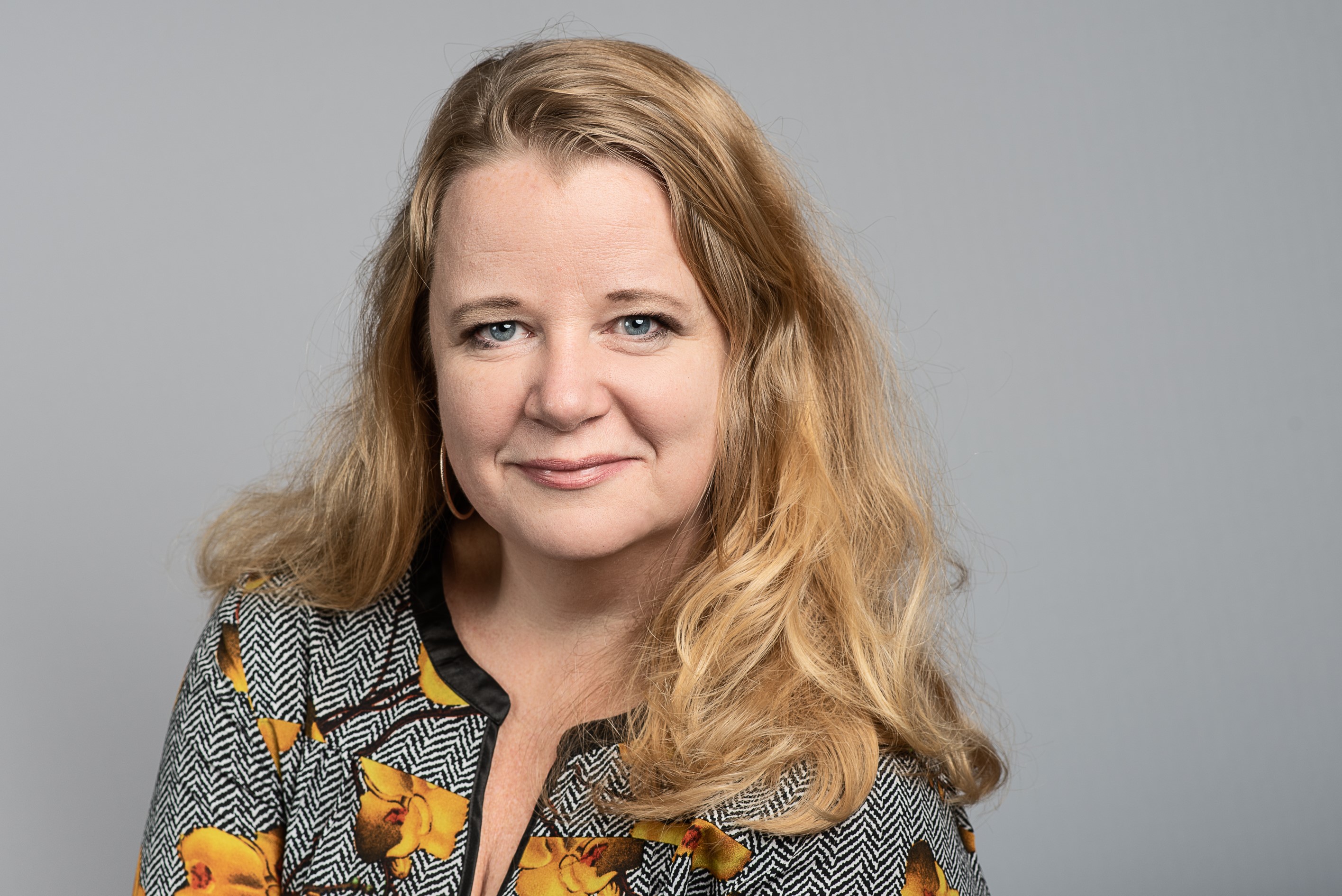
Antonio Abate is team leader at the Helmholtz-Zentrum Berlin in Germany, tenure track professor at University of Naples Federico II in Italy and visiting professor at Fuzhou University in China.  He is researching solar energy conversion with halide perovskites.
Before the current position, Antonio was leading the solar cell research at the University of Fribourg in Switzerland. He was a Marie Skłodowska-Curie Fellow at École Polytechnique Fédérale de Lausanne within the group of Prof. Grätzel.  He worked for four years as a postdoctoral researcher at the University of Oxford under the supervision of Prof. Snaith and the University of Cambridge under the supervision of Prof. Steiner.  Antonio graduated summa cum laude from University of Naples Federico II in 2006, and he got his PhD summa cum laude at Politecnico di Milano in 2011 under the supervision of Prof. Resnati and Prof. Metrangolo.
After eight years from his PhD, Antonio collected more than 3.5 M€ personal (including 1.5 M€ ERC starting grant – FREENERGY) and 7 M€ joint research funding as an independent researcher.  He is listed as the top 1% by citations in Web of Science (Highly Cited Researchers 2018 and 2019), with more 23 000 citations (h-index 56) from over 100 peer-reviewed scientific publications. The World University Rankings indicated Antonio within the top 10 most influential scientist of the field of perovskite solar cells. 
Bremer

Affiliation: Centre for the Study of the Sciences and Humanities, University of Bergen, NO; NORCE Climate Research Institute, NO

Keywords: Climate adaptation, Environmental governance, Institutions, Science-policy interface, Knowledge co-production, Post-normal science, Narrative, Climate culture

Webpage

ID_symbol_B-W_128x1280000-0002-4505-9386

Full profile:

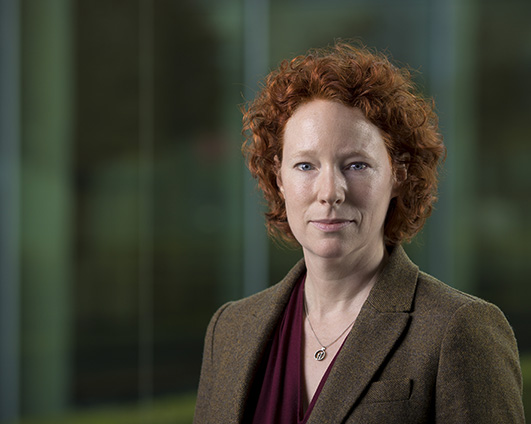
Scott Bremer’s background is broadly in environmental governance, and he has worked most on coastal governance and place-based climate adaptation. Bremer is interested in how science and other knowledge systems are used to support decisions and action in different institutions, particularly at the science-policy interface. He has worked extensively on practical approaches for co-producing actionable knowledge with different groups of people, especially guided by ideas of ‘post-normal science’, and experimenting with citizen science and narratives. To this end, his research is highly interdisciplinary; bringing together concepts and methods from natural resource management and planning, institutional theory, philosophy of science, anthropology and science and technology studies. Central to this work is building relationships with natural climate scientists, including at NORCE Climate where he is a research associate.

Since completing his PhD at Massey University (New Zealand) and the University of Versailles Saint-Quentin-en-Yvelines (France), Bremer has been based at the University of Bergen (Norway). He was awarded an ERC Starting Grant in 2019, and now leads a research team working on the CALENDARS project: ‘Co-production of Seasonal Representations for Adaptive Institutions’. This project explores how institutions in Norway and New Zealand come to understand seasonal rhythms, and questions how robust these seasonal ideas are in times of rapid change.

Today Bremer is an active scholar of knowledge used for climate adaptation, with over 30 peer-reviewed publications, a reviewer for 17 journals, an expert reviewer for the IPCC, a member of two climate journal editorial boards, a national expert on climate services in Norway, and an invited speaker at conferences such as the Nordic Conference on Climate Change Adaptation. He is an Eiffel Scholarship recipient, a SYLFF fellow, and was admitted to the Young Academy of Europe in 2019.

Äli Leijen

Leijen

Äli Leijen

Affiliation: University of Tartu, EE

Keywords: Teacher Education, Teacher knowledge, Teacher Reflection, Teacher Identity, Teacher Agency, Doctoral education, ICT in education

Webpage

ID_symbol_B-W_128x1280000-0001-5708-3837

Full profile:

Äli Leijen, PhD, is Professor of Teacher Education and Head of Institute of Education at the University of Tartu, Estonia. Her current research themes include teacher education, teacher agency, teacher knowledge, teacher reflection and professional identity. She has worked as an expert in several teacher education developments in Estonia and is an active member of different international research organizations.

Aleksandra Badura

Badura

Affiliation: Erasmus MC, NL

Keywords: Behavioral flexibility, Cerebellum, Autism spectrum disorder, Calcium imaging, Electrophysiology, Mouse models

Webpage

ID_symbol_B-W_128x1280000-0002-0119-5108

Full profile:

Aleksandra’s research focuses on unravelling the function of the cerebellum in health and disease and encompasses two research lines. Line-1 focuses on the mechanisms of cerebellar learning, integrating experimental techniques with computer modelling. In the recent years her work has established that cerebellar activity is essential for motor learning and voluntary behavior and contributed to the development of a computer model that reliably reproduces experimental data and predicts motor impairments based on neural activity. Using intravital two-photon imaging, she discovered that granule cells acquire signals predictive of motor performance. This marked a paradigm shift in the understanding of cerebellar coding as it stands in contrast with long-standing theories of cerebellar processing.

In Line-2, she has been investigating the role of the cerebellum in cognition in general and in Autism Spectrum Disorder (ASD) in particular. She showed that cerebellar deficits are common in ASD-mouse-models. By disrupting cerebellar activity during different stages of development, she established a critical period during which cerebellar regions are crucial for non-motor behaviors. The long-term goal of her work is to elucidate the role of cerebellum in ASD. In 2018 Aleksandra was awarded The Innovational Research Incentives Scheme Vidi grant (The Dutch Research Council, ZonMw) to work on understanding the cerebello-cerebral networks underlying shared autistic traits.

Aleksandra is deeply passionate about science communication and outreach and the importance of bringing science from the lab to society. This has been demonstrated by her role as one of the main organizers of the March for Science – NL in 2017 (held in Amsterdam). In her current position as a faculty member of the Department of Neuroscience she has been an active spokesperson for the Erasmus MC neuroscience community. 

Moniek Tromp

Tromp

Affiliation: University of Groningen, NL

Keywords: Operando spectroscopy, Catalysis, materials, Fuel cells, Batteries, Photochemistry, X-ray spectroscopy

Webpage

ID_symbol_B-W_128x1280000-0002-7653-1639

Full profile:

Moniek Tromp finished her MSc in Chemistry, with specialisations in spectroscopy and catalysis, at the University of Utrecht (Nld) in 2000. She then obtained a PhD from the same university, in the fields of homogeneous catalysis and time-resolved X-ray absorption spectroscopy with Profs. Koningsberger and van Koten.  After finishing with distinction (‘cum laude’, greatest honours possible) in 2004, she moved to the University of Southampton (UK) for a Post-Doctoral Research fellowship in the fields of heterogeneous catalysis and spectroscopy. In 2007, she was awarded an EPSRC Advanced Research Fellowship to start her own independent academic career (and became lecturer). She moved to Germany in 2010, where she took up a position as professor in Catalyst Characterisation at the Technical University Munich. In 2014, she decided to come back to the Netherlands, working at the University of Amsterdam. From July 2018 she has taken up the Chair of Materials Chemistry at the Zernike Institute at the University of Groningen.

She has been awarded prestigious fellowships/awards like the EPSRC Advanced Research Fellowship, NWO VIDI and the NWO Athena prize. She is active in numerous science advisory and review panels of large research facilities and universities internationally, part of a European Science Strategy team for large facilities, has published close to 100 papers in high profile journals and given over 80 invited lectures worldwide.

She is chair of the Dutch Catalysis Society (of the KNCV). She is co-chair of the organizing committee of the annual conference on Catalysis (NCCC) in The Netherlands. Gender and diversity are important for her and she has been active as Gender Equality Officer (D) and is now developing programs for primary school on science and engineering as well as gender bias issues. From April 2019, she has taken up a board position at the National Network for Female Professors (LNVH). She is a board member of the Dutch Science Association NWO (division ENW) since May 2019.

Her research focusses on the development and application of operando spectroscopy techniques in catalysis and materials research, incl. fuel cells, batteries, photochemistry, as well as arts, with a focus on X-ray spectroscopy techniques. Novel (time resolved) X-ray absorption and emission spectroscopy methods have been developed as tools in catalysis and energy material (battery and fuel cell) research. This includes the development of the required operando instrumentation and cells, as well as data analysis and theoretical methods. Application of the techniques to fundamentally or industrially interesting catalytic processes and materials has been pursued, providing unprecedented insights in properties and mechanisms.

Stefanovic

Affiliation: University of Belgrade, University of Novi Sad, RS

Keywords: Bioarhaeology of the Balkans, Prehistoric archaeology, Physical anthropology, Human osteology, Ferility, Paleodemography, Skeletal growth, Sociobiological consequence of aging in prehistory

Webpage

ID_symbol_B-W_128x1280000-0001-7434-8788

Full profile:

Prof. dr. Sofija Stefanović is a Full Professor of Physical Anthropology, University of Belgrade and leader of Bioarchaeology research group at the Biosense institute, University of Novi Sad. Her research in the field of prehistoric bioarchaeology is devoted to investigating the ancient biosystems in order to obtain understanding of the phenomena relevant for the modern populations-e.g. the study of fertility.

She is the first scientist from Serbia who is supported by the European Research Council for the BIRTH project. Project investigates prehistoric fertility and why and how humans survived despite difficulties accompanying birthing process.

Sofija actively participate in different bodes for improvement of conditions of archaeological heritage in Serbia (President of the Board of the Central Institute for Conservation, Belgrade), for creating better conditions for scientists in the region (Member of the Expert group for perspectives of junior scientists, founded by the German National Academy of Sciences), improvement of collaboration between science and industry (Member of the Council for Science-Industry Collaboration established by Serbian Chamber of Commerce and Industry).

She has (co-)authored 50 articles, three monographs and ten book chapters. Her publication track record includes numerous articles published in the top 10 Journals in Anthropology and Archaeology and book chapters published  in leading publishers, such as Oxbow or Wiley-Liss. Sofija had 50 presentations at the international scientific conferences and organized three sessions at the meetings of the European Archaeological Association and one at the World Archaeological Congress.

At the Department of Archaeology, Faculty of Philosophy, University of Belgrade, she was honored to supervised many talented scholars in their diploma (30 BA students), master (13 MA students), and PhD thesis (9 PhD students) in a field of physical anthropology and bioarcheology.

Patel-Grosz

Affiliation: University of Oslo

Keywords: Formal syntax, Formal semantics, Syntax-semantics interface, Gesture semantics, Dance cognition, Primate linguistics

Webpage

ID_symbol_B-W_128x1280000-0002-5560-6451

Full profile:

Pritty Patel-Grosz is Professor of Linguistics and director of the Super Linguistics Research Group at the University of Oslo. She was educated at University College London, and obtained a PhD in Linguistics from MIT. Her early interests include the syntax-semantics-pragmatics interface and psycholinguistics. She has conducted research on individual variables, agreement and anaphoric presuppositions. In recent work, P. Patel-Grosz advocates for the emerging field of Super Linguistics, whose goal is to expand the traditional boundaries of language and linguistics, by applying formal linguistic methodology to non-standard objects beyond language. P. Patel-Grosz’s current research proposes a unified semantic theory of body movement. In collaboration with musicologists and primatologists, she has explored the semantics of narrative dance, and illustrated its similarities to linguistic semantics; this research is now being extended to non-human primates.

Kocev

Affiliation: Jožef Stefan Institute, SI

Keywords: Explainable AI, Machine learning, Structured data, Ensemble methods, Feature engineering, Feature ranking, Feature selection, Multi-target prediction

Webpage

ID_symbol_B-W_128x1280000-0003-0687-0878

Full profile:

Dragi Kocev is a senior researcher at the Department of Knowledge Technologies, JSI. He completed his PhD in 2011 at the JSI Postgraduate School in Ljubljana on the topic of learning ensemble models for predicting structured outputs. He was a visiting research fellow at the University of Bari, Italy in 2014/2015. He has participated in several national Slovenian projects, the EU funded projects, and was co-coordinator of the FP7 FET Open project MAESTRA. He is currently the principal investigator of two ESA funded projects: GALAXAI – Machine learning for spacecraft operation and AiTLAS – AI prototyping environment for EO.
His research interests are in the field of explainable AI and includes the study, development and deployment of machine learning methods as well as their inclusion along the complete data life cycle. More specifically, his current research is aimed towards development of efficient methods for learning explainable models from data with structured outputs (e.g., predicting multiple targets, hierarchical multi-label classification) and their applications in life sciences, environmental sciences and engineering.