Report: HERCulES Meeting of Academia Europaea on Academic Freedom

“Academic freedom in the 21st century” was the title of the meeting of the Wenner-Gren Foundations and Academia Europaea HERCulES Task Force dedicated to Higher Education, Research and Culture in European Societies, where Anna Kuppuswamy (Selection Committee Vice-Chair) represented the Young Academy of Europe on the 15-17th of May 2024, in Stockholm. Former YAE members, Gemma Modinos (former YAE Chair) and Alban Kellerbauer (former YAE Treasurer, MAE) were featured in the closing panel of the event. Please find the detailed programme of the event here, and a personal note about the event by Anna Kuppuswamy below.

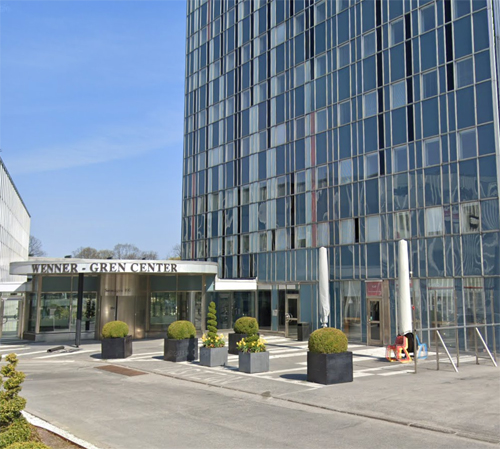
The Venue of the HERCulES Meeting in Stockholm

A year after the ENYA meeting at Stockholm, where several young academies debated the constraints and pressures faced by young academics (later summarized and published as the Stockholm Charter for Academic Freedom – Academic Freedom), the Academia Europea brought together its task force of senior academics to debate the nature of threats to academic freedom. The last 12 months have seen unprecedented developments in the world that have placed severe constraints on how some academics are allowed to operate. This has given cause to stop and reflect on the larger forces at play in the generation and dissemination of knowledge, and what it means to have academic freedom.

Furthering the boundaries of knowledge has never been easy, and over the centuries this endeavour has had to contend with multiple challenges that are reflective of the times. Today, the enterprise of research, higher education and dissemination of knowledge is a complex, multi-stakeholder activity that relies on large institutions such as universities, publishing industry and funding agencies, each with their individual agendas, but must all work in tandem, to facilitate the quest for knowledge. Political pressures, economic end goals and immediate crises that need rapid solutions have all infringed on what, and how academics are able to conduct research, thereby curtailing academic freedom. Two days of intense debate on the themes of academic freedom of institutions, research, education, and dissemination saw expert presentations and heated debates. I won’t go into details of the presentations, but suffice to say, academic freedom is under severe threat for different reasons in different countries, including in those countries where it appears as if it is ‘business as usual’. The significant shift in the role of universities, which were once places where knowledge was generated and imparted, now viewed as training grounds for the job market largely driven by economic forces, has impacted on how universities are governed, placing enormous constraints on staff’s academic freedom. Similar utilitarian agendas govern both the funding and publishing landscapes. The last few years have seen a genuine intent to intervene, with some strong leadership emerging in areas such as funding structures and publishing practices to rethink how incentives are used within the research landscape with the aim of restoring academic freedom.

While the last few decades have seen rapid changes in forces infringing on academic freedom, the core principles of knowledge generation have also been evolving, with increasing recognition of interdisciplinary methods as being vital to generating new knowledge. The theme of how interdisciplinarity interacts with academic freedom was conspicuous in its absence at this conference. What struck me was the reference to ‘dilution’ of rigour that was referenced in more than one presentation as being a threat to academic freedom, and examples discussed were pertaining to interdisciplinary methodology. As a mid-career scientist who heavily relies on interdisciplinary methods to address pathological functioning of the brain, this perspective rankled. When quizzed, it seemed to open up a can of worms. While everyone agreed there must be no compromise on rigour, there is no easy answer to how one assesses the quality of interdisciplinary research. As a representative of the YAE, I was glad to have raised this issue which appears to be less of a problem for the established senior members of academia unlike our membership base of emerging leaders. With the leadership of HERCulES Task Force changing hands next year to Prof Milena Žic-Fuchs, I was delighted when the future chair of HERCulES thanked me for my contributions and hinted at next year’s theme potentially revolving around interdisciplinary research. We would also like to express our gratitude towards Prof Lars Engwall, the actual Chair of the Task Force, who was also strongly devoted to involving YAE members and early- to mid-career researchers in this task force and in previous conferences (e.g. the meeting in 2023 dedicated to Academic Publishing where Scott Bremer and Katalin Solymosi, YAE Vice-Chairs, represented us). 

On a personal level, I have always found that I come away with more energy from a non-discipline specific conference than a discipline specific one! And this conference was no different, with the discipline furthest from my own, stimulating the most interesting of discussions, and in this instance, English and comparative literature! On that positive note, I look forward to the prospect of closer working between YAE and AE in the coming year.

YAE’s closing plenary at the 3rd Conference of the Researcher Mental Health Observatory

In recent years, the Young Academy of Europe has closely collaborated with the Researcher Mental Health Observatory Cost Action (ReMO) chaired by YAE member Gábor Kismihók. For instance, under the lead of the Initiative for Science in Europe, we took part in the organisation of the GAGO Conference, addressing, among others, the mental health issues of early- to mid-career researchers (EMCRs) during and after the COVID-19 pandemic, and Katalin Solymosi (YAE Chair) was actively engaged with the ReMO community also in her previous function as co-chair of the Hungarian Young Academy. In 2023, at the 2nd Conference of the Researcher Mental Health Observatory, Katalin presented the data of YAE and the Hungarian Young Academy on the mental health of EMCRs and took part in a panel dedicated to ‘Holistic Doctoral Supervision’.

This year, Katalin Solymosi (YAE Chair) was asked to provide some closing plenary remarks to the participants of the 3rd ReMO Conference about how to continue the inspiring and important work started by the ReMO COST Action, how to keep the network going, and how to further advocate for the improvement on mental health in academia together with other important stakeholders.

YAE at the Annual General Meeting and International Conference of Young Scientists

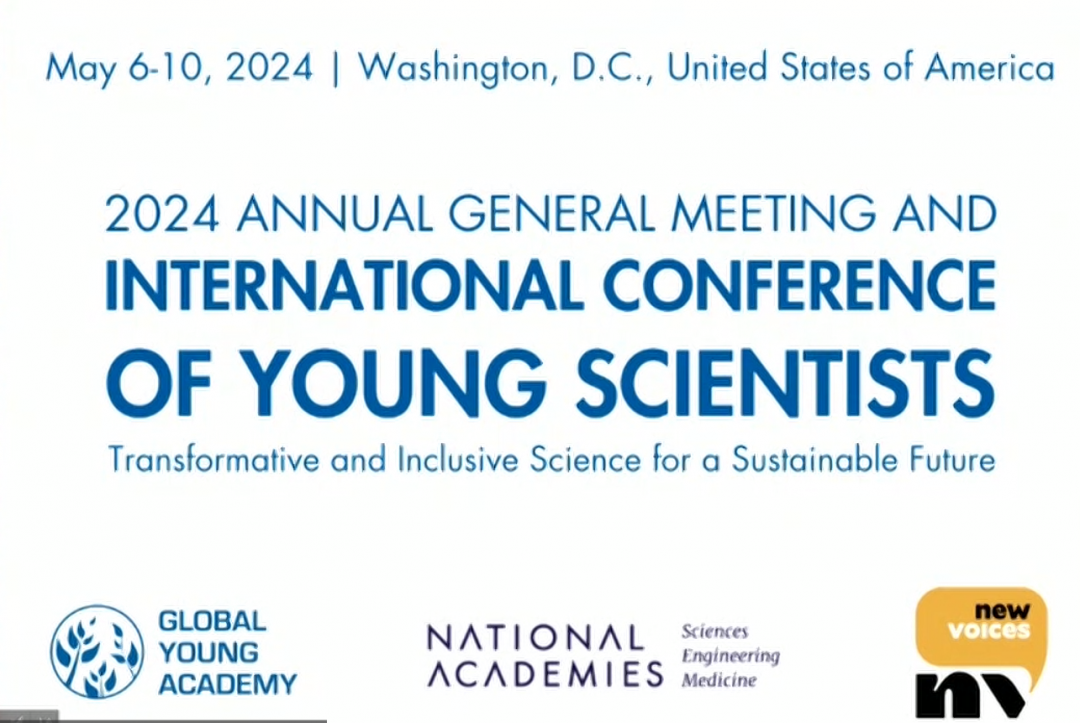
The Chair of YAE, Katalin Solymosi, attended online the plenary sessions of the 2024 Annual General Meeting and International Conference of Young Scientists entitled “Transformative and Inclusive Science for a Sustainable Future”, organized by the Global Young Academy on 6-10th of May 2024, in Washington. Among others, the event discussed questions relevant for early- to mid-career researchers as well as for the society and policy-makers engaged with sustainable development.

April YAE Newsletter is published – with data on our 4th ERC StG Mentoring Event and 2 upcoming May webinars

Our April Newsletter features among others links to useful information about transportation and accomodation as well as the venue of our Annual General Meeting in Strasbourg. It also contains details of the 4th ERC StG Mentoring Event of YAE co-organized with the Academia Europaea Budapest Hub, about our next webinar dedicated to mental health in academia, and an event about the impact of AI on academic careers and education co-organized by YAE and SAPEA. The April Newsletter was prepared by Emma C. Gordon (Selection Committee Vice-Chair, SH) and Katalin Solymosi (YAE Chair) and approved by the Board.

If you would like to be featured in our Newsletter, please contact us at communications@yacadeuro.org. If you would like to receive our newsletters, please subscribe. You can unsubscribe from these emails at any time by contacting us at office@yacadeuro.org. For more information on how we process and secure your data, please view our Privacy Policy.

Structures under stress: How we can collectively rebuild our academic systems to address mental health

The video recording of the event is available on the YouTube channel of the Young Academy of Europe here. Below you’ll find the advertisement and description of the webinar.

In academia, the prevalence of mental health symptoms is a growing concern. There is a notable incidence of mental health issues, such as depression, anxiety, and burnout, among early career researchers, and evidence suggests that senior academics also experience the burden of mental health challenges. This trend is alarming for both the research community and policymakers alike. The pressing question arises: what factors contribute to this mental health burden in academia?

Importantly, it is not only over to individual researchers to take care of their mental health. In this webinar on the 29th of May, 13:00-14:00 CET, we looked at how academic communities can work together to rebuild the academic structures creating the conditions for workaholism and burnout. To this end, we invited two speakers, Joeri K. Tijdink, psychiatrist from the Amsterdam UMC and the Young Academy from the Netherlands and Gábor Kismihók (FYAE), chair of the Researcher Mental Health Observatory COST Action, to talk about effecting the structural changes we need.

Joeri Tijdink focused on the following questions: What are the potential underlying causes? Is it primarily attributable to individual researchers, or does the research environment play a significant role? Additionally, how do the working conditions for researchers and the broader scientific ecosystem, including recognition and rewards, factor into this complex equation? By exploring these questions, we seek to foster a comprehensive dialogue surrounding mental health in academia and find ways how we can foster a supportive and healthy academia.

Gábor Kismihók talked about how small, bottom-up initiatives can make a change when it comes to improving the poor mental wellbeing situation in academia. These initiatives include networking activities, teaching and learning activities, Artificial Intelligence based learning recommendations for better wellbeing and academic career management skills, and lobbying for better wellbeing policies.

We had a Q&A session at the end of the webinar where we would be glad to hear your opinions on the topic. Register here:

Shaping careers in the digital era – YAE and SAPEA webinar

On the 30th of May 2024, between 15:00-16:30, the Young Academy of Europe (YAE) along with Science Advice for Policy by European Academies (SAPEA) organized a webinar about the impact of AI on academic careers and education, specifically focusing on its potential impact on work environments and jobs in academia. The event featured Moniek Tromp (YAE, Outgoing Chair) as moderator and Gábor Kismihók (FYAE) as speaker, along with two other speakers, Anna Fabijańska, Janet Frances Rafner and Mike Teodorescu. For more details and the video recording of the event see here.

The discussions were inspired by a recent advice issued by the Scientific Advice Mechanism to the European Commission on the request of the College of Commissioners. The evidence review report and the Scientific Opinion reports responded to the question on: ‘Successful and timely uptake of artificial intelligence in science in the EU’ and were published on 15th of April, 2024. For this report, Cristina Blanco Sió-López (FYAE) acted as peer reviewer, and Gábor Kismihók (FYAE) was involved in the evidence-gathering workshops preparing the SAPEA-SAM evidence review report about AI. The report has been handed over to Commissioner Iliana Ivanova by Nicole Grobert (former YAE Chair, Chair of the Group of Chief Scientific Advisors to the European Commission).

Survey for the European Parliament elections

The Young Academy Europe (YAE) along with the European Council of Doctoral Candidates and Junior Researchers (EURODOC), the International Consortium of Research Staff Organisations (ICoRSA), the Marie Curie Alumni Association (MCAA) and the Initiative for Science in Europe (ISE) which coordinates this project, has launched a survey to gather the views on research and innovation (R & I) of the candidate parties to the European Parliament on 6-9 June.

Whilst the European Union’s (EU) budget for R & I ranks as the 3rd largest item in the total EU budget, the R & I strategy of parties and candidates participating in the elections is very rarely discussed. This is evenmore important, because in the forthcoming years, R & I are poised to be paramount in preparing the EU to confront pressing societal challenges such as climate change, health crises, energy transition, as well as ensuring strategic autonomy and development.

Over twenty years ago, the Union established the ambitious goal of transitioning into a knowledge-based society, committing to allocate 3% of its GDP (at national and EU levels) towards R & I. However, this goal remains unmet, placing the EU behind its primary global competitors like the USA and China. Investing in and fostering groundbreaking R & I within the EU not only drive economic growth but also directly or indirectly impact the quality of higher education for Europe’s 18 million tertiary education students. Additionally, it plays a vital role in attracting and retaining talent, thereby influencing significant segments of the labor market in the long term.

The newly elected European Parliament will wield substantial influence in shaping the EU’s multiannual financial framework (MFF), especially concerning the next Framework Programme for R & I (2028-2034) and the overall balance among the financial framework’s different “pillars.” Given the gravity of these matters, the Initiative for Science in Europe, in collaboration with Eurodoc, ICoRSA, MCAA, and YAE alongside local organizations, has crafted a questionnaire for political parties.

We are keenly interested in the perspectives of the parties on issues related to R & I. The received responses will be made public on a dedicated website and disseminated to EU citizens, Higher Education Institutions, and the media prior to the election.

For the survey see this link, and for the official press release go here.

Organized by:
ISE, Eurodoc, ICoRSA, MCAA, YAE

4th ERC Starting Grant mentoring event of the Young Academy of Europe and Academia Europaea Budapest Knowledge Hub

On the 3rd of June 2024, between 14:00-16:00 hrs (CET), the Young Academy of Europe (YAE) in collaboration with the Academia Europaea (AE) Budapest Knowledge Hub will host an online event on Zoom for researchers from all around the world who would be interested in applying to the next round of the European Research Council’s (ERC) Starting Grant (StG). One of the main missions of this event series is to promote widening participation to researchers from EU13 and Associated Countries.

The online event will include two parts. First, a plenary information session with welcoming words from Prof. László Lovász (ERC Scientific Council member), Péter Hegyi (Academic Director, Academia Europaea Budapest Knowledge Hub) and Katalin Solymosi (Chair, Young Academy of Europe), followed by a presentation by Maria Leptin (President of ERC) about the why and what of the ERC’s recent changes to the evaluation of research proposals, and a talk by Angela Liberatore (Head of the Scientific Management Department at ERC Executive Agency) about the implementation of the recently introduced changes in the grant evaluation procedures. The presentations will be followed by a Q&A to be moderated by Scott Bremer (Vice-Chair, Young Academy of Europe).

The second part of the event will include three parallel sessions by domain, each featuring current YAE members who have recently secured an ERC StG and who will share their pieces of advice about grant proposal writing and oral interview preparation with the audience of the domain-specific break-out rooms: Physical Sciences & Engineering (PE), Life Sciences (LS), and Social Sciences & Humanities (SH).

Programme

Registration is available here. By registering for this event, you agree to the event being recorded on Zoom. Please note, that we are not sending separate confirmation about the registration, but will send the Zoom link to registered participants via email few days before the event. The registration form collects your data with the only aim to manage the registrations for the attendance at the webinar. By registering you consent to YAE’s Privacy Policy and Data Protection Policy as described here.

Information added after the event: The videos of the event are published on the YouTube Channel of the YAE (the video of the plenary part is available here, while those of the domain-specific breakout sessions are available on these links: Life Sciences, Physical Sciences and Engineering and Social Sciences and Humanities).

Successful second YAE webinar dedicated to mental health in academia

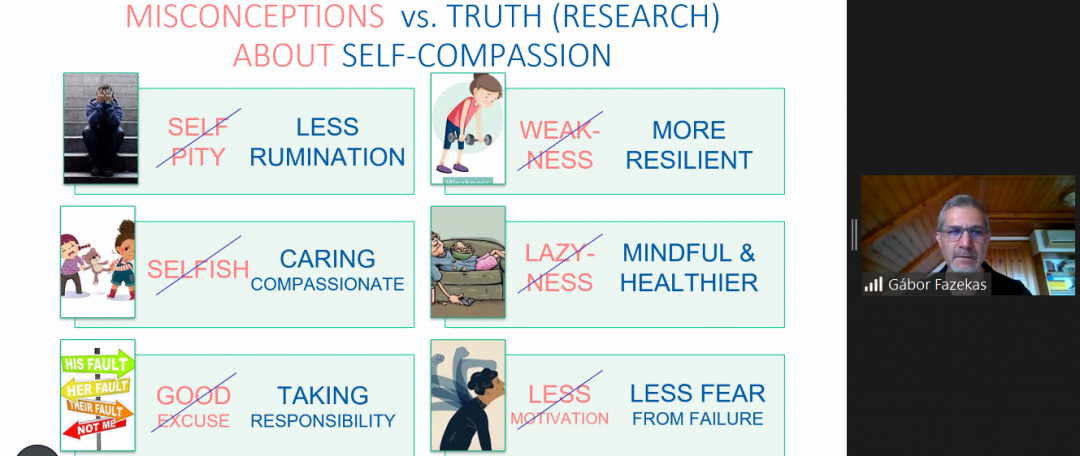
In 2024, the activities of the Young Academy of Europe are comprising a webinar series about the state-of-the-art of mental health in academia. Within this frame, on the 26th of April, we had an insightful and inspiring second webinar entitled “Mindfulness based practices to improve mental health in academia”, which focused on providing individual solutions and self-helping practices such as mindfulness based stress reduction (MBSR) and mindful self-compassion (MSC) that can be useful to fight stress, anxiety and work addiction, and to promote relaxation and self-compassion. On the event moderated by Katalin Solymosi (YAE Chair), Gábor Fazekas (MBSR and mindfulness based cognitive therapy teacher) presented basic principles of mindfulness-based stress reduction and mindful self-compassion, and provided short practical insight into how these methods work in practice.si

The March Newsletter of YAE is out featuring our detailed AGM programme and our second mental health webinar

Our March 2024 Newsletter has been published with more details about our Annual General Meeting in Strasbourg as well as a link for registration. We also advertised our second mental health webinar series event dedicated to mindfulness-based stress and anxiety reducing practices, and our next ERC StG Mentoring event. The Newsletter has been prepared by Katalin Solymosi (YAE Chair) and Scott Bremer (YAE Vice-Chair), with input and approval from the Board.

If you would like to receive our newsletters, please subscribe. You can unsubscribe from these emails at any time by contacting us at office@yacadeuro.org. For more information on how we process and secure your data, please view our Privacy Policy.