Transcending boundaries as an academic clinician and advocate for early career researchers – Interview and podcast with Gergely Toldi

Interview and podcast with Dr Gergely Toldi, awardee of the André Mischke YAE Prize for Science and Policy in 2022

In 2022, at the Annual General Meeting of the Young Academy of Europe (YAE) and the joint YAE and Academia Europaea Building Bridges Conference in Barcelona, YAE awarded the André Mischke YAE Prize for Science and Policy to Dr Gergely Toldi from the Liggins Institute. The laudatio of the awardee and the related press release in 2022 is available here and his talk can be viewed on this link. Gergely also summarized his talk and most important statements in a paper published in European Review. Gergely was member of the Global Young Academy, initiator and founding member of the Hungarian Young Academy, who was also involved in preparations related to the launch of the UK Young Academy. Currently he is based in New Zealand, and after our interview was prepared he was also elected as co-chair of the Royal Society Te Apārangi ECR Forum, the equivalent body to a young academy in New Zealand. In order to increase the visibility and impact of the André Mischke YAE Prize for Science and Policy and present active researchers involved in science policy at the European level as role models, Katalin Solymosi, the Chair of the YAE interviewed the awardee about his scientific and science policy related activities. A podcast version of this interview is available here.

Gemma Modinos (YAE Chair) is handing over the André Mischke YAE Prize for Science and Policy to Gergely Toldi at the BB2022 in Barcelona

Katalin Solymosi: Hi, Gergely, we have known each other since 2018. But I have never asked you how you chose to become a medical doctor. And then in addition, how you chose to become an academic clinician? Did you have any inspirational teachers, mentors, family members that led you towards medicine?

Gergely Toldi: I’ve always had an interest for Biology at school. Initially, I wasn’t sure if I wanted to be more involved with research or patient care. So, I decided to go to medical school where both paths were open. I later realized that I wanted to do and enjoy both, which is how I ended up as an academic clinician. Both roles, research and patient care, are very rewarding, but have their own challenges and require very different skill sets. In terms of motivation, I’m the only doctor in the family. Pretty much everyone else is involved with humanities and arts. My high school biology teacher, on the other hand, was also an eminent scientist, investigating bird lice out of all things on top of his teaching duties. Although I did not realize this at the time, his devotion to science turned out to be a great motivation.

Katalin Solymosi: How did you choose neonatology and immunology as your medical specialization and primary research field?

Gergely Toldi: I decided relatively early on that I wanted to specialize in neonatology. Although I was also considering obstetrics for a while. At the end of our first year of medical school, we had to complete a practical placement in nursing. And we were allocated to various wards, and I ended up at the Department of Pediatrics, changing nappies and feeding babies. I learned that fetal and newborn physiology, development and pathologies are a very interesting area of medicine with a lot of scope for improvement. My involvement with immunology was equally serendipitous. During my PhD, I investigated autoimmune disorders. And subsequently, it made a lot of sense to combine my clinical and research interests, as neonates have a lot of immunological and inflammatory complications that need novel treatment options to improve their overall outcomes.

Katalin Solymosi: As a mother of two with one child having been saved by neonatologists, your colleagues working at Semmelweis University, I can just confirm that you have a really wonderful vocation. What do you consider your most important scientific impact in research or which research questions you consider the most important to be answered soon by you or by others in your field?

Gergely Toldi: We had significant results on the immunological background of a common complication of pregnancy called preeclampsia. I was also heavily involved with developing new experimental and diagnostic methods using flow cytometry, which are mainly applied in the field of immunology, but in other areas of science as well. Then more recently we had very exciting results on how breast milk influences the evolving neonatal immune system. So, our research team at the Liggings Institute in Auckland is currently working on strategies to better control inflammation in babies building on those results. As I mentioned before, this is crucial to reduce the burden of complications affecting preterm and term neonates and this is a rapidly evolving area in neonatal medicine.

Katalin Solymosi: You left Hungary relatively early and then worked in the UK for several years. Now you are based in New Zealand. Are there any thoughts or stories you would like to share about researcher mobility?

Gergely Toldi: I think it is crucial for a researcher in any field to spend a longer period of time working abroad. Ideally, there will then be an opportunity for them to return to their home country, which is often more challenging than it seems. My recent experience is that mobility is becoming increasingly difficult. And I’m not sure if this has something to do with the political climate or a post COVID phenomenon. But it would be in every stakeholder’s best interest really to better support international research and mobility and exchange of ideas, skills and experience.

Katalin Solymosi: Yes, I can only confirm that I had a similar impression about some recent changes in researcher mobility. And I totally agree with you that it is an issue to be tackled soon. Now, let’s switch to a different topic. How did you get involved with the Global Young Academy? And what do you consider as your most important contribution to that organization?

Gergely Toldi: Yes, I became a member in 2016 for a five-year term, and it was a very nice experience, a very nice period in my life. My main contribution was towards documents and tools outlining the long term vision of young academies, and as a result, the declaration on the guiding principles of young academies was launched at the World Science Forum Meeting in 2019, in Budapest, with representatives of nearly 40 national young academies from around the world. And also, the young academy toolkit about how to establish a national young academy document was released in 2021.

Katalin Solymosi: I joined you after you already started to initiate the formation of the Hungarian Young Academy. Later, you have been also involved in the launch of the UK Young Academy. Are there any thoughts on these processes? And what was your primary motivation to launch the Hungarian Young Academy when you were already working in the UK?

Gergely Toldi: Yeah, I think the launch of new young academy is always an exciting process, as it usually needs to be embedded in an already existing science and science policy climate in a given country or region, which is traditionally governed by a senior academy. And in certain cases, there is already a strong desire to better involve ECRs (early career researchers), whereas in other cases, they need to better “justify” their role and contribution. So, either way, the process usually takes several years, and I was keen to initiate this dialogue in Hungary. And as a new member of the GYA (Global Young Academy) at the time, I had a good insight into good and less efficient examples from around the world. So fortunately, this motivation was very well supported by the Hungarian Academy of Sciences and aligned with Professor Lovász’s vision for ECRs in Hungary, who was president at the time.

Katalin Solymosi: Are you involved in any science policy related activities now in New Zealand?

Gergely Toldi: Yes, I’m a committee member of the Royal Society Te Apārangi ECR Forum, which is the equivalent body to a young academy in New Zealand. (Since the preparation of this interview, Gergely Toldi was elected as co-chair of this Forum. Congratulations!) And the Forum was involved with numerous activities, and the main one being a two day long national event for ECRs called He Pito Tamata organized every other year.

Katalin Solymosi: After all these experiences in science policy, if there was something you could change in academia or in science policy, what would it be? Or formulating this question a bit differently: what do you see as the most important challenge for researchers and the researcher community?

Gergely Toldi: Yes, tough question, but in my opinion, scientometry and impact evaluation needs profound changes in academia. And I do acknowledge, of course, that these are very complex questions, and there’s no one-size-fits-all solution. And there are significant variations between various disciplines and fields. However, many of the issues we face as scientists on daily basis are, I think, directly linked to these questions. For example, the constant urge to publish, leaving gaps in the quality of science and allowing publishers to prey on the science ecosystem is a clear example, in my opinion. Funding allocation is also heavily influenced by impact evaluation. And we could, of course, always do with more budget and a stronger commitment from governments for science.

Katalin Solymosi: I can only agree with that. But let’s finish this short interview with something maybe more positive. Can you recall what was the most rewarding and positive experience for you with science policy at the national and global level, so while working with the Hungarian Young Academy and the Global Young Academy?

Gergely Toldi: I’m very proud of what the Hungarian Young Academy has become as an organization from the very initial discussions up to this point over the last seven years. And this is thanks to all the hard work of yourself as well as all the other co-chairs who have served and the membership in general. It is a truly member driven, dedicated and active body of top ECRs that has earned the respect of, and become a key stakeholder within, the Hungarian science policy ecosystem.

Katalin Solymosi: Thank you very much, Gergely, for these kind and humble words and also for this interview. And now in the name of the Young Academy of Europe I would like to congratulate you again for the well-deserved André Mischke Young Academy of Europe Prize for Science and Policy. And I do hope that those listening to the podcast also agree with us that you played an important role in launching several national initiatives advocating for early and mid-career researchers and were also involved in science policy at the global level. I would also like to thank you for all these and wish you all the best with your professional and science policy related activities in the future.

Podcast version of the interview above

The YAE at the Hamburg Science Summit 2024

Katalin Solymosi as the Chair of the Young Academy of Europe (YAE) was invited to organize and host a panel at the inaugural Hamburg Science Summit 2024, to be held on 19 September, 2024. The event organized by the Körber-Stiftung and the Ministry of Science in Hamburg was dedicated to Europe’s technological sovereignty, and concluded with the presentation of the highly prestigious Körber European Science Prize on 20 September 2024 to Erin Schuman. For the detailed programme and further details see here.

The Hamburg Science Summit brought together experts and decision-makers from science, politics, business, and think-tanks from across Europe. Driven by the vision of a competitive and self-confident Europe, it aimed to strengthen Europe’s position as a hub for science and innovation. This year’s Summit focused on Europe’s technological sovereignty. Key questions discussed included: How can Europe remain competitive in crucial fields such as AI, energy, or medical technologies? In which fields of technology, if any, should Europe strive for scientific and market leadership? What kind of financial and political conditions are needed to promote Europe’s technological sovereignty? Researchers, policy experts, innovators and representatives of institutions were invited to participate.

Participants of the panel hosted by the YAE at the Hamburg Science Summit (Photo: Virág Vas)

The panel hosted by YAE was entitled “Embarking on a PhD and an academic career in Europe – What are the prospects?“. A diverse set of panellists was chosen to represent all career stages – from doctoral candidates and postdoctoral researchers to young principal investigators and senior high-profile researchers involved also in the work of funding agencies – and related researcher associations (e.g. Eurodoc, MCAA, YAE and Academia Europaea as well as the European Research Council).

The panellists – Katalin Solymosi (Chair, Young Academy of Europe), Eystein Jansen (Vice-President, European Research Council, Academia Europaea), Nadine Ritter (University of Copenhagen), Farah Islam (Board Member, Marie Curie Alumni Association) and Karl Kilbo Edlund (Board Member, European Council of Doctoral Candidates and Junior Researchers) – discussed the following questions important for the situation of the future generations of the European academic landscape under the current global challenges: How attractive are doctoral training and research careers in Europe for the X, Y and Z generations? What initiatives can we take to attract and retain the best talents in Europe? How can we improve doctoral training and career prospects to overcome issues such as precarity, the unidirectional brain-drain within Europe, the relatively low salaries, and the constant publish or perish competition leading to poor mental health in academia?

Panelists of the YAE hosted session at the Hamburg Science Summit: Eystein Jansen, Farah Islam, Nadine Ritter, Katalin Solymosi and Karl Kilbo Edlund. (Photo: Nicola Spaldin)

May YAE Newsletter is published – with call for registration to our AGM

Our May Newsletter has been published including call for registration to our Annual General Meeting in Strasbourg, for Board membership self-nomination, the date of our 4th webinar dedicated to mental health, invitation to a member consultation on YAE’s strategic priorities and bylaws changes on 10 July, and a call for co-creating an Arts&Science exhibition at the Building Bridges 2024 Conference of Academia Europaea and the Young Academy of Europe. This May Newsletter was written by Katalin Solymosi (YAE Chair) with input from Emma C. Gordon (Selection Committee Vice-Chair, SH) and the Board.

If you would like to be featured in our Newsletter, please contact us at communications@yacadeuro.org. If you would like to receive our newsletters, please subscribe. You can unsubscribe from these emails at any time by contacting us at office@yacadeuro.org. For more information on how we process and secure your data, please view our Privacy Policy.

Consultation on YAE’s strategic goals and changes in the YAE bylaws

Similarly to our January membership consultation on the Young Academy of Europe’s (YAE) science policy work, in July we plan to have another consultation dedicated to discussions about YAE’s priorities, as well as a few suggested changes in its bylaws to be voted on during our AGM in Strasbourg.

In recent years, YAE has been involved in a large number of various international collaborations and projects (COARA, YASAS, cooperation with Academia Europaea, the Initiative of Science in Europe, the European Network of Young Academies, the International Science Council, Eurodoc, MCAA, ICoRSA, etc.). Given the lack of administrative support for YAE, housekeeping tasks and these initiatives have taken up much of our members’ and the board’s engagement.  Thus, although they contributed to several of YAE’s missions, like advocating for early- to mid-career researchers and involvement in science advice for policy, they also hindered the development of a unique strategic mission or agenda of YAE.

On the 10th of July, 14:00-16:00 (CEST), we plan to have another membership consultation webinar on which we would like to discuss with our members YAE’s future priorities and goals and also explore a few propositions of the Board related to changes of our bylaws.For the latter, the Board would like to suggest some updates and modifications in the nomination procedure to better adhere to CoARA principles and to increase equity, diversity and inclusion. We would like to hear the opinions of our members and involve them in the discussion about these changes in the bylaws.​ At the same time, the event might be useful for members wanting to be better engaged with YAE or the future YAE Board to discuss these topics.

In order to plan and run a secure event, please notify the YAE board at the following email address if you are interested in attending (and we will send you a zoom link closer to the time): event_registration@yacadeuro.org.

Results of the ISE Survey of EP candidate lists’ views on Research and Innovation

Under the coordination of the Initiative for Science in Europe, members and member associations of the European Council of Doctoral Candidates and Junior Researchers (EURODOC), the International Consortium of Research Staff Organisations (ICoRSA), the Marie Curie Alumni Association (MCAA) and the Young Academy Europe (YAE) run a survey among various national parties with candidates for the European Parliament elections to get more information about their views on Research and Innovation.

Some interesting data of this survey are summarized in the press release below.

YAE at ESOF2024

Between 12-15 June, 2024, the EuroScience Open Forum (ESOF) was held in Katowice, Poland. With 3500 participants, 100 thematic sessions led by over 400 speakers, this biannual event is one of the largest science policy related conferences not only in Europe, but all over the world.

YAE alumnus and former Vice-Chair, Toma Susi, was invited as keynote speaker with a talk on Open Science entitled The importance of rewarding good research practices.

Panel featuring Sebastian Dahle (Eurodoc), Claire Morel (Head of MSCA Unit, European Commission), Martin Andler (ISE), Katalin Solymosi (YAE), Joaquin Capablo (MCAA) at the session dedicated to the 2022 Manifesto for Early Career Researchers

The YAE proposed two panels for the event, and was invited as panellist to a third one. The first session was co-organized with the Researcher Mental Health COST Action and was entitled “Personal and systemic responsibility for developing resilience in research workplaces”, and featured Katalin Solymosi (YAE Chair) and Gábor Kismihók (FYAE) as speakers. The second panel about “The 2022 Manifesto for Early Career Researchers and its impact” was co-proposed with Initiative for Science in Europe (ISE) and involved Katalin Solymosi as panellist. In addition, Katalin Solymosi was also invited to contribute to a panel entitled ”Is there room and necessity today in Europe for an organisation that would renovate what EuroScience did in the past: a constructive debate”. This session was very important, as EuroScience, the organisation behind ESOF, recently filed for bankruptcy, thus its future, as well as the future of ESOF is now uncertain.

For more details about the ESOF2024 programme and the book of abstracts see here

YAE André Mischke Prize for Science and Policy 2024 Awardee: Dr Jacek Kolanowski

In line with the basic principles and key focus areas of the Young Academy of Europe (YAE), since 2017, the André Mischke YAE Prize for Science and Policy has been awarded each year as a recognition of excellent early- to mid-career researchers who are both active in science but also made important contributions to science policy, to evidence-informed policymaking at the European level, to science communication and outreach as well as to the strengthening of the network between future generations of researchers. Since 2019, the Prize is bearing the name of the Founding Chair of YAE, the late André Mischke, and aims to recognise, reward and promote the engagement of excellent early- to mid-careers scholars with science policy. Below we present this year’s awardee: Dr Jacek Kolanowski.

Dr Jacek Kolanowski is a habilitated assistant professor at the Institute of Bioorganic Chemistry of the Polish Academy of Sciences in Poznan, Poland, and head of the Research Facilities and Innovation Centre, Victor Chang Cardiac Research Institute in Sydney, Australia. He obtained his BSc and MSc in Poland, his PhD in France, and spent postdoctoral years in Australia. He has been managing several national and European grants, and directed the Centre for Chemical Biology, Institute of Bioorganic Chemistry, Polish Academy of Sciences, where he was responsible for the management of an interdisciplinary research group and research facilities totaling over 35 people in 5 years. In this role he focused on fostering diverse and flexible academic-industry collaborations and facilitating research translation through developing robust methods and bringing new technologies to wide range of users. His interdisciplinary research is focused on the design, synthesis, validation and use of low-molecular-weight chemical compounds to visualise and control biochemical parameters in biological models both for basic and applied research.

In addition, Dr Jacek Kolanowski has also been active in science outreach by delivering several popular science lectures, lessons, and workshops in schools. He was a member of the Polish Young Academy and later served it for 2 years as vice-chair and 2 years as chair. He played an important role in fostering solidarity and networking among young researchers in Europe, as the founder of the Young Science Beyond Borders conference, providing a platform for young researchers from low- and middle-income countries and scientists at risk to interact with and access science in the EU or by providing academic support for Ukrainian researchers following the Russian invasion.

Besides his merits in building capacity and community among young scientists, he was proactively engaged with policymakers to positively influence science policy at both national and European level.

Furthermore, Jacek Kolanowski was a founding member, Board member and first elected President of the Young Academies Science Advice Structure (YASAS), a pan-European network of Young Academies and he catalyzed the campaign for YASAS to join as an independent partner the prestigious Science Advice Mechanism for the European Commission through SAPEA.

By awarding the YAE Prize to Jacek Kolanowski, the YAE aims to recognise excellent interdisciplinary and translational research, management, science outreach and science policy activities, as well as the building of early- to mid-career researcher networks and the structure facilitating the contribution of these networks and researchers to science advice for policy at the European level. The YAE will award the eighth annual YAE Prize, honouring our Founding Chair André Mischke, at the joint annual Academia Europaea and YAE meeting entitled Building Bridges 2024 in Wroclaw, on 26-28 November 2024.

Academic mentoring and how it addresses mental health

Friday 28th of June, 12.00-13.00 pm CET on Zoom

In academia, the prevalence of mental health symptoms is a growing concern. There is a notable incidence of mental health issues, such as depression, anxiety, and burnout, among early career researchers, and evidence suggests that senior academics also experience the burden of mental health challenges. This trend is alarming for both the research community and policymakers alike. How can we draw support from our community of academic peers for addressing mental health?

In this fourth webinar on mental health (28 June, 12.00-13.00 CET), we bring together a panel of three YAE members who will discuss the role of mentorship – both as mentor and mentee – as an important mechanism for traversing the challenges of academic life, and not least as a way to voice and work through issues affecting our mental health. Join a facilitated conversation between Mar Rus-Calafell, Bhismadev Chakrabarti, and Scott Bremer, as they share their diverse experiences with mentoring, and contribute with your questions and experiences. The event will be moderated by YAE Activities Chair, Viktorija Vaštakaitė-Kairienė.

This mental health webinar series will culminate in a workshop on scientific leadership with attention to mental health, at the AGM in the end of August. Don’t forget to register and join us in Strasbourg on the 26th and 27th of August.

You can join the webinar by following this link.

The webinar was recorded and can be viewed on YAE’s YoutTube channel here.

Open letter about strengthening research and innovation in Europe endorsed by the YAE

On 4 June, among with other organizations, the YAE has endorsed an open letter prepared by the ‘Research Matters’ initiative and advocating for the strengthening of funding for research and innovation in Europe. More details about the open letter and its other signatories (various academies, universities and associations) are available here.

Report: YAE at the 2024 annual meetings of YASAS and ENYA

This year, the General Assembly of the Young Academies Science Advice Structure (YASAS) and the annual meeting of the European Network of Young Academies (ENYA) were held in Berlin from the 21-23rd of May. Young academy members from all over Europe were also invited to participate in a public symposium of ALLEA (the European Federation of Academies of Sciences and Humanities) entitled “European Research Collaboration in a Shifting Geopolitical Landscape”. The Young Academy of Europe (YAE) was represented on these events by Viktorija Vaštakaitė-Kairienė (YAE Activities Chair), who was also the member of the YASAS Board as an elected representative of the Lithuanian Young Academy in previous years. In addition, Katalin Solymosi (YAE Chair) also took part in the hybrid YASAS General Assembly and in hybrid parts of the ENYA meeting.

The delegates and observers of YASAS were welcomed at the YASAS General Assembly meeting on the 21st of May. The YASAS president, Helen Eenmaa, presented an update about the previous and ongoing activities of YASAS. During the General Assembly, the preliminary results of the SAPEA survey about the engagement of early- to mid-career researchers with science policy were presented, further strategic steps were discussed, and amendments to YASAS statutes were presented and agreed upon. Among others, the YAE member Noel de Miranda (representing the Dutch Young Academy, De Jonge Akademie) was selected as a new YASAS Board member.

Participants of the YASAS General Assembly 2024 in Berlin

The ENYA-meeting is an annual event that brings together all the young academies from across Europe to engage in discussions on critical issues. This year’s ENYA meeting was co-organized by the Global Young Academy and the German Young Academy (Die Junge Akademie) on the 22nd of May in Berlin. It was entitled “Young Academy Collaboration in a Dynamic Geopolitical Landscape”. The event carried on the topics covered at the 2023 ENYA meeting in Stockholm, Sweden, such as shared interests and best practices. Six Young Academies were invited to deliver brief presentations during this session. This session was utilized to showcase recently completed projects, emphasising the process, accomplishments, lessons learned, and challenges encountered by each Academy. During this session, the other Young Academies presented a variety of projects that focused on the intersection of science and art, scientific policy and diplomacy, academic freedom, career development, and initiatives that arose as a result of the Covid-19 outbreak. In the second part, young academicians joined a meeting with ALLEA, the European Federation of Academies of Sciences and Humanities, and public symposium “European Research Collaboration in a Shifting Geopolitical Landscape”. Other parts of the program included engaging seminars, discussions, and presentations.

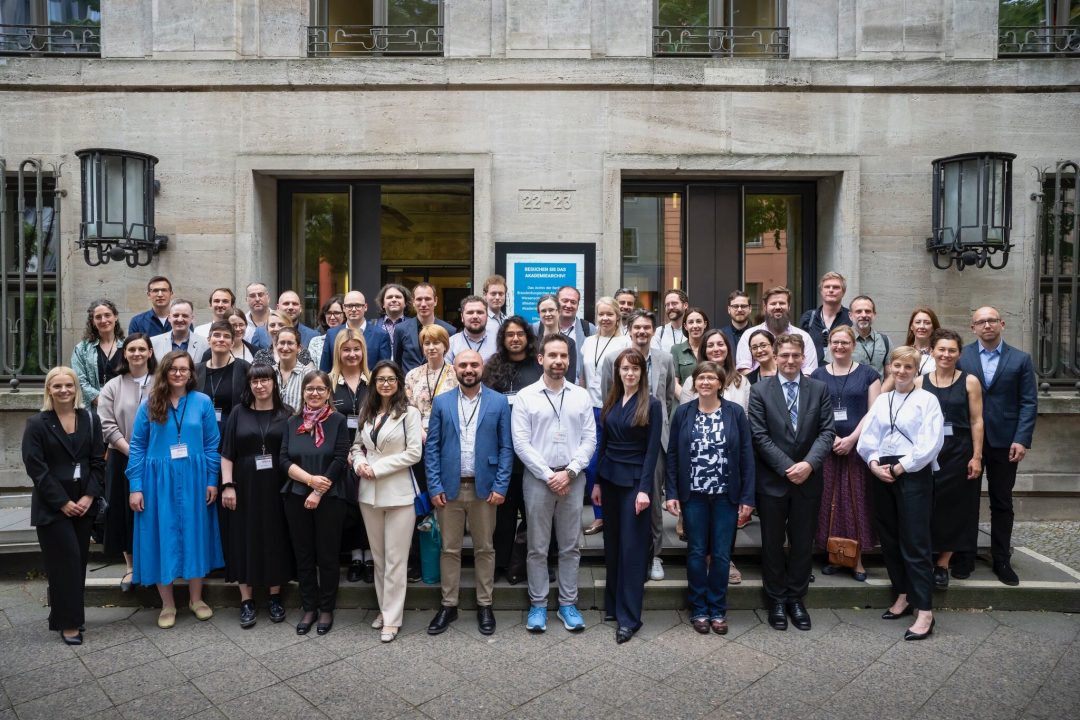
Participants of the 2024 Meeting of the European Network of Young Academies in Berlin

Two workshops on ‘Academy interactions for better policy advice’ were held by SAPEA (Science Advice for Policy by European Academies) on the 23rd of May to improve the contacts across European academies about science advice for policy. During the morning session, ’Cooperation between Academies in scientific advice’, ALLEA emphasized the importance of collaboration in scientific advice. In the afternoon, at the workshop ‘Achieving diversity, inclusiveness, and the involvement of Early- and Mid-Career Researchers (EMCRs) in scientific advice’, YASAS sought to promote diversity and inclusion in scientific advice, with a focus on involving researchers in their early to mid-career stages.