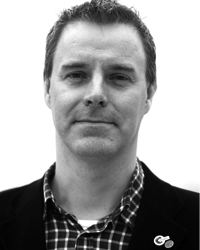
Schröder

leif schroeder
Affiliation: Leibniz Institute for Molecular Pharmacology, Berlin, DE


Keywords: Molecular Imaging

 

Webpage


Full profile:
Our group works on the development of magnetic resonance detection techniques for novel targeted contrast agents. Xenon biosensors have an outstanding potential to increase the significance of magnetic resonance imaging (MRI) in molecular imaging and to combine the advantages of MRI with the high sensitivity of hyperpolarized 129Xe and the specificity of a functionalized contrast agent. To explore this potential, the European Research Council (ERC) is providing funding in the form of a Starting Grant (BiosensorImaging, GA No. 242710) over the next 5 years.
Based on new detection schemes (Hyper-CEST method) in Xe MRI, this novel concept in molecular diagnostics will be made available for biomedical applications. The advancement focuses on high-sensitivity in vitro diagnostics for localization of tumour cells in cell cultures and first demonstrations on animal models. Such a sensor will enable detection of tumours at high sensitivity without any background signal.
More detailed work on the different available Hyper-CEST contrast parameters focuses on an absolute quantification of new molecular markers that will improve non-invasive tumour diagnostics significantly. NMR detection of functionalized Xe biosensors have the potential to close the sensitivity gap between modalities of nuclear medicine like PET/SPECT and MRI without using ionizing radiation or making compromises in penetration depth such as in optical methods.
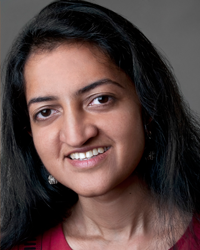
Sebastian

Suchitra Sebastian
Affiliation: King´s College, Cambridge, UK


Keywords: Quantum Matter


Webpage


Full profile:
Suchitra Sebastian received a PhD and MS in Applied Physics at Stanford University, USA in 2006. Before embarking on a career in physics, Suchitra worked as a management consultant after an MBA at the Indian Institute of Management (Ahmedabad), India. She moved to the University of Cambridge as a Junior Research Fellow in Physics at Trinity College. From 2010, she is a Royal Society University Research Fellow in Physics at the Cavendish Laboratory, and a fellow of King’s College. In 2013 she was appointed a University Lecturer in Physics at Cambridge University. Awards she has received include the Lee Osheroff Richardson North American Science prize for her PhD work on frustrated quantum magnets, the Young Scientist Medal in magnetism awarded by the International Union of Pure and Applied Physics, the Moseley Medal awarded by the Institute of Physics for her discoveries in frustrated quantum magnets, heavy fermion systems, and high temperature superconductors, a L’Oreal-UNESCO Women in Science fellowship to develop the next generation of superconductors, a Philip Leverhulme prize awarded by The Leverhulme Trust, and a five-year European Research Council starting grant for her research project on unconventional superconductivity from a Mott insulating parent magnet.

Research Interests

Suchitra’s research interests are in the area of correlated electron systems, particularly in novel materials. Her research focuses on the search for emergent quantum phenomena in a variety of new materials under extreme conditions. Toward this end, single crystals of materials such as rare earth magnets, iron pnictide and cuprate high temperature superconductors, and frustrated quantum magnets are synthesised in the laboratory, and low temperature thermodynamic and transport measurements performed under high applied pressures and large magnetic fields up to 100 T both in-house and in international facilities.

Srinivas

Mangala Srinivas

Affiliation: Radboud University Medical Center (RUMC), Cenya Imaging B.V., GE Healthcare, NL

Keywords: Imaging, Cell tracking, MRI, Multimodal, Therapy, SPECT

Webpage

ID_symbol_B-W_128x1280000-0002-3835-1995

Full profile:

Mangala started her career in research at the National University of Singapore, before completing her Ph.D. at Carnegie Mellon University (USA). She is currently a Group Leader at the Dept. of Tumor Immunology, at the Radboud University Medical Center in Nijmegen, the Netherlands. Her work focuses on agents for in vivo imaging. Mangala’s early work helped establish the field of 19F MRI for quantitative in vivo cell tracking, including the first paper on the topic. More recently, her group works on customizable nanoparticles for imaging and advanced personalized medicine applications, such as cell therapies. Some of these nanoparticles are produced at GMP-grade for a clinical cell tracking study using multimodal imaging, in melanoma patients. Her group works with fluorescence, MRI, PET, SPECT, ultrasound and photoacoustic imaging in different­ disease models, particularly cancer and cardiovascular disease. This multidisciplinary work is, and has been, supported by prestigious grants such as an NWO VENI, ERC Starting Grant (the largest European grant available to early stage researchers), ERA-NET CVD grant, two ERC PoCs, and others. She won the Dutch Venture Challenge in 2015, for her ideas on cell tracking.

Overall, Mangala’s team has taken a new type of imaging agent from development to the clinic and commercialization.

Mangala is also active within the Young Academy of Europe (YAE), where she is currently elected as Chair for a second term; she also served as Category Chair for the European Molecular Imaging Meetings, twice. She is an Associate Editor for the journal European Reviews. Mangala was also shortlisted for the World Molecular Imaging Society WIMIN Outstanding Leadership award in 2019.

In addition to her academic career, Mangala works for GE Healthcare in Strategy, Search and Evaluation, where she helps identify and evaluate emerging technologies in the fields of imaging. She is also CSO in Cenya Imaging B.V., a spin-off based on her research.

Mangala has given many invited talks and been on panels, such as at the International Society for Magnetic Resonance in Medicine, CATAPULT UK, Phacilitate Cell and Gene Therapy, European Infrastructure for Translational Medicine (EATRIS), and European Parliament Science and Media Hub. She has also been invited to several meetings, such as by the International Science Council, the Association of Universities in the Netherlands (VSNU) and European University Association (EUA).

Spin-off: www.cenyaimaging.com

Research interests:

Swart

Swart Marcel
Affiliation: University of Girona


Keywords: Density Functional Theory, polarizable force fields, bioinorganic and organic chemistry, multi-level (QM/MM or QM/QM) approaches, molecular simulations.


Webpage


Full profile:
Marcel Swart obtained his PhD in Groningen (NL) with a study on copper proteins (2002). He works since 2006 at the IQCC (Univ. Girona), and was promoted to ICREA Research Professor in 2009. He has published over 120 papers (cited >3350 times, H-index 30), formed part of tribunals for Masters and PhD ceremonies, evaluation committees (ANEP), reviewer for >30 journals and science organizations (ANEP, NWO, FWO, SNF, Prace). He received funding from science organizations and companies, organized a CECAM/ESF Workshop (Zaragoza, 2012) and is main organizer of Girona Seminar 2016. He is Editor of a Wiley-book on “Spin states in Biochemistry and Inorganic Chemistry” (2015), Chair of a COST Action (CM1305, ECOSTBio), and Assoc. Editor RSC Advances. He supervised two PhD theses with Premi Extraordinari, was awarded the Young Scientist Excellence Award 2005, the MGMS Silver Jubilee Prize 2012, was selected for the Young Academy of Europe (2014), and elected fellow of RSC (2015).

Research interests

He works in the field of theoretical (bio)inorganic and supramolecular chemistry, and works on transition-metal complexes, metalloproteins, enzymes, and DNA. The effect of (transition) metal ions on reactivity, selectivity and chemical bonding is one of the main topics in these studies. The development of computational tools for these studies is an important ingredient, to which he has contributed largely both with his own software (QUILD, DRF90) as in contributions in general purpose software (ADF, NWCHEM).

Thiele

Christina Thiele
Affiliation: Technical University Darmstadt, DE


Keywords:


Webpage


Full profile:

Tomasiello

Alessandro Tomasiello
Affiliation: University of Milan, IT


Keywords: Theoretical physics, string theory


Webpage


Full profile:

My research is centered on string theory — a candidate for the ambitious task of unifying all forces and matter, and of quantizing  gravity. In its most popular phase, this theory predicts six additional dimensions beyond the four we have observed so far. Most of my work concerns the “shape” of the tiny space spanned by these dimensions. I am particularly interested in the consequences of supersymmetry, a proposed new elementary symmetry that would explain some of the paradoxes of modern high-energy physics.

  • My most important result is the characterization (with M. Graña, R. Minasian, M. Petrini) of the requirements imposed by supersymmetry on the six-dimensional space in terms of a “generalized complex geometry” that had been previously studied by mathematicians.
  • I have clarified the nature of “massive” IIA string theory, the last corner of string theory without any known non-perturbative completion, by finding gauge theories (with D. Gaiotto) which are dual to some of its supersymmetric vacua.
  • More recently, I have obtained characterizations of which curved spaces can support a supersymmetric field theory (with D. Cassani, K. Hristov, C. Klare, D. Martelli, A. Zaffaroni). For example, I showed that any complex four-dimensional manifold works.
  • Also recently, I found gravity duals to six-dimensional field theories (with F. Apruzzi, M. Fazzi, D. Gaiotto, D. Rosa).
  • I have also worked on several other aspects of string theory, such as the dynamics of D-branes on Calabi-Yau manifolds, non-commutativity, brane instantons.

Tsori

Yoav Tsori
Affiliation: Ben-Gurion University of the Negev, IL


Keywords: Chemical Engineering


Webpage


Full profile:

We are interested in the following topics:

Theoretical understanding of interfacial phenomena at the micron
and sub-micron scales.

Phase-transitions in liquid mixtures under external spatially nonuniform electric
or gravitational fields. Phase-separation in ion-containing mixtures.

Theoretical study of phase-transitions and structural changes in ordered
phases of block-copolymers, as a result of confinement, elastic forces,
or external electric field. Orientation of ordered phases confined to thin-films.

Conformations of curved objects (i.e. micelles) near solid surfaces.
Competition between entropic, elastic and enthalpic forces.

Non-trivial polymer brush conformations when the end-groups are charged.

“Bacteria optics” : E. Coli bacteria sometimes behave in wave-like fashion.
The similarity and dissimilarity with optics is explored in these complex systems.

Verde

Licia VerdeAffiliation: Universitat de Barcelona, ES

Keywords: Astronomy and Astrophysics, Cosmology, Euclid, Structure formation, Neutrinos

Webpage

ID_symbol_B-W_128x1280000-0003-2601-8770

Full profile:
I am an astrophysicists with interest in cosmology. My research topics include theoretical cosmology, cosmic microwave background, large-scale structure, galaxy clusters, statistical applications and data analysis. I am interested in the study of large-scale structure of the Universe and the analysis of galaxy surveys.

Waser


Affiliation: École Polytechnique Fédérale de Lausanne, CH


Keywords: Synthesis of metal complexes, ligands, and organocatalysts. New catalytic reactions for C-C bond formation. Investigation of reactions mechanism. Synthesis of complex bioactive compounds.


Webpage


Full profile:
Jérôme Waser was born in Sierre, Valais, Switzerland in October 1977. From 1997 to 2001, he studied chemistry at the ETH Zurich. After a summer internship at Lonza AG in Visp in 2000, he chose organic chemistry as specialization and obtained his Diploma under the supervision of Prof. Erick M. Carreira and Dr. Christian Fischer in 2001.

In 2002, he started his Ph.D. studies at the ETH Zurich also under the supervision of Prof. Erick M. Carreira. During his Ph.D., he worked on the development of new metal-catalyzed amination reactions, which culminated in a new access to azides and hydrazines directly from olefins.
After obtaining his PhD in 2006, he then joined the group of Prof. Barry M. Trost at Stanford University as a postdoctoral fellow. While at Stanford, he worked on the total synthesis of Pseudolaric Acid B, a diterpene natural product displaying interesting antifungal, antifertility and antitumor activity.

His principal focus of research is the development and application of new catalytic methods for the synthesis of bioactive compounds.

Weigand

Jan Weigand
Affiliation: Technical University Dresden, DE


Keywords: Inorganic molecular chemistry


Webpage


Full profile: