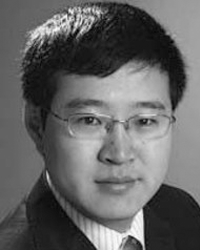
Weiskopf

Nikolaus WeiskopfAffiliation: Max Planck Institute for Human Cognitive and Brain Sciences: Leipzig, DE

Keywords: Biomedical Imaging, Neuroscience, SLMS Frontier Disciplines, MRI

Webpage

ID_symbol_B-W_128x1280000-0001-5239-1881

Full profile:
Our vision is to develop and apply functional microstructure imaging and in-vivo histology using magnetic resonance imaging (MRI) as novel non-invasive MRI methods to reliably characterize the detailed functional and anatomical microstructure of the human brain.

Yuan

Jiayin Yuan
Affiliation: Stockholm University, SE

Keywords: Functional polymers, Carbon materials

Webpage

ID_symbol_B-W_128x1280000-0003-1016-5135

Full profile:

Žagar


Affiliation: Theoretical Meteorology group, Institute of Meteorology, University of Hamburg, DE

Keywords: Weather and climate dynamics, Earth observations, Numerical modelling

Webpage

Full profile:

Professor of Theoretical Meteorology at the University of Hamburg.

Verhelst

steven verhelst
Affiliation: KU Leuven – University of Leuven, BE & Leibniz Institute for Analytical Sciences ISAS, Dortmund, DE


Keywords: activity-based probes, chemical biology, chemical proteomics, intramembrane proteases, protease inhibitors


Webpage


Full profile:

Steven Verhelst received his PhD in Chemistry at Leiden University and performed post-doctoral research at the Stanford University, School of Medicine. He started his own laboratory at the Technical University Munich as a TUM Junior fellow and DFG-funded Emmy Noether group leader in 2008. In 2014, he moved to the Leibniz Institute for Analytical Sciences ISAS in Dortmund, Germany, as a group leader in chemical proteomics. Since 2015, he is also appointed as an associate professor in chemical biology at the Department of Cellular and Molecular Medicine of the University of Leuven, Belgium. His laboratory works on the development of chemical tools to covalently label proteins, with a specific focus on (intramembrane) proteases. In his spare time, Steven likes to read, write, cook, listen to heavy metal and watch movies by Paul Verhoeven, Quentin Tarantino and Joel & Ethan Coen.

Antonelli


Affiliation: University of Gothenburg, SE

Keywords: Biogeography, Biodiversity, Evolution, Systematics, Neotropics

Webpage

ID_symbol_B-W_128x128 0000-0003-1842-9297

Full profile:

Alexandre Antonelli is a Full Professor in Systematics and Biodiversity at the Department of Biological and Environmental Sciences, University of Gothenburg. He is also Scientific curator at Gothenburg botanical garden. He is an evolutionary biologist with practical and theoretical experience ranging from fieldwork in the tropics to molecular-based laboratory and analytical techniques. He is interested in combining data and techniques from phylogenetics, palaeontology, ecology, systematics, and geology for addressing empirical biological questions. His research has focused on the origins and evolution of tropical America’s outstanding biodiversity. He is more interested in compelling research questions than particular organism groups – animals, plants or fungi.

Alimonti

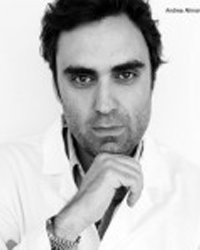
Andrea Alimonti
Affiliation: Institute of Oncology Research, Bellinzona, CH

Keywords: Biology, biodiversity, conservation, ecology, evolution, tropics

Webpage

ID_symbol_B-W_128x128

Full profile:

My research is focused on the characterization of a novel type of cellular senescence response which is elicited by complete loss of the tumor suppressor PTEN, and on the identification of novel compounds with pro-senescence activity. My final aim is to develop the concept of pro-senescence therapy for cancer, from experimental evidences to clinic, investigating the efficacy of “pro-senescence” compounds in phase I clinical trials. This will also allow for the identification of senescence markers in human tumor samples to be used in clinic.

Ballottari

Affiliation: University of Verona, IT

Keywords: Plant Science, Photosynthesis, Bioenergy, Biochemistry

Webpage

ID_symbol_B-W_128x128 0000-0001-8410-3397

Full profile:

Prof. Matteo Ballottari received his PhD in Molecular, Industrial and Environmental Biotechnology at the University of Verona with PhD thesis focused on the functional characterization of photosynthetic proteins in higher plants. Since 2011 Matteo Ballottari was appointed as Assistant Professor, and then  Associate Professor, in Plant Physiology at the Department of Biotechnology of the University of Verona. Matteo Ballottari is involved in many national and European projects financed by public and private funds about the exploitation of photosynthetic organisms to produce food, biofuels and high value products, among which the H2020 projects ERC Starting Grant SOLENALGAE and the ERC Proof of Concept ASTAOMEGA and ASTEASY. Prof. Ballottari group (SOLE-LAB) studies plant metabolism mostly in microalgae but also in plants, focusing on how it might be improved to produce biomass and high value products through an interdisciplinary approach ranging from omics to biophysics, biochemistry and genetic engineering. Overall research activity lead to publication of more than 50 articles in peer reviewed journals. Prof. Ballottari is the coordinator of the PHD program in Biotechnology at the University of Verona since March 2018.

Bestmann

Sven Bestmann
Affiliation: University College London, UK

Keywords: neuroscience, neuroimaging, brain imaging, movement disorders, neurology, decision making, electrophysiology, evidence based policy, science policy, Open Science

Webpage

ID_symbol_B-W_128x128 0000-0002-6867-9545

Full profile:

Sven hails from Dusseldorf, Germany, and conducted his PhD with Jens Frahm at the Max-Planck Institute for Biophysical Chemistry.

His current research interests are centered around action control, and how our brain controls movements. In addition, he is still puzzled how different kinds of neurostimulation might work.

He is a Professor in Motor Neuroscience at the Sobell Department for Motor Neuroscience and Movement Disorders, UCL, and Vice Chair of the Young Academy of Europe.

Branzei

Dana Branzei
Affiliation: Istituto FIRC di Oncologia Molecolare, Milano, IT

Keywords: DNA replication, recombination, chromosome structure, sister chromatid cohesion, DNA damage response, cell cycle

Webpage

ID_symbol_B-W_128x128 0000-0002-0544-4888

Full profile:

Molecular biologist Dana Branzei is one of IFOM Milan’s youngest tenured group leaders. Dana’s laboratory researches mechanisms of DNA repair and replication stress tolerance that operate in eukaryotic cells, and the regulatory pathways that coordinate their usage.

At a young age Dana, as well as members of the scientific community, discovered her talent for science. Participating in Romania’s annual Chemistry Olympics throughout her high-school years, she was scouted. Receiving exclusive scholarships from the Japanese Ministry of Education, Culture, Sports, Science and Technology, Dana learnt Japanese in one year and then did her bachelor’s degree in Pharmaceutical Studies and PhD in molecular biology at Tohoku University. Continuing her career in Japan and affirming herself as a DNA repair and genome stability researcher, Dana then became a research fellow scientist at the prestigious Riken Institute.

For a brief sabbatical, Dana worked in Marco Foiani’s Lab at IFOM. Taking advantage of the technologies available, Dana thrived and achieved amazing results. Soon after, Dana chose to return to IFOM. She quickly became a Principal Investigator and her lab DNA Repair was immediately supported by important funding bodies including Italian Association for Cancer Research (AIRC) grant, a starting grant from the European Research Council (ERC), and Telethon.

From 2016, she also receives an ERC Consolidator Grant.

Dana continues to live and breathe science around the clock. She asks new questions, enters new fields, uses different model systems, and experimental approaches. Learning and experimentation, nurturing young talent, promoting collaboration and open exchange of ideas are of value to Dana. Passion accompanied by essential ‘hard-work’, as she puts it, Dana today is author of over 50 papers published in prestigious international scientific journals.

Angela Casini

casini-angela
Affiliation: Cardiff University, UK

Keywords: Medicinal chemistry, Bioinorganic, Supramolecular chemistry, Chemical probes, Organometallics, Gold compounds.

Webpage

ID_symbol_B-W_128x128 0000-0003-1599-9542

Full profile:

Angela Casini is Chair of Medicinal and Bioinorganic Chemistry at Cardiff University (UK). She completed her PhD in Chemistry at the University of Florence (Italy) in 2004, and, afterwards, moved to EPFL (Switzerland) as senior scientist funded by the Swiss National Science Foundation. Between 2011-2015 she has been assistant professor at the University of Groningen (The Netherlands), holding a Rosalind Franklin Fellowship, before taking up her current position at Cardiff University. She was awarded the 2012 European Medal for Biological Inorganic Chemistry and the 2014 Early career investigator at the GRC Metals in Medicine “New Frontiers”. In 2014 she has been listed by Thomson Reuters as one of the “World’s most influential scientific minds” in the field of Pharmacology. Her research interests are in Medicinal Inorganic and Bioinorganic Chemistry. In these fields, she is author of ca. 170 publications and has an H index of 53. In particular, the study of the role of metal ions in biological systems and of the mechanisms of action of metal-based anticancer agents are active topics of her research program. Furthermore, novel applications for metal-based compounds/scaffolds are explored in various domains of chemical biology, bio-analytical chemistry and physiology. Since 2016 Prof. Casini is also Hans Fischer Senior Fellow of the prestigious Institute for Advanced Studies of the Technical University of Munich.