Moroni

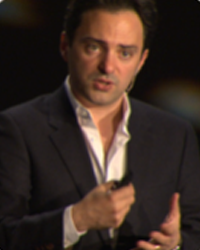
Moroni Lorenzo

Affiliation: Maastricht University, MERLN Institute, Dept. of Complex Tissue Regeneration, NL
Keywords:

Webpage

Full profile:

Dr. Lorenzo Moroni studied Biomedical Engineering at Polytechnic University of Milan, Italy, and Nanoscale Sciences at Chalmers Technical University, Sweden. He received his Ph.D. cum laude in 2006 at University of Twente on 3D scaffolds for osteochondral regeneration, for which he was awarded the European doctorate award in Biomaterials and Tissue Engineering from the European Society of Biomaterials (ESB). In 2007, he worked at Johns Hopkins University as a post-doctoral fellow in the Elisseeff lab, focusing on hydrogels and stem cells. In 2008, he was appointed the R&D director of the Musculoskeletal Tissue Bank of Rizzoli Orthopedic Institute, where he investigated the use of stem cells from alternative sources for cell banking, and the development of novel bioactive scaffolds for skeletal regeneration. From 2009 till 2014, he joined again University of Twente, where he got tenured in the Tissue Regeneration department. Since 2014 he works at Maastricht University and in 2016 he became professor in biofabrication for regenerative medicine at the MERLN Institute for Technology-Inspired Regenerative Medicine. His research group interests aim at developing biofabrication technologies to generate libraries of 3D scaffolds able to control cell fate.
In 2014, he received the prestigious Jean Leray award for outstanding young principal investigators from the ESB and the ERC starting grant. In 2016, he also received the prestigious Young Scientist Award for outstanding principal investigators from TERMIS.

Hendry

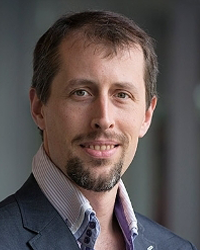
Hendry Kate

Affiliation: Royal Society University Research Fellow, School of Earth Sciences, Faculty of Science, University of Bristol, UK
Keywords: biogeochemistry, oceanography, paleoclimate, isotope geochemistry

Webpage

Full profile:

Kate Hendry obtained her undergraduate degree in Natural Sciences at Cambridge University (2004), before completing a doctorate in Antarctic biogeochemistry at Oxford University (2008). She was awarded a postdoctoral scholarship at Woods Hole Oceanographic Institution, working on ocean chemistry and paleoclimate (2009-2011). She then moved back to the UK, initially as a Research Lecturer at Cardiff University (2012-2013), then as a Royal Society University Research Fellow at the University of Bristol (2013-). She has published over 30 well-cited, peer reviewed papers, with over 400 citations, and has been invited to give talks at several international conferences. She is a director of Antarctic Science Ltd, and sits on the UK National Committee of Antarctic Research. She was awarded the European Association of Geochemistry EAG Hautermans Award for early career geochemistry (2016), a European Research Council ERC starter grant (2016), and was selected for the Young Academy of Europe (2017).

Research interests:

Kate’s main research interests lie in the investigation of modern biogeochemical cycling and past ocean processes, focusing on biogenic opal and silicon cycling in seawater. Her work uses isotope geochemistry as a tool for investigating nutrient uptake, biological production and particle cycling in the modern ocean as well as in the past using marine sediment archives.

Fernández-Götz

Affiliation: University of Edinburgh, School of History, Classics and Archaeology, UK

Keywords: Archaeology, Early Urbanism, Conflict Archaeology, Ancient Identities.

Webpage

Full profile:
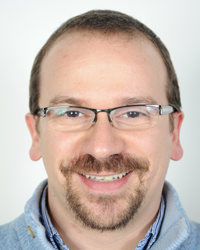
Dr. Manuel Fernández-Götz is Reader in Archaeology at the University of Edinburgh, Executive Board Member of the European Association of Archaeologists, and winner of the Philip Leverhulme Prize in Archaeology 2016. He has authored more than 130 publications on Iron Age societies in Central and Western Europe, the archaeology of identities, and the archaeology of the Roman conquest. Key publications include the monographs Identity and Power: The Transformation of Iron Age Societies in Northeast Gaul (Amsterdam 2014), and the edited volumes Paths to Complexity: Centralisation and Urbanisation in Iron Age Europe (Oxford 2014) and Eurasia at the Dawn of History: Urbanization and Social Change (New York 2016). He has directed fieldwork at the sites of the Heuneburg (Germany), Ardoch (Scotland), and Monte Bernorio and Huerta Varona (Spain).

Apel

Sven Apel
Affiliation: University of Passau, DE

Keywords: Programming methods, Software engineering, Empirical methods, Formal methods

Webpage

ID_symbol_B-W_128x128

Full profile:

Prof. Dr. Sven Apel holds the Chair of Software Engineering at the University of Passau, Germany. The chair is funded by the esteemed Emmy-Noether and Heisenberg Programs of the German Research Foundation (DFG). Prof. Apel received his Ph.D. in Computer Science in 2007 from the University of Magdeburg, Germany. His research interests include software product lines, software analysis, optimization, and evolution, as well as empirical methods and the human factor in software engineering. He is the author or co-author of over a hundred peer-reviewed scientific publications. He serves regularly in program committees of top-ranked international conferences, he is member of the editorial boards of IEEE Software and Empirical Software Engineering, and he was program-committee co-chair of the 31st International Conference on Automated Software Engineering (ASE). His work has received awards by the Ernst-Denert Foundation and the Karin-Witte Foundation.

Artero

Vincent Artero
Affiliation: CEA, Grenoble, FR

Keywords: Bio-inspired chemistry, catalysis, Artificial photosynthesis, solar fuels, solar-driven chemistry, electrocatalysis, photocatalysis, photoelectrocatalysis, bioinorganic chemistry

Webpage

ID_symbol_B-W_128x128 0000-0002-6148-8471

Full profile:

Bednarkiewicz

Artur Bednarkiewicz
Affiliation: Institute of Low Temperature and Structure Research, Wroclaw, PL

Keywords: luminescent nanoparticles, lanthanides, biospectroscopy, bioimaging, remote nanothermometry

Webpage

ID_symbol_B-W_128x128 0000-0003-4113-0365

Full profile:
Present research activity

  • Lanthanide doped nano-colloidal solutions: optical properties and application in bioscience (biolabels, biomarkers)
  • Fluorescence Lifetime Imaging and Hyper Spectral Imaging, Molecular Imaging
  • Non-invasive monitoring of living cell functions
  • Applications of spatial light modulators in digital photolithography, neurotoxicity, photodynamic cell colony enrichment, high-content imaging
  • Diode Pumped Solid State lasers – ytterbium doped double tungstates (KYW, KGdW) and YAG laser crystals were investigated i CW and Q-switch mode in the end-pump configuration.
  • Spectroscopy of rare earths – especially energy transfer between Eu-Yb, Tb-Yb and Nd-Yb
  • Application of physics and lasers in medicine – photodynamic therapy and diagnosis of cancer, atherosclerosis, spectroscopy of photosensitizers, application of lasers in medicine

Berti

massimiliano berti
Affiliation: SISSA, IT

Keywords: Analysis of Hamitlonian PDEs, KAM theory,

Webpage

ID_symbol_B-W_128x128

Full profile:

Main Reaserch Interests

  • Variational and Topological Methods in the study of Hamiltonian systems
  • Hamiltonian Partial Differential Equations
    • Periodic and Quasi-Periodic solutions for wave and Schrodinger equations
    • Averaging theory and Birkhoff normal forms
    • Water wave equations
  • Bifurcation Theory and Nash-Moser Implicit Function Theorems
  • KAM theory
  • Dynamical Systems
    • Chaotic Dynamics
    • Arnold Diffusion
    • Perturbation and Nekhoroshev Theory
    • 3 body problem

Bertone

Gianfranco Bertone
Affiliation: University of Amsterdam, NL

Keywords: Dark Matter, Cosmic Rays, Extra Dimensions

Webpage

ID_symbol_B-W_128x128 0000-0002-6191-1487

Full profile:

I am an Associate Professor at the University of Amsterdam, where I lead a research team investigating topics at the interface between Particle Physics and Cosmology.

After a PhD at the University of Oxford and the Institute of Astrophysics in Paris, I have held teaching and research positions at the Fermi National Accelerator Laboratory, the University of Padova, the IAP in Paris and the University of Zurich, before moving to Amsterdam.

I am currently the spokesperson of the Center of Excellence in Gravitation and Astroparticle Physics of the University of Amsterdam, GRAPPA (Gravitation, AstroParticle Physics Amsterdam).

I am the editor-in-chief of the new “Physics of the Dark Universe” journal.

I have recently published my first popular science book “Behind the Scenes of the Universe: from the Higgs to Dark Matter“, with Oxford University Press. The French edition of the book has won in 2015 the ‘Ciel et Espace’ prize for the best Astronomy book.

Bonnet

Sylvestre Bonnet
Affiliation: Leiden Institute of Chemistry, NL

Keywords: phototherapy, metallodrugs, photoactivated chemotherapy, photopharmacology, photodynamic therapy, cancer, liposomes, photocatalysis, bioinorganic chemistry, biomimetic chemistry, upconversion, hypoxia

Webpage

ID_symbol_B-W_128x128 0000-0002-5810-3657

Full profile:

SB did his PhD on molecular machines in the group of Jean-Pierre Sauvage in Strasbourg, France, where he graduated in 2005. He then moved to The Netherlands as a postdoctoral fellow, first in the catalysis group of Gerard van Koten (Utrecht), then with Jan Reedijk (Leiden) where he worked on spin crossover. After obtaining a Veni grant in 2008 in the Chemical Biology group of Bert Klein Gebbink and Antoinette Killian (Utrecht) he moved to Leiden in 2009 where he completed a Tenure Track in Inorganic Chemistry. He obtained a Vidi grant in 2012 and an ERC Starting Grant in 2013, and became Associate Professor in Leiden in 2015. His expertise lies at the crossing point between inorganic chemistry, photochemistry, and liposomes. His current research interests are light-activated anticancer metallorugs, photocatalysis, and coordination chemistry at lipid bilayers.

Bordas

Stephane Bordas
Affiliation: Cardiff University, UK

Keywords: High Performance Computing, Surgical Simulation, Biomechanics, Microstructurally-faithful material modelling, Multiscale simulation, Model Reduction techniques

Webpage

ID_symbol_B-W_128x128

Full profile:

Born in Paris, France in 1975, I joined the Theoretical Applied and Computational Mechanics team at Cardiff University on 1st September 2009, as a Professor.

Before this, I was a lecturer in Glasgow University Civil Engineering Department for three years (2006-2009).

Between 2003 and 2006, I was at the Laboratory of Structural and Continuum Mechanics at the Swiss Federal Institute of Technology in Lausanne, Switzerland, working under the support of Professor Thomas Zimmermann on meshfree point collocation methods and partition of unity enrichment (extended finite elements) with applications to geomechanics.

In 2003, I graduated in Theoretical and Applied Mechanics with a Ph.D. from Northwestern University under the guidance of Professor Brian Moran. My thesis, funded by the Federal Aviation Administration, concentrated on applications of the extended finite element method (XFEM) to damage tolerance analysis of complex structures, casting design and biofilm growth processes. In addition to the unique support of Professor Moran, this work would never have been possible without Professor James Conley and Professor David Chopp as well as the instruction of Professor Ted Belytschko.

In 1999, through a joint graduate programme of the French Institute of Technology (Ecole Speciale des Travaux Publics) and the American Northwestern University I complete a dual M.Sc. after a thesis work on Time Domain Reflectometry simulation to assess ground movements with Professor Charles H. Dowding.

My areas of expertise are:
Computational mechanics with an emphasis on moving discontinuities (mechanics of fracture, biofilm and tumour growth, etc.)

Method development (enriched/extended finite elements, meshfree methods, smooth strain finite elements)

Evolving discontinuities (level set methods, partition of unity enrichment

Academic research/industrial applications: bridging the gap (porting novel methods to industrial codes, real-world applications of computational mechanics and novel method development)