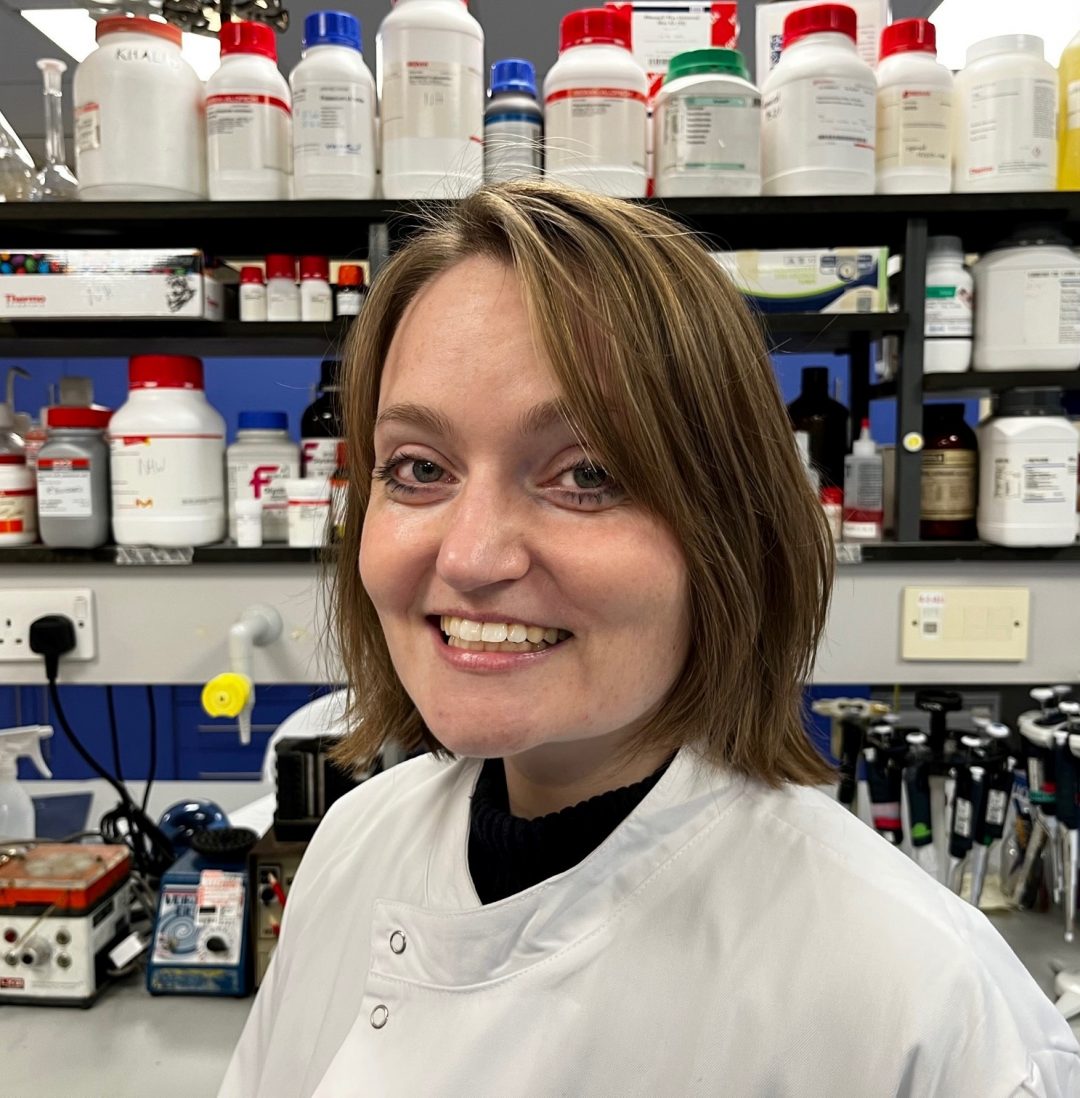
Warren

Affiliation: King’s College London

Keywords: Spinal cord injury, Regeneration, Respiratory physiology, Neuroscience, Plasticity, Neurodegeneration

Webpage

Orcid identifier

Full profile:

27 million people world-wide have lived experience of a spinal cord injury, for which there is currently no cure. My pre-clinical and translational research aims to understand the mechanisms behind these physiological deficits and develop treatment strategies with the aims of restoring ‘normal’ breathing in clinical patients.

During my BSc at Imperial College London (UK), I worked at Eli Lilly (UK) as an electrophysiologist assessing the causes, and pharmaceutical treatments, of temporal lobe epilepsy. I became immersed in spinal cord injury research in 2006 during my PhD at the University of Cambridge (UK) where I helped assess viral therapeutics for this devastating disorder, a treatment which is now being developed for first-in-human trials. During my six years at Case Western Reserve University (USA) and the University of Leeds (UK), I gained additional expertise in respiratory and muscle physiology while focusing on the recovery of critical motor system function at chronic time points following injury. I joined King’s College London (UK) in 2018 as a King’s Prize Fellow where I forged my independent research group focusing on understanding the mechanisms of deficit and recovery throughout the spinal-motor-axis after spinal cord injury. This was shortly followed by a Wellcome Trust & Royal Society Sir Henry Dale Fellowship that started in December 2021. Within the Institute of Psychiatry, Psychology & Neuroscience (IoPPN), I am also a Senior Lecturer, co-leading Stem Cell and Spinal Cord Injury MSc programmes and lecturing across BSc and MSc courses.

My lab is based in the Wolfson Centre of the IoPPN. I use a vast array of state-of-the-art approaches including respiratory and muscle physiology, X-ray videography, anatomy, neuroimaging, chemogenetics, pharmacogenetics, and neuromodulation to understand the systemic problems caused by traumatic injury to the central nervous system and subsequent targets for treatment strategies.
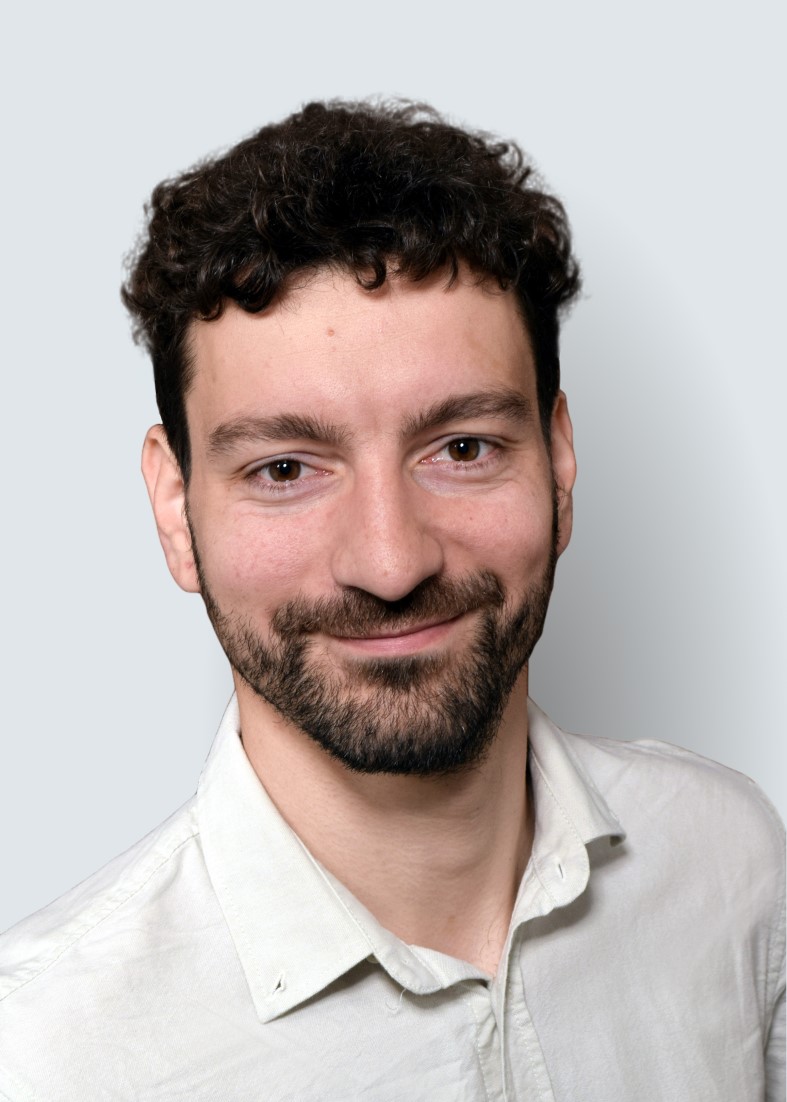
Salvalaglio

Affiliation: TU-Dresden, Institute of Scientific Computing & Dresden Center for Computational Materials Science

Keywords: Computational Materials Science, Condensed Matter Physics, Applied Mathematics, Scientific Computing, Scale-Bridging Materials Modeling

Webpage

Orcid identifier

Full profile:

Marco Salvalaglio is an Emmy Noether Group Leader at the Institute of Scientific Computing at TU Dresden. He is also an associated researcher at the Dresden Center for Computational Materials Science and the Dresden Center for Intelligent Materials. Physicist by training, he obtained his Ph.D. in materials science (and European Doctorate PCAM) at the University of Milano-Bicocca (IT) in 2016. The same year, he joined TU Dresden with a two-year Alexander von Humboldt fellowship and collaborated with the Leibnitz Institute IHP-Microelectronics in Frankfurt (Oder) as a guest scientist. He was invited as a Visiting Junior Fellow to the prestigious Hong Kong Institute of Advanced Studies (2019). In 2020, he was awarded the DFG Emmy Noether Programme Grant, which enabled him to establish his research group the following year.

Salvalaglio and his group perform interdisciplinary research at the intersection of materials science, solid-state physics, and applied mathematics, focusing on both the development of novel models and technology-relevant applications. He contributed to understanding elastic and plastic relaxation in three-dimensional crystalline heterostructures for optoelectronics applications. Moreover, he investigated their morphological evolution and self-assembly, shedding light on the basic mechanisms at play as well as their exploitation in bottom-up fabrication processes. Correlated disorder emerging from such phenomena is also an important subject of his studies. His group primarily works on the comprehensive study of defects, interfaces, and microstructures in single and polycrystalline systems with novel mesoscale approaches. In 2023, he was nominated by the editorial board of the IOP journal Model. Sim. Mater. Sci. Eng. as an MSMSE Emerging Leader. He was admitted to the Young Academy of Europe in March 2023.

Vaštakaitė-Kairienė

Affiliation: Vytautas Magnus University Agriculture Academy

Keywords: 

Webpage

Orcid identifier

Full profile:

Viktorija Vaštakaitė-Kairienė is a Vice-chair of the Lithuanian Academy of Sciences Young Academy, a Chief Researcher at the Lithuanian Research Centre for Agriculture and Forestry Institute of Horticulture, and an Associate Professor at Vytautas Magnus University Agriculture Academy.

Viktorija defended her doctoral thesis, ‘The Photophysiological Aspects for the Management of Metabolites and Mineral Elements in Brassicaceae Microgreens’ in 2018. Currently, her work focuses on developing non-destructive methods of harmful organisms and applying biological and alternative plant protection products and technologies in horticulture. In addition, she is teaching students of plant physiology, morphology and mineral nutrition at various study levels.

Viktorija participates(-ed) in high-level R&D and other projects financed by the Research Council of Lithuania and with(-out) European Union funds and Lithuanian Business Support Agency projects. She was a postdoctoral fellow at Nature Research Centre in Lithuania (2020-2022). Viktorija had internships at the University of Agriculture in Krakow, Poland, Michigan State University in the USA, the University of Padova in Italy, Institute of Plant Physiology and Genetics of the Bulgarian Academy of Sciences. With co-authors, she published over 50 scientific publications, including three chapters in books by international publishers and a scientific study published by the Lithuanian Academy of Sciences. She has given over 60 presentations at national and international conferences in the USA, China, Turkey, Austria, Sicily, Latvia, Poland, Latvia, France, Bosnia and Herzegovina.

Viktorija actively participates in the activities of the international societies EPSO, ISHS, and ASHS and seminars in Lithuania and abroad. She is an alumni council member of the Baltic-American Freedom Foundation. Since 2022 she is a Board member at the Young Academies Science Advice Structure (YASAS).

She is awarded a scholarship for young scientists, a prize and a certificate of merit from the Lithuanian Academy of Sciences, and a National scholarship from the World Federation of Scientists.

Baláž

Affiliation: Slovak Academy of Sciences

Keywords: Mechanochemistry, ball milling, metal chalcogenides, silver nanoparticles, eggshell, nanomaterials, solid-state chemistry, X-ray diffraction, nitrogen adsorption

Webpage

Orcid identifier

Full profile:

Matej Baláž graduated in Chemistry at P. J. Šafárik Unviersity in Košice (Slovakia) in 2011 and got his PhD. degree in Metallurgy at the Institute of Geotechnics, Slovak Academy of Sciences in 2015. He currently serves as an independent researcher and a vice-head of the Department of Mechanochemistry at the institute.

Matej is well-established in the field of mechanochemistry applying the high-energy ball milling for the production of nanocrystalline materials (mainly metal chalcogenides and silver nanoparticles) and the treatment of eggshell waste. Mechanochemistry represents an environmentally sound alternative to the traditional solution-based chemistry as it offers a one-step, solvent-free solid-state methodology to access the desired compounds without the need to use toxic solvents, external heating or pressure.

Matej’s reseach work has been awarded more times on a national level, e.g. he was listed in the ranking of “Top 30 under 30 Slovaks” (member of top 5 in the category “Science”) in the magazine Forbes Slovakia (2016), winner of the competition “Young researcher of Slovak Academy of Sciences under 35 years” (2016), winner of a competition “Scientist of the year 2018” in the category “Young researcher” in Slovakia (2018), he finished 3rd in the competition Falling Walls Lab Slovakia (2020) and he is the finalist of the ESET Science Award in the category “Exceptional young scientist” (2021). He has been also awarded by the Slovak Academy of Sciences for active popularization of science to the public (2021). The recognition of his work at the international level is documented e.g. by having more invited lectures on international conferences e.g. in USA, Italy or France and serving as an invited lecturer at Al-Farabi Kazakh National Unviersity (Almaty, Kazakhstan). He also serves as a Short-term Scientific Missions coordinator and a Task Force leader in the COST Action CA18112: Mechanochemistry for Sustainable Industry.

Rodolà

Affiliation: Sapienza University of Rome

Keywords: Machine learning, Geometry processing, Computer vision, Artificial intelligence

Webpage

Orcid identifier

Full profile: Emanuele Rodolà is Full Professor of Computer Science at Sapienza University of Rome, where he leads the GLADIA group of Geometry, Learning and Applied AI, funded by an ERC Grant and a Google Research Award.

Previously, he was Assistant and then Associate Professor at Sapienza (2017-2020), a postdoc at USI Lugano (2016-2017), an Alexander von Humboldt Fellow at TU Munich (2013-2016), and a JSPS Research Fellow at The University of Tokyo (2013). He is an ELLIS fellow, has received a number of research prizes, has been serving in the program and organizing committees of the top rated conferences in computer vision, machine learning and graphics, founded and chaired several successful workshops.

His research interests lie at the intersection of geometry processing, graph and geometric deep learning, computer vision, language and sound processing, and has published more than 100 papers in these areas.

Hana Lísalová

Lísalová

Affiliation: Czech Academy of Sciences, Prague

Keywords: Bio-surface science, biointerfaces surface chemistry, functional coatings, antifouling materials, biosensors, cell-on-a-chip applications

Webpage

Picture of Hana Lísalová

Orcid identifier

Full profile:

Hana received Ph.D. in biophysics at Charles University in Prague. In 2006 – 2008, she worked as a postdoctoral research fellow in the Chemical Engineering Department at University of Washington, Seattle. In 2008, she joined the Institute of Photonics and Electronics of the Czech Academy of Sciences in Prague as a research scientist. In 2019, she has established a new research group – Laboratory of Functional Biointerfaces in the Institute of Physics of the Czech Academy of Sciences in Prague. Her biointerface research focuses on fundamentals of surface-mediated biomolecular interactions, and development of next-generation functional antifouling coatings, biosensors and biomimetic systems for bioanalytical and biomedical applications.

Ehrler

Affiliation: AMOLF, Amsterdam

Keywords: Solar Cells, Perovskite, Materials Science, Sustainability

Webpage

Picture of Bruno Ehrler

Orcid identifier

Full profile:

Bruno Ehrler is leading the Hybrid Solar Cells group at AMOLF in Amsterdam since 2014 and is also a honorary professor at the University of Groningen since 2020. His group focuses on perovskite materials science, both on the fundamental level, and for device applications. He is recipient of an ERC Starting Grant and an NWO Vidi grant, advisory board member of the Dutch Chemistry Council, recipient of the WIN Rising Star award, senior conference editor for nanoGe and science board member of the Netherlands Energy Research Alliance.

Before moving to Amsterdam, he was a research fellow in the Optoelectronics Group at Cambridge University following post-doctoral work with Professor Sir Richard Friend. During this period, he worked on quantum dots, doped metal oxides and singlet fission photovoltaics. He obtained his PhD from the University of Cambridge under the supervision of Professor Neil Greenham, studying hybrid solar cells from organic semiconductors and inorganic quantum dots. He received his MSci from the University of London (Queen Mary) studying micro-mechanics in the group of Professor David Dunstan.

Picture of David Cerny

Černý

Affiliation: Institute of State and Law and Institute of Computer Science, Czech Academy of Sciences

Keywords: Ethics, Philosophy, Artificial Intelligence, Biomedicine

Webpage

Orcid identifier

Full profile:

David is a philosopher who works at the Czech Academy of Sciences and lectures on applied ethics (medical ethics, bioethics, ethics of artificial intelligence) at several Czech universities. He is the author of several monographs on the ethics of stem cell research, animal rights, death and dying, allocation of scarce resources in times of pandemics, euthanasia, and the ethics of modern technologies. He is also the author of Cerny, D. The Principle of Double Effect. A History and Philosophical Defense (New York: Routledge, 2020, 2022) and co-author of Jenkins, R., Černý, D., Hříbek, T. (eds.). Autonomous Vehicle Ethics. The Trolley Problem and Beyond (New York: Oxford University Press, 2022).

David is currently working on just war theory, particularly the use of autonomous military robots.

In the Czech Republic, David frequently appears in the media (TV, radio) and has written many articles in newspapers. He is also involved in science popularization.

Facebook: https://www.facebook.com/david.p.cerny

Twitter: @DavidPCerny

Jambrak

Affiliation: Faculty of Food Technology and Biotechnology, University of Zagreb

Keywords: Nonthermal processing, advanced thermal processing, sustainability, food processing, Industry 4.0, digitalization, food chemistry, food physics

Webpage

Orcid identifier

Full profile: She is at position of full professor (from 2018.) and scientific advisor (permanent title) from 2017, in food engineering (biotechnical sciences). From 2019, she is head of Laboratory for sustainable development. She obtained PhD, in 2008.

Thesis: Ultrasonic effect on physical and functional properties of whey proteins. She was trained abroad at Coventry University, UK and at the University of Avignon, France. Her field of research is nonthermal processing, advanced thermal processing, sustainability, food processing, Industry 4.0, digitalization, food chemistry, food physics etc. In the period from 2007.

Anet Režek Jambrak has published over 110 significant scientific papers with citation more than 4650, (h-index 35) and author of book chapters in recognized scientific publishers like Wiley, Elsevier, Springer etc. She received many prizes and awards: In 2021. she received Emerging Sustainability Leader Award from MDPI Sustainability Foundation; 2019. she was titled Highly Cited Researcher, among 0.1% world scientists (powered by Web of Science https://publons.com/awards/highly-cited/2019). In 2019. she received national award for Science, Parliament of the Republic of Croatia, Ministry of Science and Education, Government of the Republic of Croatia; in 2016. was awarded Young Scientist Award – International Union of Food Science and Technology (IUFOST) etc.

Professor Anet Režek Jambrak was appointed Editor in Trends in Food Science and Technology, Elsevier; Assistant Editor, Journal of Food Processing and Preservation, Hindawi; Editor, Food Engineering Reviews, Springer Nature; Section Editor-in-chief (2020-2022), Processes, MDPI; and Editor-in-Chief, Journal of Food Quality, Hindawi. She is teaching courses related to nonthermal and advanced thermal processing, food engineering, physical properties of foods, sustainability, Industry 4.0 in biotechnical sciences etc. She is member of Global Young Academy (GYA), European Union of Food Science and Technology (EFFoST) and International Academy of Food Science and Technology (IAFoST).

Kismihók

Affiliation: TIB, Hannover

Keywords: Knowledge management, Artificial Intelligence in Education, Technology Enhanced Learning, Learning Analytics, Researcher Mental Health and Wellbeing

Webpage

Orcid identifier

Full profile:

Since I obtained my summa cum laude PhD in management sciences (information management) in 2012, I have been concentrating my research efforts on the multi-disciplinary area of matching processes between education, labour market, and individuals. Within this field I have been carrying out research on 1) Artificial Intelligence (AI) and (in)formal learning 2), Utilising Open Educational Resources (OERs) for upskilling and re-skilling of individuals, 3) changing nature of work and its impact on education, 4) role of knowledge and the assessment of knowledge in bridging the education – labour market divide. Usually my work has both strong technical and social components. A major output of these research efforts is an open, AI driven learning platform, called eDoer

Currently, I work on the above mentioned research topics as the head of the Learning and Skill Analytics Research Group at the TIB – Leibniz Information Centre for Science and Technology in Hannover, Germany. Previously, together with Dr. Stefan Mol, I founded the Center of Job Knowledge Research at the Amsterdam Business School, University of Amsterdam (UvA). Since then I have supervised nine doctoral researchers in four different organisations, in the intersection of Knowledge Management, Learning Analytics, Data Science and Organisational Behaviour. 

During the past 18 years most of my research was funded by EU and national (German, Dutch and Hungarian) research and innovation grants (e.g. COST, Horizon2020, Horizon Europe (HE), FP7, Erasmus+, BMBF). I participated in 29 research projects with a total value of €19,5M. From these 29 projects I was coordinating 9, and the funding which was directly fed into my research was €4,3M. I have been successfully shaping up and managing large scale innovation networks (e.g. Eduworks with a budget of €3,6M and a working staff of 25-30 people), smaller scale innovation projects (e.g. oscar-ai.eu with a budget of €500k and a working staff of 10-15 people), and research project proposals. In addition, I am a member of expert panels reviewing proposals for EU funding (HE, COST).

When it comes to academic life, I put strong emphasis on the improvement of the academic environment. Therefore I’m an initiator and member of bottom-up, researcher led initiatives. I was elected as the chair of the Researcher Mental Health Observatory (ReMO) COST Action (250+ members from 41 countries). Previously, I chaired the Career Development and the Research Funding Working Groups of the Marie Curie Alumni Association (MCAA). I’m the first author of two signature publications, the Declaration on Sustainable Researcher Careers by the MCAA and Eurodoc, and the Researcher Mental Health and Well-being Manifesto of ReMO. 

As the coordinator and lead investigator of the Eduworks EU FP7 MSCA ITN project, I have developed a multi-disciplinary training programme for doctoral researchers. This includes the development of a transversal (e.g. writing and communication skills) and a personalised, research specific training programme covering methodological (advanced statistical methods, research design) and technical (data science, basic coding skills) courses for social scientists. Utilising the above-mentioned training, I co-organized a number of summer and winter schools. Further, I worked out a complex quality management system to monitor the training progress of a multi-disciplinary group of graduate students. These efforts led to a non-profit, social startup called SciLink Foundation, which I led during its incubation period.