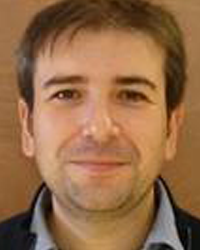
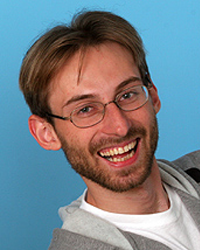
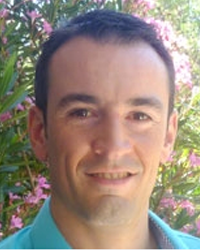
Marmodoro

Anna Marmodoro
Affiliation: Durham University, UK

Keywords: History of philosophy: from the early Greek Philosophers to Aquinas
Metaphysics: fundamentality; composition and structure; the nature of properties, dispositions, relations; the metaphysics of substance; causation.

Philosophy of mind: Perception
Philosophy of religion: incarnation and trinity

Webpage

ID_symbol_B-W_128x128

Full profile:

Anna is currently affiliated to Corpus as a Research Fellow and is an associate Faculty member in the Philosophy Faculty, while she concomitantly holds the Chair of Metaphysics (2017-) at Durham University. Anna came to Corpus in 2007, after earning her doctorate in Philosophy from the University of Edinburgh (2006) and her Laurea, also in Philosophy, from the University of Pisa (2000). In her 11 years at Corpus, Anna has also been a Departmental Lecturer in Philosophy in the Faculty and in College (2007-08), a Junior Research Fellow (funded by a British Academy Post-Doctoral Fellowship, 2008-11), and an Official Fellow in philosophy (2011-2017). She has so far served in College as SCR Master, Tutor for Women, Dean of Degrees, and University Pro-Proctor. She lives in Oxford.

Research interests

Anna specializes in two research areas: on the one hand, ancient, late antiquity and medieval philosophy, and on the other, metaphysics. She also has strong research interest in the philosophy of mind and the philosophy of religion. In metaphysics she is particularly interested in questions concerning fundamentality; composition and structure; the nature of properties, dispositions, relations; the metaphysics of substance; and causation. In the history of philosophy, she has worked on an eclectic collection of topics, in Anaxagoras, Aristotle, Plotinus, the Stoics, Gregory of Nyssa, and Thomas Aquinas. Anna has published monographs, edited books and journal articles in all these areas. She is currently working on a new monograph, Forms and Structure in Plato’s Metaphysics. She has been directing a large-scale multidisciplinary research group, with funding (in successive stages) from the European Research Council, the Templeton World Charity Foundation, the Leverhulme Trust, and the AHRC, with a combined research budget of over £2,5M. She is also the founder and co-editor of the peer-reviewed journal Dialogoi. Ancient Philosophy Today, published by Edinburgh University Press, forthcoming in press from 2019.

Canevaro


Affiliation: The University of Edinburgh, UK

Keywords: Greek history, Athenian democracy, Greek law, political institutions, political theory

Webpage

ID_symbol_B-W_128x1280000-0001-5884-1839

Full profile:

From Alessandria, a provincial town in northern Italy, Mirko Canevaro left for Torino to study Classics. There he was involved in politics, campaigned against authoritarian changes to the Italian constitution and started a project that brought teaching of Civic Education to many schools of Piedmont. A move to England landed him a Durham PhD – and a Geordie wife. He has held research positions in Greece (at the British School of Athens) and Germany (at the Universität Mannheim), and is now Reader in Greek History at the University of Edinburgh (after being Chancellor’s Fellow).
His research has been funded by the Arts and Humanities Research Council, the Alexander von Humboldt Foundation, the Leverhulme Trust, the Royal Society of Edinburgh and, most recently, the European Research Council. In 2014 he was appointed Member of the Royal Society of Edinburgh Young Academy of Scotland and he has been, since January 2015, Co-Chair of the Arts and Humanities in Society Working Group. In 2015 he was awarded a Philip Leverhulme Prize in recognition of his research achievements. In spring 2017 he was a Visiting Professor of Greek History at the Università di Cagliari. In 2017 he was also awarded the Royal Society of Edinburgh’s Thomas Reid Medal for Excellence in Arts, Humanities and Social Sciences, in recognition of his research on Greek politics and law.
Mirko is a Greek historian interested in institutional, social and economic history. His work has focused on the sources for Athenian legal and institutional history, on the ideology and procedures of constitutional reform in Athens, on the political philosophy of Aristotle, and on inequality of wealth and honour in the Greek city-states.

Lloret-Fillol

Julio Lloret-Fillol
Affiliation: Institut Català d’Investigació Química, ES

Keywords: Catalysis, Inorganic chemistry, reaction mechanism, Artificial photosynthesis, Light-driven chemistry, Electro- and photo-catalysis, Bio-inspired chemistry, Bio-inorganic chemistry, computational modelling

Webpage

ID_symbol_B-W_128x1280000-0001-9173-1105

Full profile:

Dr. Julio Lloret-Fillol graduated in Chemistry from the Universidad de Valencia in 2001 where he also obtained his PhD in 2006, working under the supervision of Prof. Lahuerta and Prof. J. Pérez-Prieto. After his PhD he moved to the University of Heidelberg where he stayed two years as a postdoctoral MEyC fellow and two years as a postdoctoral Marie Curie fellow. Since 2010 he has been working as independent research leader at Universitat de Girona (Ramón y Cajal programme). In 2014 he obtained a position as Young Research Group Leader at the Institut de Química Computational i Catàlisi (UdG). In November 2014 he move to the Institute of Chemical Research of Catalonia (ICIQ) within the CELLEX-ICIQ starting career programme. Since 2015, he is ICREA researcher professor at the ICIQ.

My research is mainly focused on designing new catalysts for a more sustainable chemistry through the use of artificial photosynthetic schemes (ERC Consolidator Grant). Although artificial photosynthetic schemes are a potential solution for a future sustainable society, basic science still needs to be done in order to achieve this objective. Accordingly, my research dream is to address the production of fine chemicals using solely CO2, water and light as driving force. To this end, we are working in developing new methodologies to employ light as a driving force to produce reductive organic transformation and in the understanding of one of the most important reactions in earth, the water oxidation; identified as one of the bottlenecks for the production of solar fuels. Mechanistic investigations will aid to understand multi-proton multi-electron transformations. These areas of research can open up new avenues for newer and greener synthetic methods.

Camprubí

Lino Camprubi
Affiliation: Max-Planck-Gesellschaft, DE

Keywords: History of science and technology, philosophy, engineering, oceanography, history of Spain, Mediterranean, Cold War, postcolonialism, global environment.

Webpage

ID_symbol_B-W_128x128 0000-0001-6848-9090

Full profile:

Lino Camprubí is since 2014 a Research Scholar at the Max Planck Institute for the History of Science, Dept. II. He obtained his PhD in History at UCLA in 2011 and then became a Postdoctoral Research Fellow at the UAB (Barcelona) as part of the ERC-funded project The Earth Under Surveillance. His first book, Engineers and the Making of the Francoist Regime (The MIT Press, 2014) explores the active role of engineers in dictatorship building Spain. His second book, Los ingenieros de Franco. Ciencia, catolicismo y Guerra Fría (Crítica, 2017) extends this view to the role of geoscientists in shaping Spanish international relationships in the Cold War contest. He has recently published on “the invention of the global environment”, on Western Sahara phosphates and the fertilizers world market, and on oceanic circulation and anti-submarine surveillance at the Strait of Gibraltar, which constitutes the core of his current project.

Research interests:

Camprubí’s current main project The Strait in the Cold War—Deep Science and Global Geopolitics in the Mediterranean, is a history of oceanography and Cold War geopolitics. It explores the geopolitical, perceptual, and scientific resources mobilized in the effort of anti-submarine warfare at Gibraltar. Far from offering a US-centered perspective, it analyzes a number of transnational research programs and is very attentive to interests predating the Cold War, namely sovereignty disputes and decolonization. Underwater surveillance was a matter of acoustics. It required both the standardization of experience through trained ears and precise knowledge of sound propagation, which depended on Atlantic-Mediterranean water flows. The attention to circulation of civil and military oceanographers paved the way for the scientific globalization of the Mediterranean.

Hendry

Hendry Kate

Affiliation: Royal Society University Research Fellow, School of Earth Sciences, Faculty of Science, University of Bristol, UK
Keywords: biogeochemistry, oceanography, paleoclimate, isotope geochemistry

Webpage

Full profile:

Kate Hendry obtained her undergraduate degree in Natural Sciences at Cambridge University (2004), before completing a doctorate in Antarctic biogeochemistry at Oxford University (2008). She was awarded a postdoctoral scholarship at Woods Hole Oceanographic Institution, working on ocean chemistry and paleoclimate (2009-2011). She then moved back to the UK, initially as a Research Lecturer at Cardiff University (2012-2013), then as a Royal Society University Research Fellow at the University of Bristol (2013-). She has published over 30 well-cited, peer reviewed papers, with over 400 citations, and has been invited to give talks at several international conferences. She is a director of Antarctic Science Ltd, and sits on the UK National Committee of Antarctic Research. She was awarded the European Association of Geochemistry EAG Hautermans Award for early career geochemistry (2016), a European Research Council ERC starter grant (2016), and was selected for the Young Academy of Europe (2017).

Research interests:

Kate’s main research interests lie in the investigation of modern biogeochemical cycling and past ocean processes, focusing on biogenic opal and silicon cycling in seawater. Her work uses isotope geochemistry as a tool for investigating nutrient uptake, biological production and particle cycling in the modern ocean as well as in the past using marine sediment archives.

Bronstein

Michael Bronstein
Affiliation: University of Lugano, CH

Keywords: Computer vision, Pattern recognition, Geometry processing, Machine learning

Webpage

ID_symbol_B-W_128x1280000-0002-1262-7252

Full profile:

Michael Bronstein was born in 1980. He received the B.Sc. summa cum laude from the Department of Electrical Engineering in 2002 and Ph.D. with distinction from the Department of Computer Science, Technion in 2007. In 2010, he has joined the Institute of Computational Science in the Faculty of Informatics at the University of Lugano (USI), Switzerland, where he is currently an associate professor leading a research group on geometric and visual computing. Since 2012, he also serves as research scientist and principal engineer at the Perceptual Computing lab at Intel. He also held visiting appointments at Politecnico di Milano (2008), Stanford university (2009), INRIA (2009), Technion (2013, 2014), University of Verona (2010, 2014), and Tel Aviv University (2015).

Verde

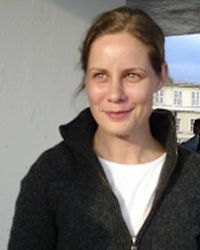
Licia VerdeAffiliation: Universitat de Barcelona, ES
Keywords: Astronomy and Astrophysics, Cosmology, Euclid, Structure formation, Neutrinos

Webpage

ID_symbol_B-W_128x1280000-0003-2601-8770

Full profile:
I am an astrophysicists with interest in cosmology. My research topics include theoretical cosmology, cosmic microwave background, large-scale structure, galaxy clusters, statistical applications and data analysis. I am interested in the study of large-scale structure of the Universe and the analysis of galaxy surveys.

Forstmann

Birte Forstmann
Affiliation: University of Amsterdam, LS

Keywords:

Webpage

ID_symbol_B-W_128x1280000-0002-1005-1675

Full profile:
Our general research goal is to understand the brain mechanisms that allow people to adapt quickly to changes in their environment. Our work combines mathematical modeling with functional magnetic resonance imaging (fMRI), diffusion weighted imaging (DWI), ultra-high resolution 7T MRI, electroencephalography (EEG), and postmortem work. Our general research strategy capitalizes on individual differences in psychological processes involved in decision-making and interference control. Process models and descriptive models quantify the process of interest for each individual separately, and structural and functional brain imaging techniques subsequently relate inter-individual variation in psychological processes to inter-individual variation in the neural substrate.

Cappa

Frédéric Cappa
Affiliation: University Côte d’Azur, FR

Keywords: Geophysics, Earthquakes, Landslides, Induced seismicity, Fluid flow, Rocks Deformation

Webpage

ID_symbol_B-W_128x128 0000-0003-4859-8024

Full profile: