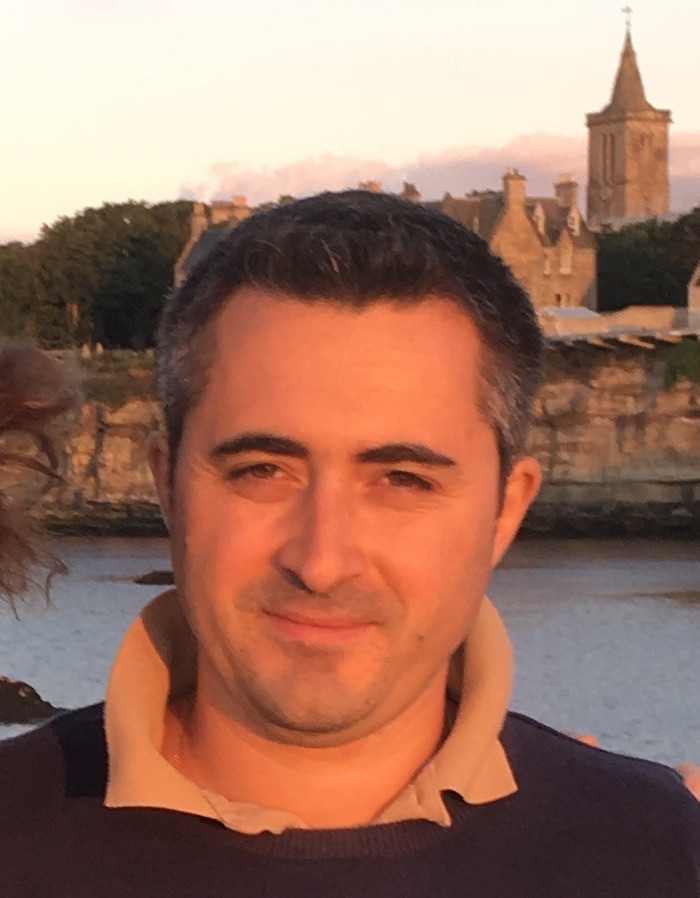
Pezzini

Affiliation: The University of St Andrews, UK

Keywords: Roman republican literature and culture, Roman comedy, Latin language from the early Republic to the 21st century, Ancient linguistics, Metre, textual criticism, and digital humanities, History of classical scholarship, Theory of Fiction, Tolkien


Webpage

ID_symbol_B-W_128x1280000-0001-9845-864X

Full profile:

Giuseppe Pezzini (1984) is Senior Lecturer in Latin at the University of St Andrews, which he joined in 2016 after research fellowships at Magdalen College Oxford and the Institute for Advanced Study in Princeton. He holds a BA and an MA in Classics from the Scuola Normale Superiore in Pisa, and a D.Phil. from the University of Oxford. He worked as an assistant editor for the Oxford Dictionary of Medieval Latin (completed in 2013 after a century of work), and has worked especially on Latin language and literature, classical theatre, the history of classical scholarship, ancient and modern theory of fiction.

His publications include a monograph on the verb ‘to be in Latin’ (Oxford 2015), an edited volume on ancient theory of language (Cambridge 2019), a translation of a humanist treatise on the political history of Venice (Toronto 2020), and papers on Caesar’s linguistic politics, Aristotle’s logic, the satires of Lucilius, slavery and literature, ancient theory of realism, and Tolkien’s ‘theology of fiction’.

His main current project is an edition of and commentary on a play by the Latin playwright Terence, which he is preparing for the Cambridge ‘Orange Series’ and is funded by a British Academy Mid-Career Fellowship and a Loeb Library Foundation fellowship. He is particularly interested in the integration of Greek culture in the Roman world and the construction of a national identity in a multi-cultural and multi-ethnic society, topics which he is also investigating through projects on the special relationship between Pergamene Culture and Rome and a commentary of Lucretius DRN 4 (under contract with Lorenzo Valla).
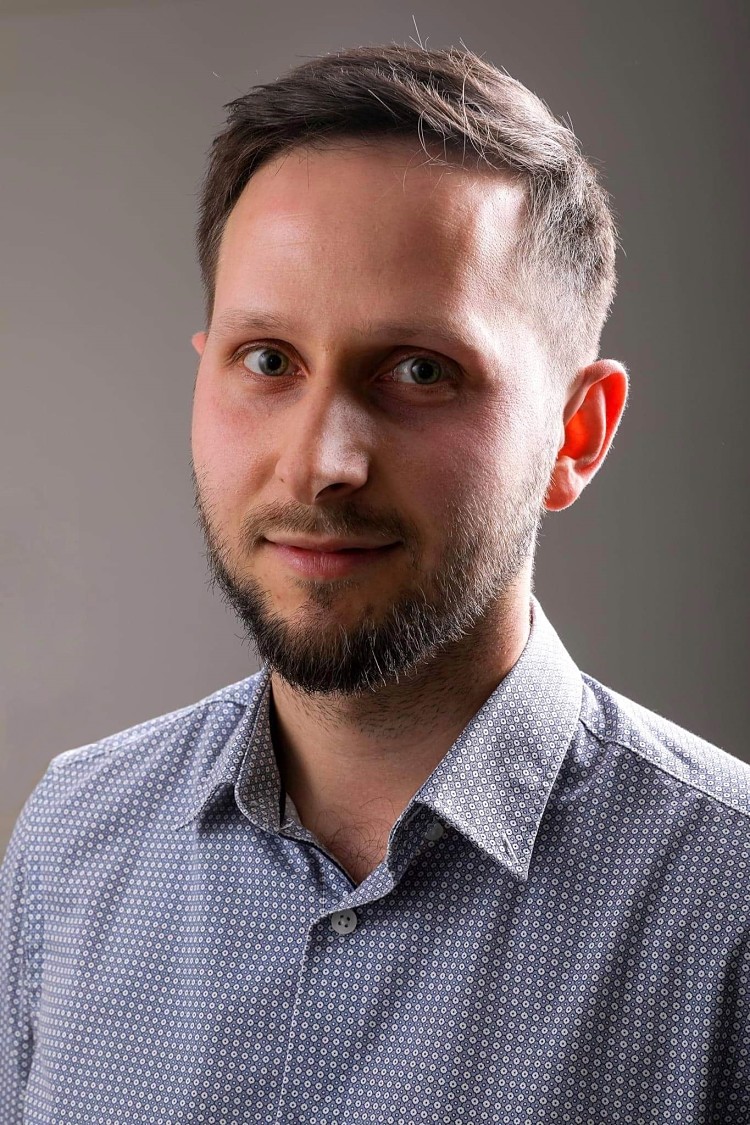
Korpal

Affiliation: Adam Mickiewicz University, Poznań, PL

Keywords: Linguistics, Translation and Interpreting Studies, emotion, psycholinguistics

Webpage
0000-0001-7479-936X

Full profile:

Paweł Korpal is an assistant professor at the Faculty of English of Adam Mickiewicz University, Poznań. He obtained his doctoral degree in 2016 in the field of linguistics for the monograph “Linguistic and psychological indicators of stress in simultaneous interpreting”. He also holds a master’s degree in psychology from Adam Mickiewicz University, Poznań. Paweł Korpal has been awarded several scholarships, e.g. the Summer School scholarship by the European Society for Translation Studies (EST) for the best Ph.D. proposal (2014), the Award of the Committee on Linguistics of the Polish Academy of Sciences for outstanding academic achievements (2017), and START – Foundation for Polish Science scholarship for outstanding young scholars (2018). In 2016-2018 Paweł Korpal was the Principal Investigator in the project “Numerical data processing in simultaneous interpreting: Eye-tracking studies” financed by the National Science Centre, Poland. He is a member of International Association for Translation and Intercultural Studies, as well as European Society for Translation Studies.

Research interests:

Paweł Korpal is involved in interdisciplinary research combining Interpreting Studies and psychology. His research interests include: stress and emotions in conference and community interpreting, cognitive processing in simultaneous interpreting, the use of eye-tracking in Translation and Interpreting Studies, as well as psychophysiological measures of emotional language processing in L1 and L2. In his research, Paweł Korpal has adopted the following research methods: eye-tracking, skin conductance, and heart rate.

Den Hertog

Martien Den Hertog
Affiliation: Institut NÉEL, FR

Keywords: Transmission Electron Microscopy (TEM), Nanotechnology, Microscopy, Nanoscopy, Materials science, Electron microscopy, Nanowires, Zinc oxide, Semiconductors; In-situ electron microscopy, Off axis electron holography, Dopant mapping

Webpage

ID_symbol_B-W_128x1280000-0003-0781-9249

Full profile:

Dr. Martien den Hertog (female), CNRS researcher, obtained her MSc degree in Chemistry and Physics from the University of Utrecht (NL) in 2005 and PhD in 2009 from University Joseph Fourier in Grenoble on transmission electron microscopy of nanostructures. Since 2010 she is working as a junior researcher at the Institut Neel to develop methods to study nano-object based devices by correlation of electrical and structural properties and electrical in-situ TEM experiments. She has been coordinator of a French young researcher project (ANR project COSMOS) and has received and ERC starting grant e-See that starts in Oktober 2018.

Research Interest

Since 2010 I work at the Neel Institute in Grenoble.
I am interested in the structure properties relation of semiconducting nanowires (NWs) using transmission electron microscopy (TEM), optical spectroscopy and electron transport. The goal of my research is to develop methods to combine various characterization methods (optical and electrical) with transmission electron microscopy characterization on the same unique nanowire, and find what structural or electrical properties at the sub-nm scale determine the macroscopically measured optical and electrical properties of the nano-structure. For electrical and electro-optical characterization contacts have to be applied to the nanowire, that can also be used to bias the nanowire device in-situ in the transmission electron microscope. Observing the reaction of a device to an electrical signal with nm scale resolution is a very exiting opportunity to learn more on the device characteristics/reactions, and will allow ultimately to correlate the presence of a single impurity atom observed in TEM with electrical spectroscopy of this same single atom in a single dopant device.

Caricchi

Luca Caricchi
Affiliation: Université de Genève, CH

Keywords: Volcanology, Petrology, Physical properties of magmas, Magmatic Ore Deposits

Webpage

ID_symbol_B-W_128x1280000-0001-9051-2621

Full profile:

Luca Caricchi completed his studies at the University of Perugia (Italy) and obtained his PhD at ETH Zurich (Switzerland) in 2008. After a postdoctoral fellowship at the CNRS in Orleans (France), he moved to the University of Bristol (UK) to complete a NERC postdoctoral fellowship. In 2012 he become assistant professor of Volcanology and Petrology at the Department of Earth Sciences of the University of Geneva (Switzerland) and in 2017 he was promoted to associate professor in the same department. Luca Caricchi received an ERC starting grant in 2015 and he is PI in other projects financed by the Swiss National Science Foundation. He is currently associate editor of Journal of Geophysical Research and has been selected for the Young Academy of Europe in 2018.

He is a volcanologist and petrologist combining geochemistry and various statistical approaches to understand the physical processes responsible for the generation, transport and eruption of magmas on Earth.

The target of his research group is to define the main factors controlling the recurrence rate of volcanic eruptions at regional and global scale and identify the mechanisms responsible for the formation of magmatic ore deposits.

Ribeyrol

Charlotte Ribeyrol
Affiliation: University of Oxford, UK

Keywords: Victorian literature, Victorian painting, reception studies, colour, pigments, dyes

Webpage

ID_symbol_B-W_128x128

Full profile:

Charlotte Ribeyrol is Associate Professor at the Sorbonne in Paris and a Junior Member of the Institut Universitaire de France. Her main field of research is the reception of the colours of the past in Victorian painting and literature. Her monograph on the Hellenism of Swinburne, Pater and Symonds entitled “Etrangeté, passion, couleur”, L’hellénisme de Swinburne, Pater et Symonds came out in 2013 and she has since co-edited two special issues on the subject of paganism in international peer-reviewed journals:  Antique bodies in Nineteenth Century British Literature and Culture (with C. Bertonèche) Miranda, n°11, 2015 and Late Victorian Paganism (with C. Murray) Cahiers Victoriens et Edouardiens (2015). She also published in The Journal of Victorian Culture and contributed to the edited volume Pater the Classicist (OUP, 2017). In 2014-2016 she co-directed a major interdisciplinary project on chromatic materiality (POLYRE, IDEX Sorbonne Universités), which led to the publication of a collection of essays entitled The Colours of the Past in Victorian England (Peterlang, Oxford, 2016).  She then held a Marie Curie Fellowship at Trinity College, Oxford (2016-2018) as part of her new project on the colours of William Burges’s Great Bookcase.

Kutnar

Andreja Kutnar
Affiliation: UUniversity of Primorska and InnoRenew CoE, SI

Keywords: wood composites, thermo hydro mechanical treatment, adhesive bonding, sustainable development, LCA

Webpage

ID_symbol_B-W_128x1280000-0001-8366-6227

Full profile:

Andreja Kutnar obtained her PhD in 2008 at the Biotechnical Faculty, Department of Wood Science and Technology, University of Ljubljana, Slovenia. Since 2012 she has worked as an Associate Professor in the field wood science at the University of Primorska in Koper, Slovenia where she led the development of the Sustainable Built Environments Masters degree programme. Since 2014 she has served as the Acting Head of the Department of Technology at the Andrej Marušič Institute, University of Primorska, Slovenia. In 2017 she became the director of the InnoRenew CoE, a research institute founded as a result of a successful H2020 Widespread-Teaming grant application. She is also an affiliated faculty member at the Department of Wood Science and Engineering, Oregon State University, USA. In 2018 she was a DAAD Guest Professor at the Georg-August-Universität Göttingen, Germany. Andreja is active in international associations and networks. She is an Executive Board member of InnovaWood and the vice president of the Society of Wood Science and Technology. She is chair of COST Action FP1407 “Understanding wood modification through an integrated scientific and environmental impact approach” (ModWoodLife). Andreja is co-editor of Wood Materials Science and Engineering (Taylor & Francis) and serves on the editorial board of several scientific journals. She has published over 100 papers. In 2014, she co-authored, “Contemporary Slovenian Timber Architecture for Sustainability”, a book published by Springer International Publishing AG in the Green Energy and Technology series. In 2016 she co-edited “Environmental Impacts of Traditional and Innovative Forest-based Bioproducts” a scientific book published by Springer International Publishing AG in the Environmental Footprints and Eco-design of Products and Processes series.

She was awarded the “Jesenko award” for the best PhD student graduating in the year 2008 and in 2004 she received the “Jesenko award” for excellent undergraduate study success. Both awards were received from Biotechnical faculty, University of Ljubljana, Slovenia. Moreover, she received funding for many National research projects and for several international projects including the H2020 Teaming Renewable materials and healthy environments research and innovation centre of excellence (InnoRenew CoE). In 2016 she received the »Prometej« award for Excellence in science communication for successful communication of wood science in support of the implementation of the sustainable development paradigm.

Research interests:

She works in the field wood science, focusing on wood composites, thermo hydro mechanical treatment of wood, and adhesive bonding. Her research includes environmental impact assessment of new materials, products, and technologies from origin, manufacturing, use/alteration to reuse or recycle. Furthermore, her research addresses an advanced understanding of wood use beyond conventional measures of performance through interdisciplinary scientific research teams.

Badescu

Alina-Mihaela Badescu
Affiliation: University Politehnica of Bucharest – Center for Advanced Research on New Materials, Products and Innovative Processes, RO

Keywords:

Webpage

ID_symbol_B-W_128x128

Full profile:

A. Badescu received the B.Sc. degree in electrical engineering from University POLITEHNICA of Bucharest (2006), Romania, and the M.Sc.degree in Radio Astronomy and Space Science from Chalmers University, Sweden (2008). In 2011 she received her PhD from University POLITEHNICA of Bucharest and is currently an associate professor at the Department of Telecommunications. She has been conducted several international research projects, funded by European Research Council, John Templeton Foundation (USA) etc., mainly regarding radio frequency systems. She has authored and co-authored over 50 peer-reviewed journals, conference papers, and several book. She has chaired several sessions in international conferences, and participated in the technical committees. Alina Badescu is a member in international collaborations and associations, such as: ASPERA, Euroscience, IEEE Antenna and Propagation Society (vice-president, Romania section-starting 2017) and was the country representative of “Graduate Women in Science” and “Space Generation Advisory Council” (2013-2016). She was awarded several national and international prizes.

Verbruggen

Frederick VerbruggenAffiliation: Ghent University, BE

Keywords: Cognitive psychology and neuroscience, Impulse control, Gambling, Brain stimulation

Webpage

ID_symbol_B-W_128x1280000-0002-7958-0719

Full profile:

I received my Ph.D. from Ghent University in 2005. I was a visiting fellow at Vanderbilt University and Cardiff University before I became a senior lecturer at the University of Exeter. In 2012, I was appointed to a Chair in Cognitive Psychology at Exeter. In 2017, I moved back to Ghent University to take up Research Professorship.

My contributions to psychology are in the study of executive control mechanisms. I examine how people withhold or suppress inappropriate or risky actions, switch between tasks and response strategies, and adjust behavior after bad outcomes. I also study how executive control and learning interact, and how action control, decision-making, and motivation are related. As well as my theoretical and methodological contributions to the field, my work has opened up promising new avenues for treating impulsive disorders.

Leppert

Linn Leppert
Affiliation: University of Twente, NL

Keywords: Electronic structure theory, Green’s function-based many-body perturbation theory, density functional theory, light-harvesting, perovskites, photovoltaics, photosynthesis

Webpage

ID_symbol_B-W_128x1280000-0002-4361-4382

Full profile:

After completing a PhD in physics at the University of Bayreuth, Germany, Dr. Linn Leppert moved to the beautiful shores of Berkeley for a two-year postdoc at Lawrence Berkeley National Lab and the University of California, Berkeley. In 2017 she returned to her alma mater, now leading an independent junior research group in the Department of Physics. Linn has received funding from the Alexander-von-Humboldt foundation, the German research foundation, and the Elite Network of Bavaria, and awards for her dissertation and postdoctoral research. Her research interests and main expertise are the development and application of accurate methods for calculating the electronic structure and dynamics of light-converting systems: from halide perovskites for photovoltaic applications to the chlorophyll molecules at the heart of charge excitation and transfer in photosynthesis.

Ahmad

Shahzada Ahmad
Affiliation: BC Materials, ES

Keywords: Sustainable Energy, Photovoltaics, Molecular solar cells, Energy Storage, Electrochemistry, Physical Chemistry, Electron transfer reaction, Photo-electrochemistry.

Webpage

ID_symbol_B-W_128x128 0000-0002-1218-2556

Full profile:

Born and brought up in India, studied Materials Chemistry (2002) and finished his Ph.D. (2006). Subsequently he moved to the Max Planck Institute for Polymer Research, as Alexander von Humboldt Fellow to work on surface and interface studies of electrodeposited layers in ionic liquids by scanning probe microscopy. He was a regular visitor at École polytechnique fédérale de Lausanne, where he developed nanoporous films for metal-free electro-catalysis and new redox shuttle. In 2011 he accepted the offer as program head of new concept in photovoltaics and advanced materials and was the strategic hire for the Abengoa Research, a corporate research centre of multinational energy based conglomerate Abengoa. He is the recipient of numerous awards and fellowships, board member of Journals, and recently his work was endorsed by European research council consolidator grant (2016). He is the inventor of 7 family of patents (23 patents), the impact of work led to the invitation to speak at many conferences and institutional seminars. His work has been summarized in >100 articles, along with many popular science articles, and the publications list reflects his diverse field of interest in the domain of physical chemistry, nanotechnology and materials science. In summer 2017, he accepted the call from Ikerbasque to work as professor at Basque centre for materials, applications and Nanostructures. His research mission is the development of new materials for energy storage and conversion application.