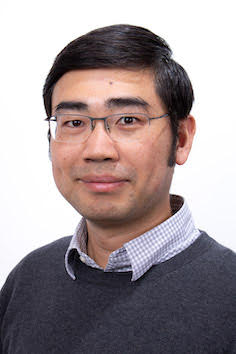
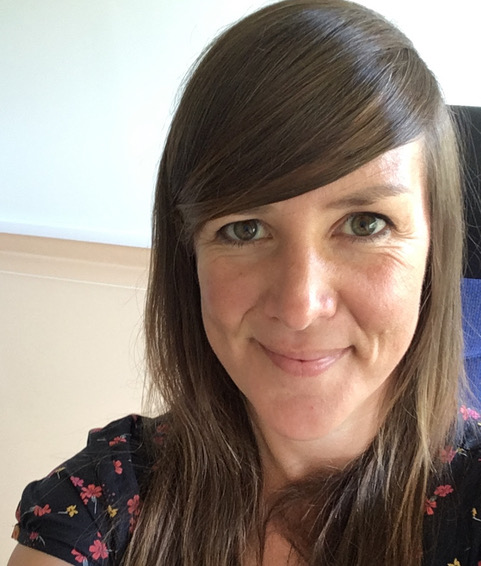
Dong

Affiliation: Technische Universitat Dresden

Webpage

Full profile:

Dr. Renhao Dong is a TUD Young Investigator and leads an independent research group in the Chair of Molecular Functional Materials at Faculty of Chemistry and Food Chemistry and Center for Advancing Electronics Dresden (cfaed), Technische Universität Dresden. He received his Bachelor’s degree in chemistry in 2008 and then doctor’s degree in physical chemistry in 2013 in Shandong University (Jinan, China). He joined the Max Planck Institute for Polymer Research (Mainz, Germany) as a research associate in July 2013. In 01/2017, he was appointed as a research group leader of organic 2D (O2D) materials in the Chair of Molecular Functional Materials. At present, he is an associate member of cfaed and PI of CRC-1415, SPP-1928 and ERC Starting Grant (FC2DMOFs).

Fyndanis

Affiliation: Cyprus University of Technology & University of Oslo

Keywords: psycholinguistics, neurolinguistics, aphasia, adult neurogenic disorders, language disorders, (morpho)syntactic deficits, morphosyntactic processing, grammatical aspect, time reference, tense, bilingualism, multilingualism, working memory, short-term memory, executive functions, bilingual language control, domain-general cognitive control

Personal webpage: www.fyndanis.com

ORCID identifier: https://orcid.org/0000-0001-9403-3468

Full Profile:

Valantis Fyndanis is Assistant Professor of Psycholinguistics/Neurolinguistics in the Department of Rehabilitation Sciences at the Cyprus University of Technology and Researcher at the Center for Multilingualism in Society across the Lifespan (MultiLing) at the University of Oslo. Prior to these appointments, he held a faculty position in the Department of Communication Sciences and Disorders at Long Island University (Brooklyn Campus), a postdoctoral research fellow position at MultiLing, University of Oslo, and a Marie Curie fellow position in the Department of Linguistics at the University of Potsdam. He has also held research and teaching positions in Greece and Italy.

He completed an MA in Applied Linguistics in 2003 and a PhD in Psycholinguistics/Neurolinguistics in 2009 (both at Aristotle University of Thessaloniki). His current work centers around three lines of research: (1) relationship between morphosyntactic processing and cognitive capacities such as short-term memory, working memory and speed of processing; (2) impact of bilingualism/multilingualism on cognitive abilities; and (3) nature of the mechanisms underlying bilingual language control. Currently, Valantis is Principal Investigator on a 4-year FRIPRO grant (“Machine Learning Aphasia”) awarded by the Research Council of Norway.

Sheehan

Affiliation: Queen Mary University of London

Keywords: health services research, rehabilitation, equity, fragility fracture, older adults

ORCID: 0000-0002-5325-7454

Webpage: https://www.kcl.ac.uk/people/katie-sheehan

Katie completed her BSc in Physiotherapy in 2008, a Postgraduate Diploma in Statistics in 2009, and her PhD in 2012. Subsequently, she pursued both clinical and academic roles with a focus on older adults in Ireland and Canada before taking up an academic appointment at Kings College London, UK in 2017. She joined Queen Mary University of London as a Professor of Rehabilitation in 2023.

Katie’s clinical experience in Ireland and Canada framed her subsequent research which focuses on the use of routine data to 1) evaluate variation in access, delivery, and outcomes of rehabilitation to inform quality improvement and policy change and 2) inform future interventions. Katie’s early work led her research team to publish a series of papers detailing the association between rehabilitation key performance indicators and outcomes for older adults after hip fracture surgery. Her work led to invitations to deliver several international talks informing the use of rehabilitation key performance indicators in national audit. Katie’s multidisciplinary work was supported by funding awards from the National Institute for Health Research and the Chartered Society of Physiotherapy Charitable Trust.

More recently, Katie was awarded a prestigious UKRI Future Leaders Fellowship. These fellowships are designed to establish the careers of world-class research and innovation leaders across the UK. Among 500 researchers appointed across 7 UK Research Councils and Innovate UK, Katie is one of just two allied health professionals who have successfully secured this award. Katie’s Fellowship will use data analytics and a strong patient voice to inform the development and testing of the first stratified approach to rehabilitation for patients after hip fracture surgery. These methods have potential to benefit the organisation and delivery of rehabilitation more broadly – in the acute care setting, for other admitting diagnoses, and for older adults in other healthcare settings. This approach is regarded as central to the progress of UK healthcare according to the UK National Health Services and the UK House of Lords Science and Technology Committee.

Katie holds several leadership roles including her recent appointment as Chair of the UK Falls and Fragility Fracture Audit Programme Scientific and Publications Committee with the responsibility for signing off on research applications seeking access to three national audit datasets. Katie is also Co-Chair of the Hip Fracture Recovery Research Special Interest Group of the Global Fragility Fracture Network and serves on the Scientific Committee of the Network. She also serves as an Associate Editor of BMC Geriatrics.

In addition to her research interests, Katie is an advocate for better support of the career development and progression of early career researchers. In 2021 she was awarded funding from UKRI for a project which seeks to increase transparency and equity in access to opportunities afforded by managers and institutions to early career researchers.

Interests

  • Access, delivery, and outcomes of care following orthopaedic trauma in older adults
  • Interventions to improve outcomes of care after orthopaedic trauma in older adults
  • Use of routine and audit data to inform quality improvement and policy change
  • Supporting the development and progression of early career researchers

Cousijn

Affiliation: Erasmus University Rotterdam, Department of Clinical Psychology
Keywords: Neuroimaging, Experimental Psychology, Neuropsychopharmacology, Brain Development, Addiction, Cannabis, Alcohol, Adolescence, Translational science
ORCID-ID: 0000-0002-7699-2582
Janna Cousijn is an Associate Professor at the Erasmus University Rotterdam, Department of Clinical Psychology. She is intrigued by the fine line between addiction risk and resilience and wants to understand the processes underlying trajectories of drug use across the lifespan. She has an interdisciplinary background in neurobiology, psychiatry and experimental psychology and received her doctorate from the University of Amsterdam cum laude for identifying predictors of cannabis addiction with a novel combination of neuroimaging techniques (structural MRI, functional MRI, connectivity analyses) and neuropsychological tasks applied to a group of difficult to find cannabis users. Through postdocs at the Amsterdam University Medical Center, Leiden University and Utrecht University, she extended her knowledge on mental health, experimental psychology, brain development, neuroimaging and neuropsychopharmacology. In 2015, she was invited back at the University of Amsterdam where she founded the Neuroscience of Addiction lab. She is recognized as a leading cognitive neuroscientist investigating cannabis addiction. Her work marks a milestone in showing the similarities between cannabis addiction and other addictions. This was recognized through a 2016 APS-rising star designation and a NIDA-NIH RO1 grant. She advocates a paradigm shift, embracing individual differences and mixed positive and negative effects, and the potential role of cannabis culture therein. In collaboration with her international collaborators, she aims to improve the cannabis knowledge base, stimulate harmonization of research methods and inform users, practitioners and policy makers. Currently, she also works as a Deputy Regional Manager for Addiction journal. In addition, with her ERC starting grant she aims to delineate the impact of age on the neurocognitive processes underlying alcohol and cannabis use, using a rat-human translational paradigm.

Dolcerocca

Affiliation: University of Bologna, Italy

Keywords: comparative literature, literary theory, narratology, digital humanities

Website: https://www.unibo.it/sitoweb/ozen.dolcerocca/en

ORCID: 0000-0001-7022-995X


Full Profile

Ö.N. Dolcerocca is an Associate Professor of Literature at the University of Bologna. She received her doctoral degree with distinction in Comparative Literature from New York University in 2016. Her research focuses on literary theory, comparative literature, modernism, nineteenth-century cultural history, narratology, and digital humanities. She is the primary investigator of the ERC project “Modernizing Empires: Enlightenment, Nationalist Vanguards and Non-Western Literary Modernities” (NONWESTLIT). The project is a comparative study of cultural reforms, linguistic renewal and literary renaissance movements in three imperial traditions, caught between the East-West divide: Russia, Turkey and Japan. It looks at the negotiated cultural models in modernization and westernization processes and argues that their shared historical experience resulted in a common intellectual vocabulary and narrative models shared by otherwise extremely diverse cultures. The project aims to develop a comparative model, drawing a polycentric and plural map of literary modernity. In three subprojects, this project investigates structural similarities in 1.Questions and concepts in literary criticism; 2.Translational practices and translated works from Europe, and 3.Narrative logic and typologies in fiction. It is the first comparative multilingual study of the non-Western literary modernities to bring these specific traditions together. It contests Eurocentric models of literary history which interprets these cases as failures or late emulations. It challenges an overemphasis on single national traditions or on postcolonial approaches, and limited body of studied texts and analysis techniques in the study of the non-West. The project follows a multi-method research strategy to conduct historical and literary comparisons between the emerging national literary systems, combining qualitative and quantitative methods in order to map transnational networks of narrative strategies, conceptual systems and translation practices. It brings new directions in Digital Humanities, expanding it to non-Western and multilingual comparative research. Finally, it makes a much-needed contribution to the current literary corpus by making unknown and untranslated texts available and accessible.

Dolcerocca completed her higher education in Istanbul, Marburg, Paris and New York. She widely published scholarly articles and book chapters on Comparative literature. Her masters thesis “Self and Desire in the Modern Turkish Novel” was published as a book in 2012. She is the guest editor of the special issue entitled “Beyond World Literature: Reading Ahmet Hamdi Tanpınar Today,” which appeared in the journal of Middle Eastern Literatures. The issue offers new ways to read Turkish literature, beyond its common perception as the phantasmic union of ‘East’ and ‘West.’ Her articles “Free Spirited Clocks: Tanpınar’s Modernism and Time Regulation Institute,” and “Chronometrics in the Modern Metropolis: The City, the Past and Collective Memory in A.H. Tanpınar,” both mark out a transnational comparativism that contribute to the current debates on comparative methodologies and modernist studies. Her most recent publications include commissioned chapters on the nineteenth-century Ottoman Literature by Oxford University Press and I.B. Tauris. She is currently working on her book manuscript on the development of modernist fiction in Turkey in a comparative perspective.

Dolcerocca currently serves as an executive council member in the MLA West Asian Literatures Forum and as the chair of the ACLA Owen Aldridge Prize Committee. In her academic service, she is interested in promoting humanities and liberal arts in higher education, addressing the particular problems the humanities face today, and strengthening interdisciplinary relations between science and humanities.

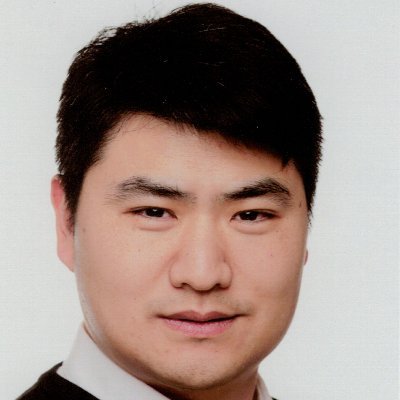
Leroy

Affiliation: Universidad Miguel Hernández

Keywords: Social Interactions, Neural Circuits, System Neuroscience, Neuropsychiatric Diseases

Webpage

ORCID: 0000-0003-1715-3233

Full profile:

Dr. Félix Leroy is a neuroscientist studying the neural basis of social interactions. Following his bachelor and master degrees at the Ecole Normale Supérieure, he received a Ph.D. in neuroscience with Suma Cum Laude from the Paris Descartes University in 2014.

For his post-doctoral studies, Félix joined the laboratory of Dr. Steven Siegelbaum at Columbia University. He became interested in a little-studied hippocampal region named CA2 that is necessary for social memory. After discovering a new form of plasticity in CA2 that may support social memory encoding (Leroy et al., Neuron 2017), Félix began examining how CA2 output could mediate social behaviors. Based on his finding that CA2 sends a strong projection to the lateral septum, an area implicated in aggression, he focused on how CA2 might modulate social aggression. As a core motivated behavior, aggression is controlled by a hypothalamic nucleus, specifically the ventro-lateral part of the ventro-medial hypothalamic nucleus (VMHvl). Dr. Leroy discovered that CA2 upregulates VMHvl activity, thereby enhancing aggression, through a disynaptic disinhibitory circuit in the lateral septum that is modulated by the social neuropeptide arginine vasopressin (Leroy et al. Nature 2018).

In the Fall of 2020, Félix joined the Instituto de Neurociencias de Alicante (the largest Spanish neuroscience institute managed by the Consejo Superior de Investigaciones Cientificas and the Universidad Miguel Hernández) as a principal investigator. There, Dr. Leroy leads the cognition and social interactions laboratory investigating how cognitive information (past experiences and decisions) prioritize, determine and calibrate innate behaviors. Indeed, while the cognitive functions of the cortex (neocortex and hippocampus) have been extensively studied, we know much less about its ability to regulate motivated behaviors fulfilling physiological, safety and social needs. The lateral septum (LS) is ideally positioned to integrate cortical signals in order to regulate the activity of hypothalamic and midbrain nuclei controlling motivated behaviors. LS also receives numerous modulatory inputs from subcortical brain regions. Based on recent cortical-LS-subcortical circuit studies, he studies how LS integration of cognitive inputs regulates motivated behaviors. This is all the more important since malfunctions occurring within cortical-LS circuits may lead to altered social behaviors, a hallmark of many psychiatric disorders.

Dr. Leroy’s research is supported by the European Research Council, the Generalitat Valenciana and the Brain and Behavior Foundation.

Lendak

Affiliation: University of Novi Sad

Keywords: Cybersecurity, Industrial Control System (ICS) Security, Information Security, Security Data Science, Cybersecurity Education

Webpage

Full profile:

Imre Lendak is an associate professor and information security consultant with 15+ years of professional experience. He teaches information security in smart grids and distributed systems/algorithms. His research and professional focus are on critical infrastructure and industrial control systems security, as well as cybersecurity education and awareness raising.

Simmchen

Affiliation: Physical Chemistry, TU Dresden

Keywords: Colloids, active matter, photocatalysis, micromotor, biomimicking

Webpage

ID_symbol_B-W_128x1280000-0001-9073-9770

Full profile:

Juliane Simmchen’s lab focusses on sysnthesis and characterization of active colloidal materials and the physical principles governing their interactions. She constructs (bio)-micromotors from innovative material combinations to confer activity to them, but also investigate information transport as well as communication strategies on both, the individual particle level and in swarms. This highly multidisciplinary research area bridges chemistry, surface science, (bio)-physics and engineering and bears potential to contribute to thriving research fields such as drug delivery, the energy supply of microscale machining and environmental remediation.

Zhang

Affliation: Department of Chemistry-Ångström Laboratory at Uppsala University

Keywords: Dielectrics; Electrochemistry; Electrolyte materials; Electrified interfaces; Molecular Dynamics; Atomistic Machine Learning

Webpage: https://katalog.uu.se/profile?id=N17-1304

ORCiD: 0000-0002-7167-0840

Full profile:

Chao Zhang (张超) is an associate professor in the Department of Chemistry-Ångström Laboratory at Uppsala University. He obtained Dr. rer. nat. from RWTH Aachen University in 2013 and Docent (“venia docendi”) from Uppsala University in 2020. Before joining Uppsala in 2017, he was a postdoctoral researcher in the Department of Chemistry at Cambridge University. His group focuses on developing finite-field methods in computational electrochemistry as well as multi-scale modelling of electrolyte materials and electrified solid-liquid interfaces in energy storage/conversion. He is the recipient of ERC Starting Grant (2020), Junior Research Fellowship from Wolfson College (2015) and Jülich Excellence Prize for Young Scientists (2013).

Stelkens

Affiliation: Associate Professor at the Department of Zoology at Stockholm University, Sweden

Keywords: Evolution, Genomics, Biodiversity, Environmental Change, Yeast

Webpage: www.stelkenslab.com

ORCID: 0000-0002-8530-0656

Rike Stelkens is an Associate Professor at the Department of Zoology at Stockholm University, Sweden. She is an evolutionary biologist interested in the selective and stochastic evolutionary forces generating biodiversity. Rike’s group uses the model system yeast Baker’s yeast (Saccharomyces) and a combination of experimental evolution and genome sequencing. Her research seeks to understand the effects and risks of environmental change for populations with different prerequisites, e.g. populations that differ in size, in genetic variation, the type of selection they experience, their connectivity to other populations, and their ability to compensate stressful conditions through phenotypic responses. All these factors potentially alter the rates and mechanisms of adaptation and therefore the persistence and survival of populations in the wild. Rike’s research program aims to provide a comprehensive view of how these factors operate and interact to allow (and restrict) evolutionary adaptation. 
Rike has received prestigious grants, fellowships and awards throughout her career, including a MarieSkłodowska-Curie Fellowship from the European Union, a Starting Grant form the Swedish Research Council, and a Knut and Alice Wallenberg Fellowship. Rike has presented her research at many international and national conferences resulting in a vibrant network of international collaborators. Rike has has been serving as editorial board members for two scientific journals, she is a member of the Swedish Society for Microbiology, and she has been a review panelist for the Swedish Research Council for Natural and Engineering Sciences.